



A single dental implant is considered a breakthrough restorative solution in modern dental technology. This method not only replaces the function of a missing tooth but also significantly improves aesthetics. In the following article, we will analyze and explore detailed information about single tooth implant placement, helping you better understand this treatment option.
What is a single dental implant?
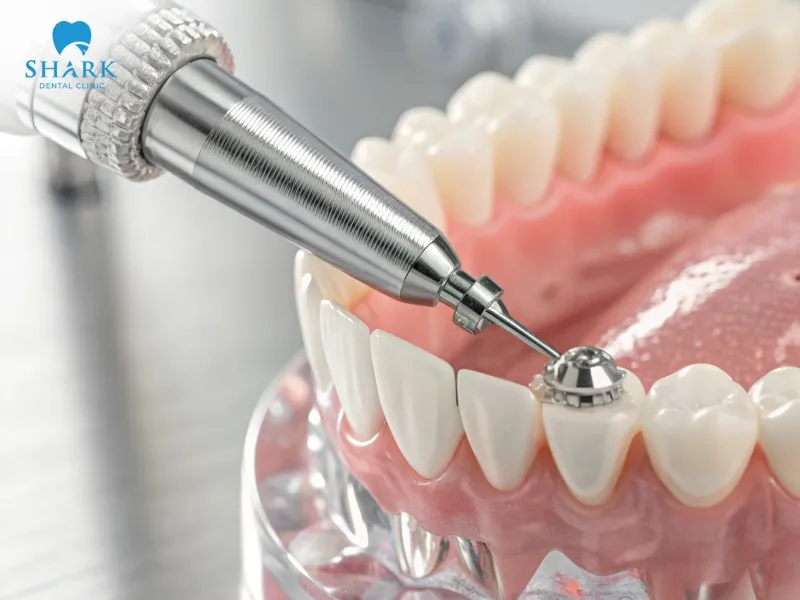
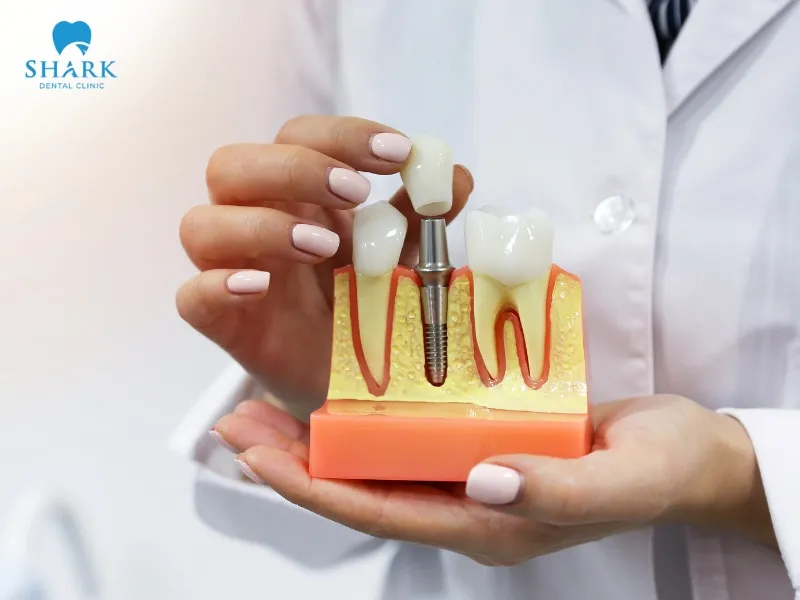
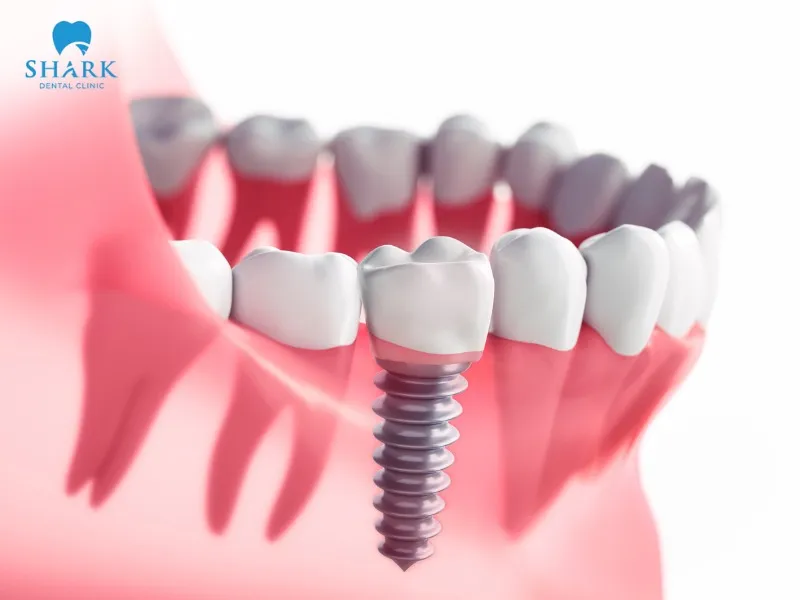
A single dental implant is a restorative method that involves placing an implant post into the area of a missing tooth. After the post is inserted, a porcelain crown is attached to restore tooth function and enhance appearance. This method uses an artificial implant post embedded directly into the jawbone, effectively replacing the lost tooth root.
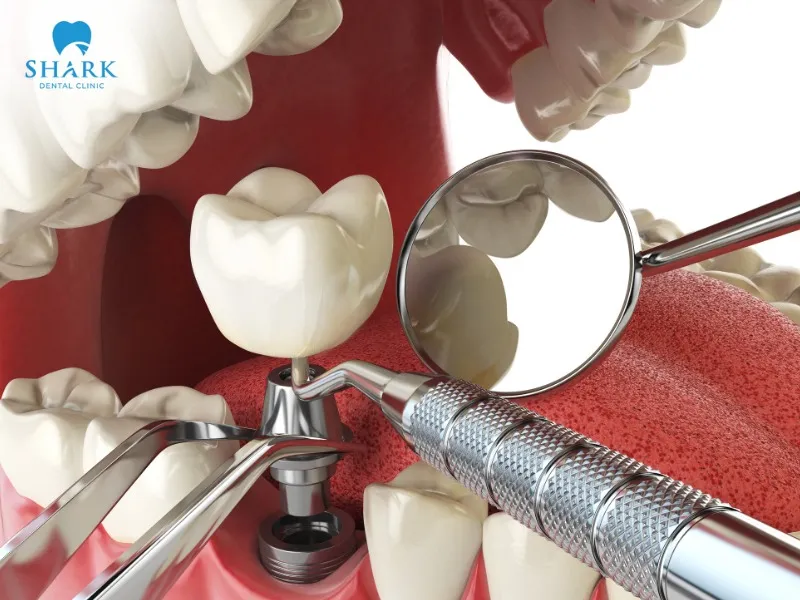
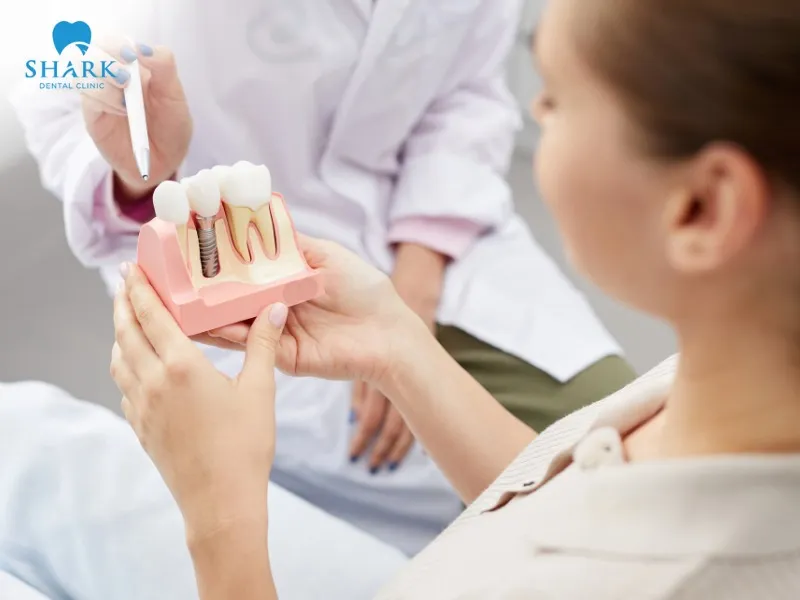
This solution offers numerous advantages, providing high restorative effectiveness and excellent aesthetics, making it a popular choice for many patients today. A single dental implant consists of three main components:
- Implant post: Made from durable titanium, the implant post is highly biocompatible and designed with a screw-like threaded shape for easy placement into the jawbone, creating a strong foundation to support the porcelain crown.
- Abutment: This crucial component connects the implant post to the porcelain crown placed above.
- Dental crown: The porcelain crown is crafted from either metal-ceramic or all-ceramic materials. It closely resembles the natural tooth in shape, color, and size, ensuring optimal aesthetic results.
How a single dental implant is placed?
At reputable dental clinics, the single dental implant procedure follows these steps:
Step 1: Examination and consultation
The process begins with a comprehensive oral examination and consultation. The dentist assesses the patient’s oral health and addresses any issues, such as tooth decay, periodontitis, or gingivitis, before proceeding.
Step 2: Treatment planning
Based on the patient’s oral condition, personal needs, and financial considerations, the dentist develops a suitable treatment plan. This plan is explained in detail to the patient before treatment begins.
Step 3: Oral cleaning and local anesthesia
The entire oral cavity is thoroughly cleaned to reduce the risk of infection. The dentist then calculates and administers the appropriate dosage of local anesthesia at the implant site to minimize pain and discomfort.
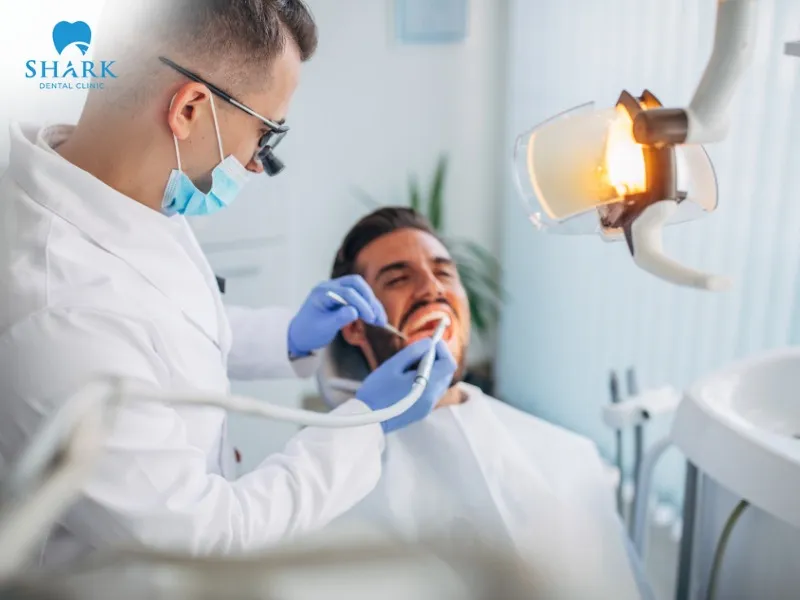
Step 4: Implant placement
The implant post is surgically placed directly into the jawbone. Following proper surgical techniques, the dentist sutures the wound and allows time for the implant to integrate with the jawbone.
Step 5: Impression taking
While waiting for osseointegration, impressions of the surrounding natural teeth are taken. These impressions are used to fabricate the porcelain crown in the dental laboratory. During this period, the patient is fitted with a temporary denture to maintain normal chewing and communication.
Step 6: Crown placement
After 3 to 6 months—depending on the individual case—once the implant has fully integrated with the jawbone, the temporary denture is removed, and the permanent porcelain crown is securely attached.
After completing the implant procedure, patients must adhere to the scheduled follow-up visits. These check-ups allow the dentist to monitor the integration of the implant and to promptly address any issues during the healing process.

How many implants are needed for different tooth restorations?
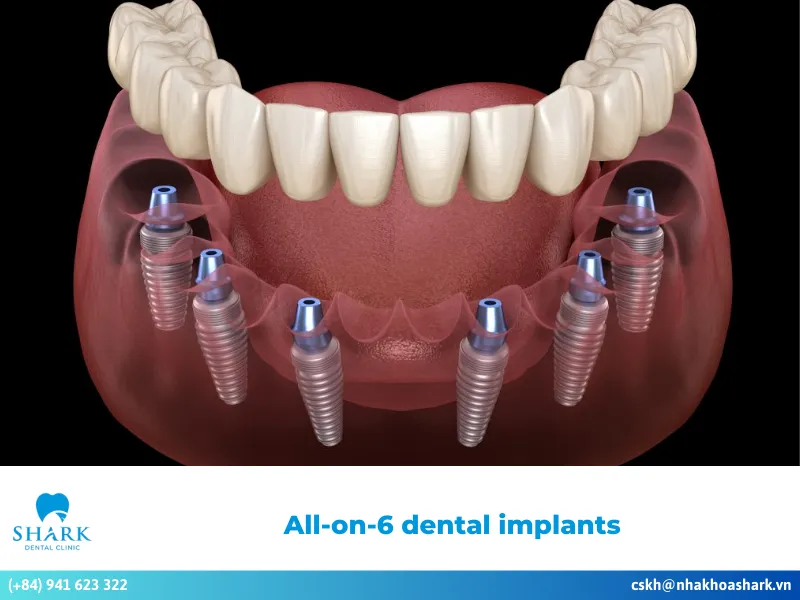
The number of implant posts required for a single dental implant treatment correlates with the number of missing teeth. For instance, if one tooth is missing, one implant post is placed; if two teeth are missing, two implant posts are necessary, and so on. Based on the patient’s specific oral condition, the dentist will recommend a treatment plan that optimizes both effectiveness and cost.
Single tooth implant vs. Dental bridge
Both single dental implants and dental bridges are common solutions for tooth replacement in modern dentistry.
Below is a detailed comparison to help you understand each option better:
| Criteria | Dental bridge | Single dental implant |
| Technique | The dentist prepares the two adjacent teeth next to the missing tooth to support a porcelain bridge. | An implant post is placed directly into the jawbone at the site of the missing tooth, and then it is restored with a porcelain crown. |
| Chewing function | Improves chewing ability, but is not on par with natural teeth and is limited with very hard or chewy foods. | Restores chewing function to nearly that of natural teeth. |
| Aesthetics | Aesthetic results are acceptable shortly after restoration. | Provides optimal aesthetics, resulting in strong teeth and a confident smile. |
| Jawbone resorption | Does not prevent jawbone loss. | Effectively helps prevent jawbone resorption. |
| Durability | Lasts approximately 6 to 10 years. | Can last around 20 to 25 years or even longer. |
| Cost | Ranges from 1,000,000 to 10,000,000 VND per tooth. | Ranges from 13,000,000 to 40,000,000 VND per tooth. |
Who is a good candidate for single implant treatment?
Single dental implants are suitable for the following cases:
- Patients who have lost one tooth due to trauma, impact, or infection.
- Patients missing two adjacent teeth for various reasons.
- Patients missing teeth within the same dental arch.
- Patients with loose teeth caused by pulp necrosis or severely damaged teeth that cannot be restored.
- Patients who have been missing teeth for a long time and need to restore chewing function and improve their ability to eat.
Benefits and possible limitations of replacing one missing tooth
Like other restorative methods, single dental implants have both advantages and limitations.
Benefits:
- Safety: Dental implants are considered highly safe. The implant post is placed into the jawbone to replace the tooth root and has excellent biocompatibility, minimizing irritation risks.
- Chewing Function: Implants restore the function of missing teeth, significantly improving chewing ability and allowing patients to eat more comfortably.
- Aesthetics: The aesthetic concerns caused by missing teeth are effectively resolved after implant placement.
- Prevention of jawbone loss: Long-term tooth loss can lead to jawbone resorption. Implant placement helps effectively prevent this condition.
- Non-invasive to adjacent teeth: A single dental implant does not affect neighboring teeth, helping to preserve the natural tooth structure.
- Long lifespan: Implant posts are highly durable, with a lifespan of over 20 years or even permanent with proper oral care.
Possible limitations:
- Longer treatment time: Compared to traditional methods, implant treatment may require a longer time; in some cases, patients might need to wait up to six months for full integration of the implant.
- Higher cost: The cost of dental implants is significantly higher than that of dental bridges or removable dentures.
- Complex technique: The procedure requires a dentist with advanced skills and solid clinical experience.
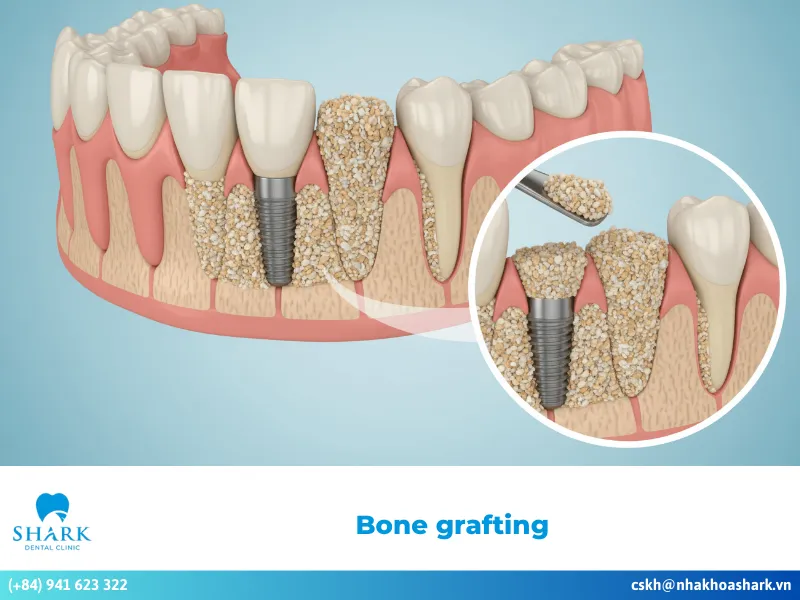
- Bone grafting: Some patients may require bone grafting to ensure sufficient bone volume before implant placement.
How long does it take to heal after a single dental implant?
On average, a single dental implant takes about 3 to 6 months for the implant post to fully integrate with the jawbone. However, the soft tissue at the implant site usually heals within 10 to 14 days after placement. During this healing period, it’s essential for patients to be mindful of their chewing habits, limit physical activity, and practice gentle oral hygiene to avoid putting unnecessary pressure or irritation on the surgical site.
What risks or complications should patients be aware of?
There are several potential risks that may arise during or after the placement of a single dental implant, including:
- Failure of osseointegration: Low-quality or inexpensive implant posts may struggle to integrate with the jawbone and can lead to irritation.
- Implant rejection: In some cases, the body may reject the implant post after a period of use. This would require repeating the implant procedure, resulting in additional time and cost.
- Poor biocompatibility: Inferior implant materials may cause irritation to soft tissues due to inadequate compatibility with the oral environment.
- Infection: Common signs of infection following implant surgery include gum bleeding and soft tissue swelling.
- Prolonged bleeding: Abnormal bleeding after a single implant placement can occur. If bleeding persists for more than 5 days, it may suggest poor implant quality, technical errors, or substandard materials.

To minimize these risks, patients should carefully select a reputable dental clinic. Choosing experienced dentists, utilizing advanced equipment, and opting for implant systems from well-known brands can significantly reduce the likelihood of post-implant complications.
Longevity and success rates of single dental implants
The lifespan of a single dental implant typically ranges from 20 to 25 years, and it can even last a lifetime depending on oral hygiene habits and the type of implant used. Implant posts are typically made from titanium, a material recognized for its excellent biocompatibility, high durability, and superior load-bearing capacity.
With the information provided above, we hope you now have a clearer understanding of single dental implant treatment. This modern dental solution effectively addresses tooth loss, restores chewing function, and ensures long-term aesthetics. If you would like more personalized consultation regarding this restorative option, please feel free to contact us for professional guidance.













Comment on the post