



Bone grafting is a procedure indicated in certain mandatory cases to ensure adequate conditions for dental implant placement and/or the treatment of periodontal diseases. So, what is dental bone grafting, how is it performed, and are there any potential risks? All of these questions will be clearly explained in detail in the following article by Shark Dental Clinic.
What is bone grafting?
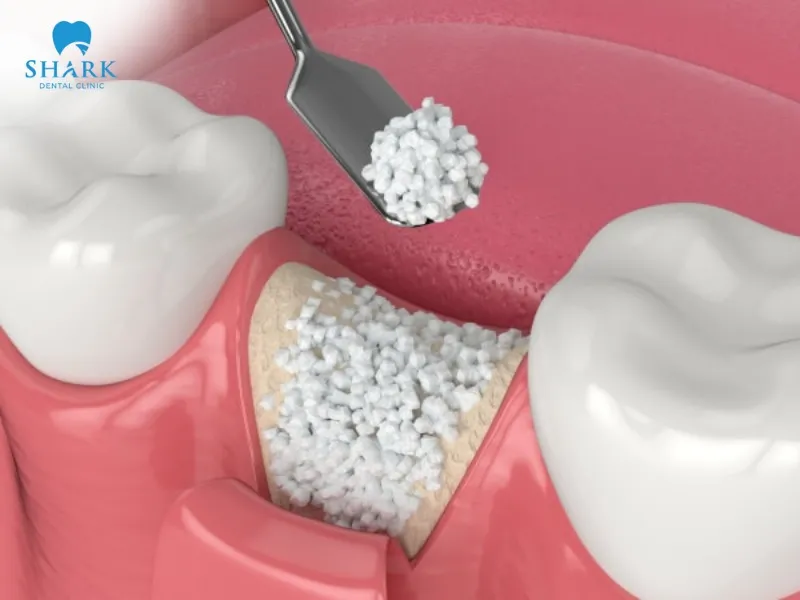
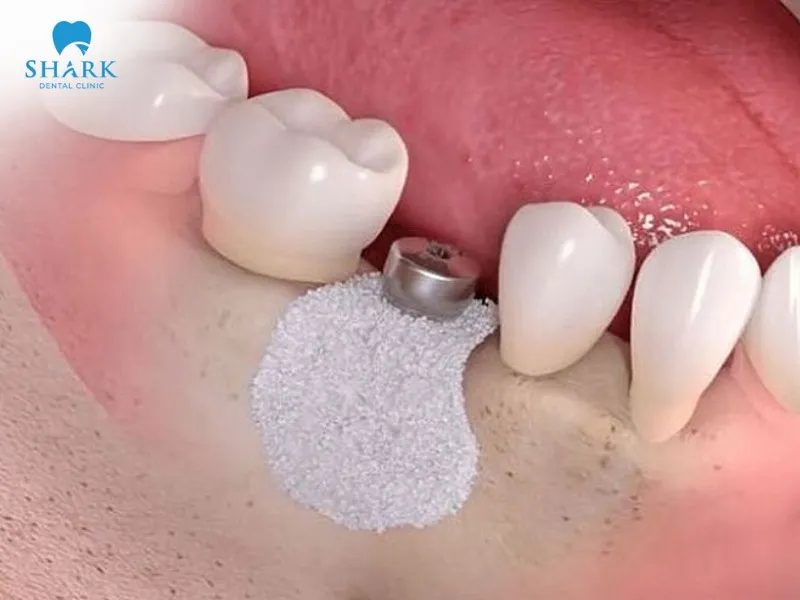
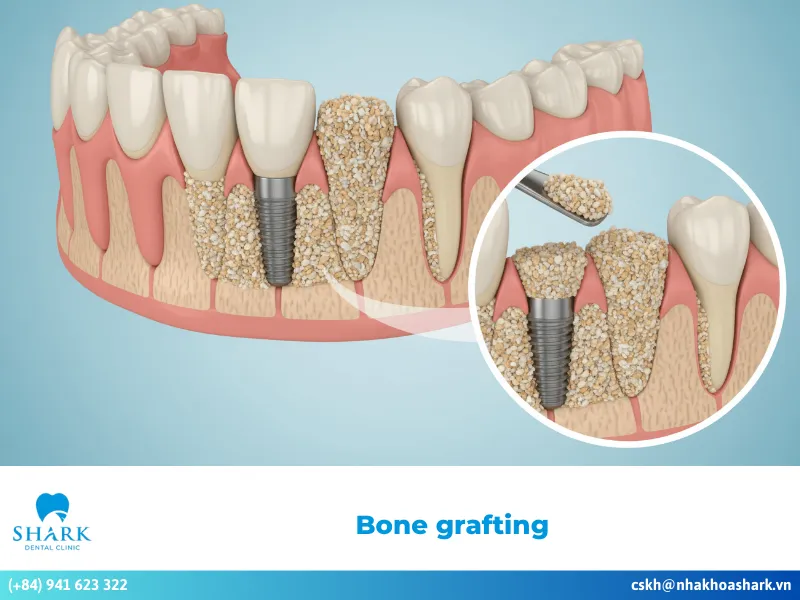
Bone grafting is a dental technique used to enhance the volume of the jawbone, increasing its thickness and strength to create adequate conditions for dental implant placement and other necessary oral disease treatments. This procedure involves placing bone graft material into the deficient jawbone area, often covered by a protective membrane to stabilize the graft and promote bone regeneration. It ensures compatibility with the oral environment while minimizing irritation.
When is bone grafting needed?
Bone grafting is typically recommended in the following situations:
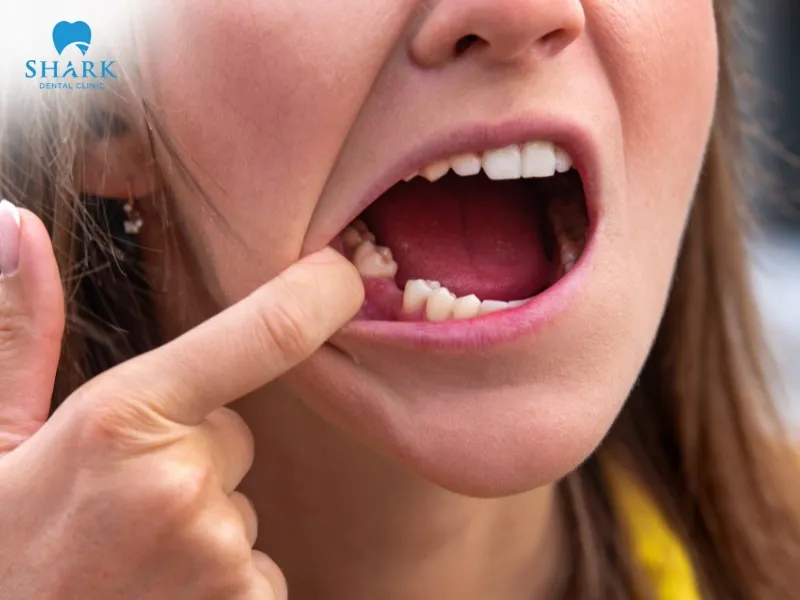
- Patients who have experienced long-term tooth loss without timely restoration, leading to significant jawbone resorption.
- Individuals with chronic dental infections that have caused defects or structural damage to the jawbone.
- Patients with fractured teeth or cracks in the jawbone resulting from trauma or accidents.
- People with naturally thin or weak jawbones who do not qualify for dental implants or periodontal disease treatments.
Bone graft material types
Based on the individual needs and financial situations of patients, dentists may recommend the following commonly used bone grafting materials:
- Resorbable membranes: These membranes are artificially made from collagen, characterized by a porous and rough structure. They aid in the integration between the jawbone and dental implants and naturally dissolve after approximately 2 to 3 months.
- Non-resorbable membranes: Made from materials such as PTFE, cellulose, or titanium, these membranes are durable, rigid, and stable. They are placed to support bone augmentation before implant placement and require a minor surgical procedure for later removal.
More specifically, bone grafting methods include:
- Autogenous bone grafts: This technique uses bone powder or fragments harvested from the patient’s own body, such as the jaw, chin, or hip, and grafted into the deficient area of the jawbone.
- Allogeneic bone grafts: Bone sourced from a human donor, processed to remove incompatible cells, and then freeze-dried and irradiated before transplantation.
- Xenogeneic bone grafts: Bone materials derived from animals, such as cows or pigs, are sterilized and processed to remove their cells, ensuring safe use in dentistry.
- Synthetic graft materials: These mimic the composition and structure of natural bone and are typically made from substances such as calcium phosphate to create artificial bone for grafting.
Benefits of bone regeneration
Bone grafting can provide significant benefits, including:
- Strengthening the jawbone: Bone grafting is an effective solution for addressing defects or damage to the jawbone.
- Preventing jawbone resorption: By supplementing bone volume, the procedure helps reduce the risk of severe bone loss.
- Restoring dental function: After bone grafting and dental implant placement, chewing function can be restored, allowing patients to eat comfortably as they would with natural teeth.
- Improving aesthetics: When combined with dental implants, bone grafting enhances the overall appearance of the dental arch.
Bone grafting risks
While bone grafting is often necessary—and sometimes essential—undergoing the procedure at an unreliable dental clinic or using improper techniques may result in certain risks, including:
- Jawbone damage: Incorrect placement of the graft or poor technique can lead to structural damage in the jawbone.
- Allergic reactions or rejection: Low-quality or incompatible graft materials might trigger irritation, allergic responses, or rejection of the graft.
- Infection: Some patients may experience serious infections after the procedure, with common symptoms including pain, tooth sensitivity, and abnormal bleeding.

What are the success rates of bone regeneration?
The success rate of bone grafting procedures is relatively high, exceeding 90%. This straightforward dental technique is performed in a sterile environment with the support of advanced dental equipment. Dentists carry out the procedure carefully and according to established protocols, ensuring effective and predictable restoration outcomes.
Bone grafting procedure overview
In modern dental clinics, the bone grafting procedure typically follows these steps:
- Step 1: The dentist conducts a comprehensive oral examination to assess the patient’s overall dental health and determine eligibility for bone grafting. X-rays are then taken to evaluate jawbone position, bone density, and structural conditions.
- Step 2: The oral cavity is thoroughly cleaned, and the bone graft materials are sterilized. Local anesthesia is administered at the appropriate dosage to minimize pain and discomfort during the procedure.
- Step 3: The dentist makes a longitudinal incision along the alveolar mucosa, as well as two additional incisions toward the vestibular area, creating enough space for bone graft placement.
- Step 4: The sterilized bone membrane and bone graft material are placed precisely in the designated area, followed by suturing of the mucosa.
After completing these steps, patients should maintain proper oral hygiene and attend follow-up appointments as scheduled to monitor bone integration.

Does bone grafting hurt?
Bone grafting does not typically cause pain, as patients receive local anesthesia before the procedure. Additionally, dentists perform the technique gently and accurately, and the procedure duration is relatively short, which helps minimize discomfort.
Managing post-operative symptoms
After bone grafting, some patients may experience symptoms such as minor bleeding or mild pain. The following measures can help manage post-operative discomfort:
- Bite down firmly on sterile gauze for 15 to 20 minutes if bleeding occurs.
- Apply a cold compress to the cheek near the grafted area to reduce swelling and pain.
- Prioritize soft, easy-to-chew, and easy-to-digest foods, such as soup, porridge, or broth.
If abnormal symptoms persist or do not improve, patients should contact their dentist promptly for evaluation and timely treatment.

How long does bone grafting take to heal?
Healing time after bone grafting varies based on individual biological factors. On average, it takes 2 to 6 months for the jawbone to fully integrate with the graft material. However, patients can usually resume normal eating activities within 7 to 10 days after the procedure.
Tips for supporting bone graft healing
To promote faster and more effective healing after bone grafting, patients can follow these helpful tips:
- Rest and relax during the first 2 to 3 days, avoiding strenuous activities that may impact the oral area.
- Avoid smoking and alcohol consumption, as these substances can reduce blood circulation, slow healing, and increase the risk of graft rejection.
- Maintain a nutritious diet to boost immunity, prioritizing soft and easy-to-swallow foods.

This article provides comprehensive information about the bone grafting procedure, including its process, benefits, and potential risks. To achieve strong, healthy, and aesthetically pleasing teeth, patients are encouraged to choose bone grafting services at a reputable dental clinic.













Comment on the post