



Anyone who chooses a facelift hopes to achieve firmer, more youthful skin and erase signs of aging. However, the appearance of facelift scar after surgery can sometimes become a psychological “barrier,” making many women hesitate even though the aesthetic results are highly effective. Don’t worry—this article will help you understand the causes and treatment options for facelift scars, so you can feel confident when choosing facelift services.
What are facelift scar?
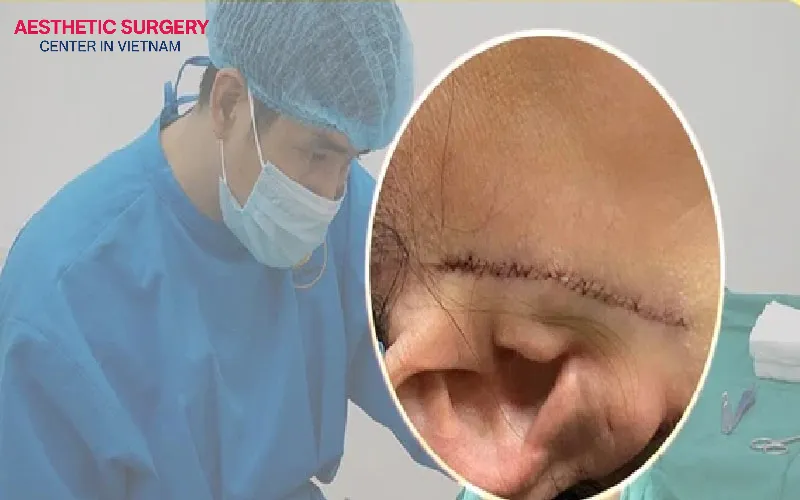
Facelift scar are a natural result of the healing process after the surgeon makes incisions to remove excess skin and tighten the underlying facial tissues. In most cases, these incisions are carefully planned along the hairline or hidden within the natural folds around the ear to help conceal the scars.
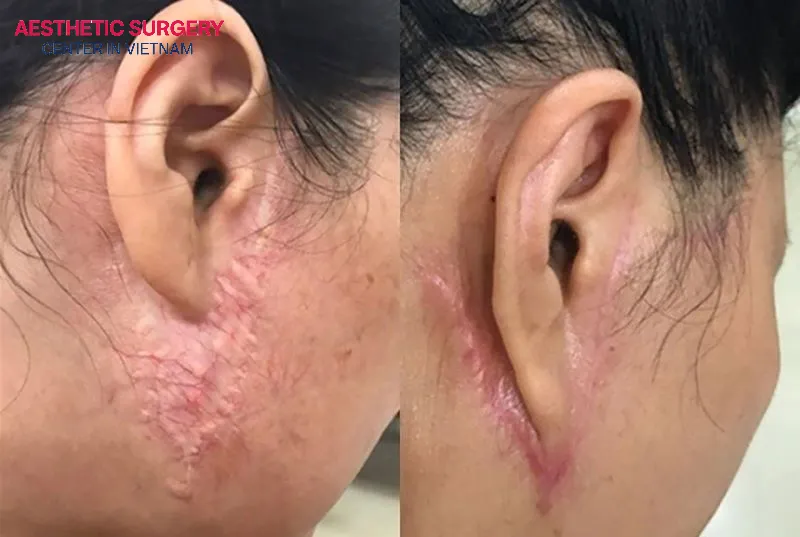
In the early stage, scars are usually light pink and slightly raised. Over time, with proper care, they gradually fade, become flatter, and blend in with the surrounding skin tone. However, the final appearance of a facelift scar depends greatly on the surgeon’s suturing technique, each person’s healing tendency, and especially proper post-operative care and dietary restrictions to prevent complications such as hypertrophic scars, keloids, or widened “track-like” scars.
What causes the scars?
Although facelift scarring is normal, if the scar does not fade and becomes more noticeable, it can affect appearance and make many women feel worried. Common causes of facelift scars include:
Surgeon’s technique
The surgeon’s skill and experience play a major role in how the scar looks. If the incision is not clean, the surgery is too invasive, or the wound is not sutured properly, it can create excessive tension on the skin edges. When the wound is stretched during healing, the body produces more fibrous tissue to repair the area. This can lead to widened scars, raised scars, or “track-like” scars along the incision line.
Skin type and genetic factors
Each person heals differently depending on genetics and skin type. Individuals who are prone to keloid scars or hypertrophic scars often have an overactive healing response. This can trigger excessive collagen production at the incision site. Skin tone also plays an important role. Individuals with darker skin tones have a higher risk of post-inflammatory hyperpigmentation, making scars darker and more visible compared to lighter skin.
Post-operative care
Care during the recovery stage directly affects how well the scar fades. If the patient does not follow hygiene instructions, the incision becomes infected, or the wound is exposed to sunlight too early, pigment cells can be stimulated and cause long-lasting darkening. Strong physical activity or excessive facial movement before the wound is stable can also create pressure on the incision. This may lead to wound opening or distortion of the original scar line.
Diet and lifestyle
What you consume affects cell regeneration and the quality of new tissue. Eating foods that may trigger irritation and worsen scarring such as water spinach, beef, seafood, sticky rice dishes, or using stimulants like cigarettes and alcohol can reduce blood flow to the wound. In particular, nicotine in cigarettes constricts blood vessels, disrupting oxygen and nutrient supply to the skin. This not only makes scars worse but also increases the risk of skin edge necrosis.
Where facelift scars are typically located?
In modern facelift surgery, incision placement is carefully planned to use natural skin folds and hidden facial areas to conceal scars as much as possible.
Typically, the scar starts at the temple area within the hairline, continues down along the ear margin (in front of the ear), then curves behind the earlobe and blends into the hairline behind the neck.
For brow lift techniques or mini facelift procedure, scars may be shorter and placed along the hairline or within the natural creases of the eyelid. Thanks to these “blind spot” locations, once the scars fully heal and fade, it becomes very difficult for others to notice signs of cosmetic surgery—even when you tie your hair up or view the face at close distance.
Can a facelift be done without any scars?
In reality, there is currently no facelift surgery that leaves absolutely no scars. Any procedure that involves skin incisions will trigger the body’s healing response and lead to scar tissue formation. However, with advances in medical technology, the goal is no longer to remove scars completely, but to make them “invisible” to the naked eye.
By using endoscopic techniques with ultra-small incisions hidden deep within the hairline, or applying multi-layer aesthetic suturing methods to minimize tension on the skin surface, facelift scars can heal into thin, thread-like lines that blend naturally with the skin tone and facial creases.
Therefore, instead of searching for a scar-free method, you should focus on choosing a highly skilled surgeon to ensure the scar is well-hidden and fades as beautifully as possible.
The healing process and timeline
Facelift recovery usually happens in stages. It is a process that requires patience, as the skin and deeper tissues need time to stabilize and regenerate. Depending on your healing ability and the surgical technique used, each stage will show clear changes in both appearance and the condition of the scar.
First week: Initial healing
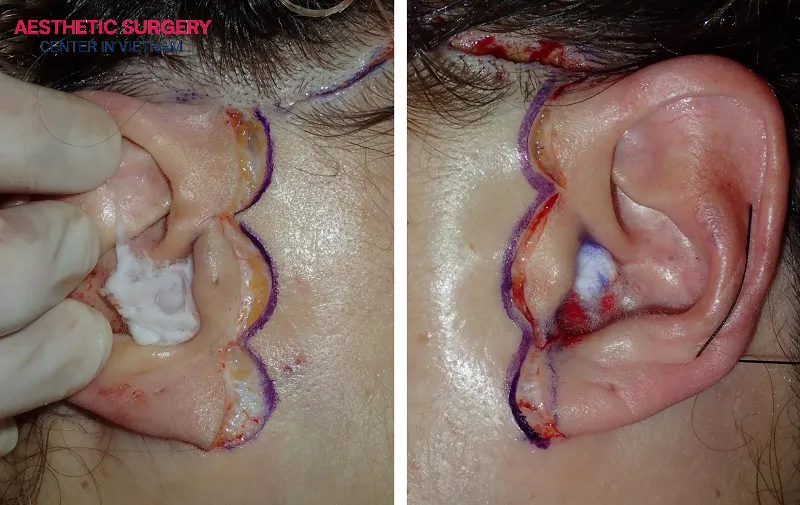
This is the time when the body reacts most strongly to surgical impact. During the first 7 days, the face often becomes swollen with mild bruising around the cheeks and neck. The incision is still fresh, bright red, and may slightly ooze fluid.
These are normal side effects of facelift surgery and will gradually improve over time. During this stage, the surgeon usually applies a compression bandage to help maintain facial shape and protect the sutures from external pressure. By the end of the first week, after the stitches are removed, the wound begins to close but remains very sensitive. Careful hygiene is required to prevent infection.
Weeks 2-4: Scar maturation
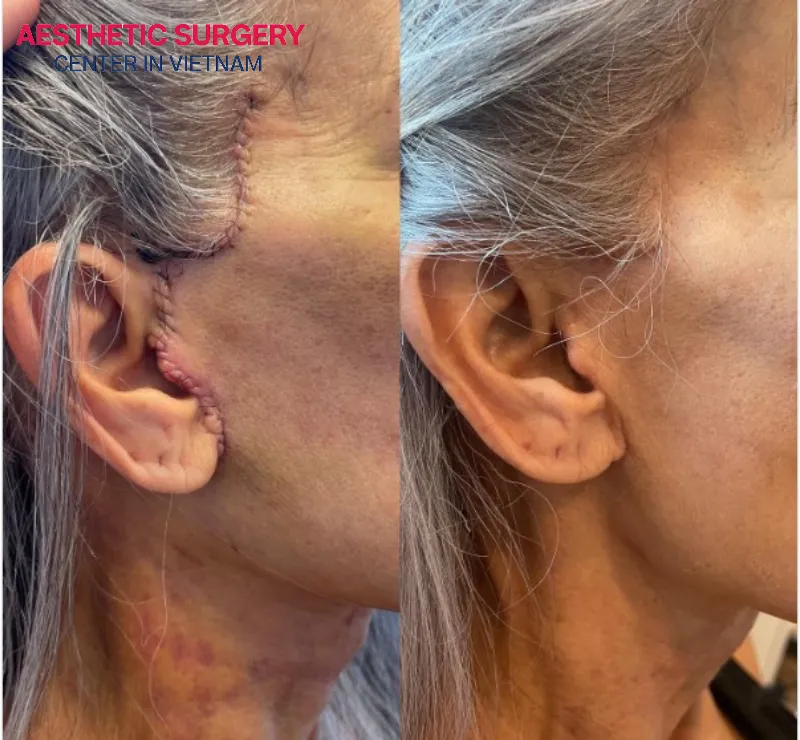
From week 2 to week 4, bruising starts to fade and the facial structure becomes more natural. At the incision site, the scar enters the early “maturation” stage. It may look darker, feel slightly firm, or become mildly itchy due to collagen production as the wound continues to heal.
This is an important stage to start using scar treatment creams as prescribed by your surgeon. These products help control scar thickness, soften scar tissue, and prevent localized hardening. You should also avoid exposing the healing area to direct sunlight.
Months 2-6: Scar fading
From the second month onward, swelling almost completely disappears, restoring a more youthful facial contour. The scar is no longer bright red. It gradually turns light pink and becomes flatter compared to the surrounding skin.
The scar tissue beneath the skin also becomes softer, allowing facial expressions to look more natural and flexible. During this stage, protecting the scar from sunlight is essential to prevent hyperpigmentation and keep the scar from turning dark.
6 months to 1 year: Final scar appearance
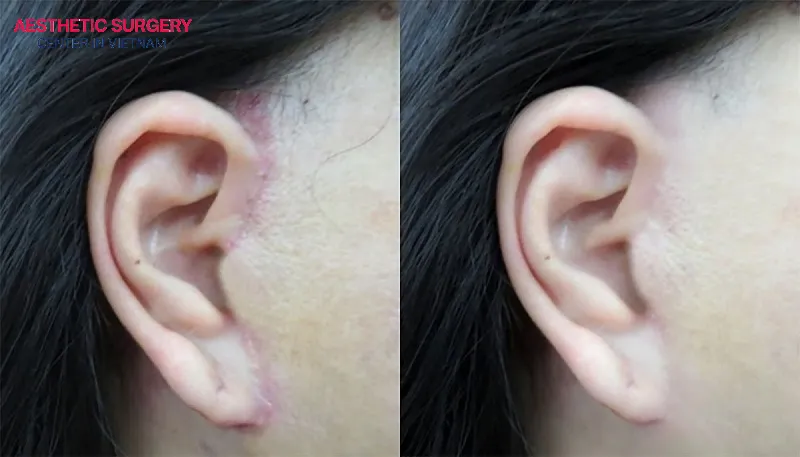
From 6 months to 1 year, tissue regeneration is fully completed, and facelift scars reach their most stable stage. At this time, the scar line turns ivory white or blends completely with the natural skin tone. It becomes a thin, faint line hidden behind the ear or within the hairline. If performed by a highly skilled surgeon and followed by proper aftercare, the scar can become almost invisible and very difficult to notice even at close distance. The face looks smoother, firmer, and shows no obvious signs of cosmetic surgery.
However, it is important to note that everyone heals at a different pace, so some Individuals may need more time for scars to fade.
Advanced scar treatment options
Modern aesthetic medicine offers many effective solutions to improve post-surgery scars, from mild discoloration to more complex raised scars. Below are leading options that help improve scar texture and color:
Laser therapy
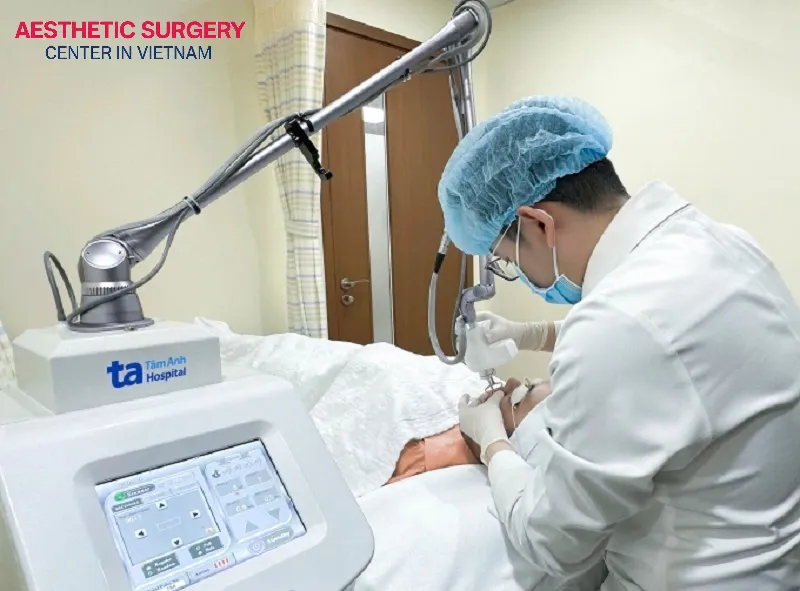
Laser technology such as Fractional CO2 Laser is highly recommended for treating facelift scars. The laser energy, delivered at the right wavelength, penetrates the skin to break down scar tissue while stimulating new collagen and elastin production to regenerate the skin surface.
This method not only helps flatten raised scars and improve depressed scars, but is also especially effective in reducing red or dark pigmentation, helping the scar area blend more evenly with the surrounding skin.
Chemical peels
Chemical peels use special acidic ingredients such as AHA, BHA, or TCA to remove dead skin cells and the old keratin layer on the scar surface. This process promotes new skin cell renewal, helping fade post-surgery dark spots and smoothing superficial scars.
This option is suitable for stable scars that are still dark or have an uneven texture. It can significantly improve the brightness and texture of aesthetic scars.
Microneedling
Microneedling creates tiny controlled micro-injuries on the scar surface using medical-grade needles. The body’s natural healing process is immediately activated, releasing growth factors to repair and restructure collagen that was damaged or hardened due to the previous surgery. When combined with stem cell serums or PRP (platelet-rich plasma), microneedling can greatly speed up scar fading and improve skin elasticity in the scar area.
Steroid injections
For individuals who are prone to keloid or hypertrophic scars, steroid injections directly into the scar tissue are one of the most effective treatments. Steroids help suppress excessive fibroblast activity and reduce inflammation. This allows the scar to gradually flatten, soften, and relieve itching or tight pulling sensations.
A full treatment plan usually includes multiple sessions spaced a few weeks apart until the scar becomes flat and even with the surrounding skin.
Surgical scar revision
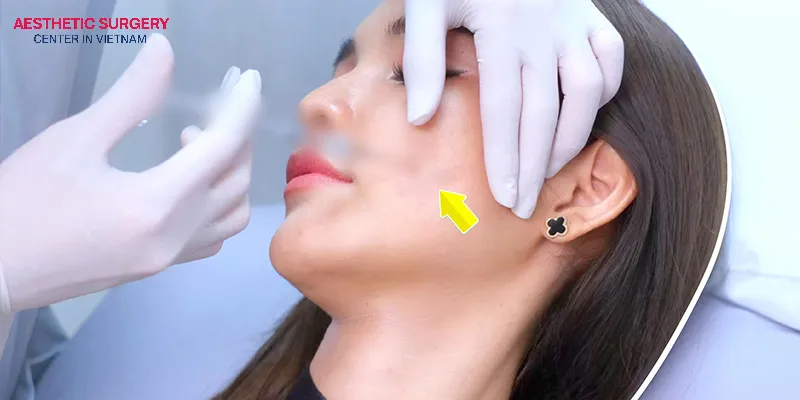
If a facelift scar becomes widened, distorted, or too visible due to poor previous technique, the surgeon may recommend surgical scar revision. In this method, the old scar tissue is removed and the wound is re-closed using more advanced aesthetic suturing techniques. This helps reduce the scar size or reposition the scar line into more hidden natural folds. This is the most definitive solution to “reconstruct” an unsatisfactory scar into a thinner, cleaner, and more discreet line.
How to minimise the appearance of scars
To minimise facelift scars as much as possible, you need a combination of proper medical technique and consistent personal care, including the following:
Follow a strict wound care routine
In the first few days, keeping the incision clean and dry is essential. You should gently cleanse the area with sterile saline solution as instructed by your surgeon, and avoid getting soap or cosmetic products on the sutures. Once the wound starts to close, applying a specialised scar treatment cream can create a protective barrier, maintain moisture, and prevent excessive collagen production. This helps the scar become flatter and softer.
Protect the scar from sun exposure
UV rays are the number one enemy of healing skin. Direct sun exposure can stimulate melanin cells, causing the scar to become darker and much harder to fade later. You should protect the area with a wide-brim hat or use sunscreen designed for sensitive skin consistently for at least 6 months to 1 year after surgery.
A healthy diet
A diet rich in Vitamins C, E, and zinc helps speed up skin regeneration and improves tissue quality. In contrast, you should strictly avoid foods that may trigger irritation or worsen scarring, based on common experience and medical advice, such as water spinach, beef, seafood, sticky rice dishes, and stimulants. Drinking enough water daily is also important to maintain natural hydration and support better skin elasticity around the incision area.

Limit pressure on the face
For at least the first month, you should avoid intense physical activity, bending your head down too often, or making exaggerated facial expressions such as laughing loudly or opening your mouth wide. These actions can create tension on the incision line, making scars wider or causing “track-like” scars. Sleeping on your back with your head elevated also helps reduce swelling and limits friction between the incision and the pillow, keeping the scar more stable during healing.
Keep the area moisturised
Moisturising the scar area helps prevent dryness and itching, reduces irritation, and supports faster healing. You can use fragrance-free, hypoallergenic moisturisers designed specifically for scar care to improve skin elasticity and significantly reduce the appearance of scars.
Based on the information shared about facelift scar, scars can fade significantly and may become almost invisible when the facelift is performed by a highly skilled cosmetic surgeon and followed by proper post-operative care. Therefore, when choosing a facelift, you should select a reputable aesthetic clinic to avoid unwanted risks.















Comment on the post