



If you have just undergone a hair restoration procedure, “cutting corners” with your workout routine can become a costly mistake. Sweat and the pressure from lifting weights may seem harmless, but they pose a hidden risk of displacing or infecting the newly implanted hair follicles. This article will explain in detail why it is necessary to limit exercise after hair transplant and provide the appropriate timeline to safely resume your training.
Why should you limit exercise after hair transplant?
Restricting physical activity after the procedure is mandatory to protect the newly transplanted follicles, which are currently in an extremely sensitive state. The first and most important reason is to avoid increased blood pressure in the scalp area. During high-intensity workouts, an elevated heart rate forces blood flow into the capillaries, which can cause hair transplant swelling, bleeding, or more seriously, push the new grafts out of their original positions.
Additionally, sweat produced during exercise creates an ideal environment for bacteria to thrive, easily leading to folliculitis (inflammation of the hair follicles) and itching, which may cause patients to accidentally scratch and damage the scalp.
Finally, sports activities carry the risk of physical impact or stretching of the skin in the donor and recipient areas, directly affecting the survival rate of the hair and the aesthetic healing of the wounds. Therefore, patiently stepping away from the gym during the first few weeks is a necessary “investment” to ensure your hair achieves the expected thickness and health.

When can you exercise after a hair transplant?
After a hair transplant, returning to your workout routine requires following a strict timeline to ensure the new hair follicles have enough time to take root and recover. Here are the critical milestones you need to keep in mind:
Phase 1: Days 1 to 5 – Absolute rest
During the first few days, the newly transplanted follicles on the scalp have not yet formed a secure bond. Any physical activity that increases your heart rate and blood pressure can cause bleeding or “pop” the grafts out. At this stage, you should rest completely, avoid bending your head downward, or doing heavy labor. Keeping the scalp stable and dry is the number one priority to reduce swelling and prevent the onset of infection.
Phase 2: Day 6 to day 14 – Light activity
After about a week, the tiny incisions begin to close and form hair transplant scabs. You can start with gentle exercises such as slow walking on flat surfaces or basic yoga, avoiding any inverted poses (head-down positions). However, you must strictly avoid excessive sweating on the scalp, as sweat and bacteria can cause itching or folliculitis (inflammation of the follicles). If you feel any tension or soreness in the scalp during movement, stop immediately.
Phase 3: From 2 weeks to 1 month – Gradual intensity
At this point, the hair follicles have begun to take root more securely. You can return to moderate-intensity exercises like light jogging, cycling, or low-impact cardio. However, experts still recommend avoiding contact sports such as soccer and martial arts, or lifting heavy weights. Overexertion during this phase can still increase internal pressure, affecting the blood circulation that nourishes the hair.
Phase 4: After 1 month – Resuming normal routine
After one month, the structure of the hair follicles is essentially fully integrated into the scalp. This is the time when you can comfortably return to the gym, lift heavy weights, or participate in contact sports without worrying too much about losing grafts. Notably, you can also go swimming again, as the scalp has fully healed and is less irritated by the chlorine in pool water. However, it is still advisable to protect your scalp from harsh sunlight if exercising outdoors.

Tips for safe exercise after hair transplant
To ensure your workout routine doesn’t affect the survival rate of your new hair follicles, besides following the recommended timeline, you should keep these small but crucial tips in mind:
- Control intensity and heart rate: During the first month, use a smartwatch or gym equipment to monitor your heart rate. Keep your heart rate at a low-intensity level. High blood pressure from intense exercise can cause sub-epidermal bleeding or put excessive pressure on the scalp.
- Prioritize a cool environment: Sweat is the “enemy” of newly transplanted follicles as it contains salt and bacteria, which can easily cause infection or itching. Opt for air-conditioned rooms or workout in the early morning/late afternoon when outdoor temperatures are lower. If you start to sweat, use a clean towel to gently pat (do not rub) the area to keep the scalp dry.
- Choose appropriate workout attire: Prioritize wide-neck T-shirts or zip-up jackets so you can change easily without touching the newly transplanted area. Strictly avoid tight-fitting pullovers, as the action of pulling them over your head can cause friction and accidentally dislodge newly rooted follicles.
- Protect the scalp from pressure and impact: For at least the first 2 weeks, avoid wearing tight sweatbands around your forehead or heavy helmets.
- Workout posture: Avoid exercises that require lying on gym benches where the transplanted area is pressed against the surface. If you must lie down, place a soft, clean towel underneath and ensure the transplanted area is not under direct pressure.
- Cleanse immediately after activity: After exercising and sweating, cleanse your scalp with cool water or a specialized shampoo prescribed by your doctor. However, remember to only rinse gently; do not scratch or use your fingernails to pick at any scabs that are peeling off.
What are the risks of exercising too soon after a hair transplant?
Rushing back to the gym earlier than medically advised can lead to severe consequences, not only compromising the aesthetic results but also wasting the significant time and financial investment you’ve made. Below are the primary hair transplant risks associated with premature physical activity:
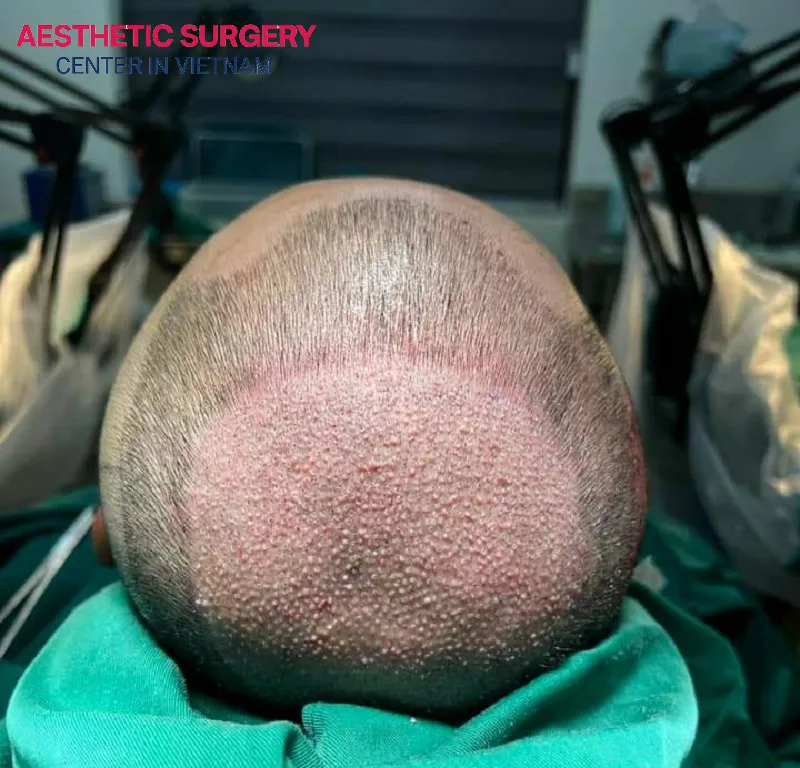
- Dislodging or losing hair grafts: This is the most critical risk during the first 7–10 days. Newly transplanted grafts are merely placed into tiny incisions and have not yet established a firm mechanical anchor or blood supply. Intense exertion and an elevated heart rate increase blood pressure in the scalp, which can literally “push” the grafts out. Additionally, bending over or accidental contact during exercise can cause grafts to be dislodged.
- Infection and folliculitis: When the tiny wounds at the recipient site haven’t fully closed, sweat combined with gym grime can lead to inflammation and pustules. A severe infection can completely destroy the hair follicles, preventing any future growth.
- Bleeding and swelling (edema): Exercise increases blood pressure and circulation. A sudden spike in blood pressure can rupture unstable capillaries at the transplant site, causing bleeding or oozing.
- Scar stretching: If you underwent the FUT method, there is a donor incision at the back of the head. Neck-straining exercises, heavy lifting, or shoulder tension can stretch the scalp at the nape. Exercising too soon may cause the wound to gape or leave a raised (keloid) hair transplant scars, which is unsightly and difficult to conceal later.
- Heat and sun damage: Working out outdoors or in hot environments leads to excessive sweating and UV exposure. Sunlight can sunburn the vulnerable skin, alter skin pigmentation, and weaken the vitality of the new grafts.
After reading this article, you likely understand why it is essential to limit exercise after hair transplant procedures to ensure optimal graft survival. We hope these insights regarding timelines and safety tips have eased your concerns. If you have doubts about a specific sport or activity, do not hesitate to consult your specialist. Be patient—a thick, healthy head of hair is waiting for you just ahead!











Comment on the post