



When deciding to get a hair transplant, many people wonder whether to choose FUE or FUT. These two methods may seem similar, but they have key differences, each with its own advantages and disadvantages. While FUT often leaves a long scar at the back of the head, FUE solves this aesthetic issue. To make the best choice before undergoing surgery, you need to understand the core fut and fue hair transplant difference. This article will help you clearly distinguish the two methods.
What is FUE?
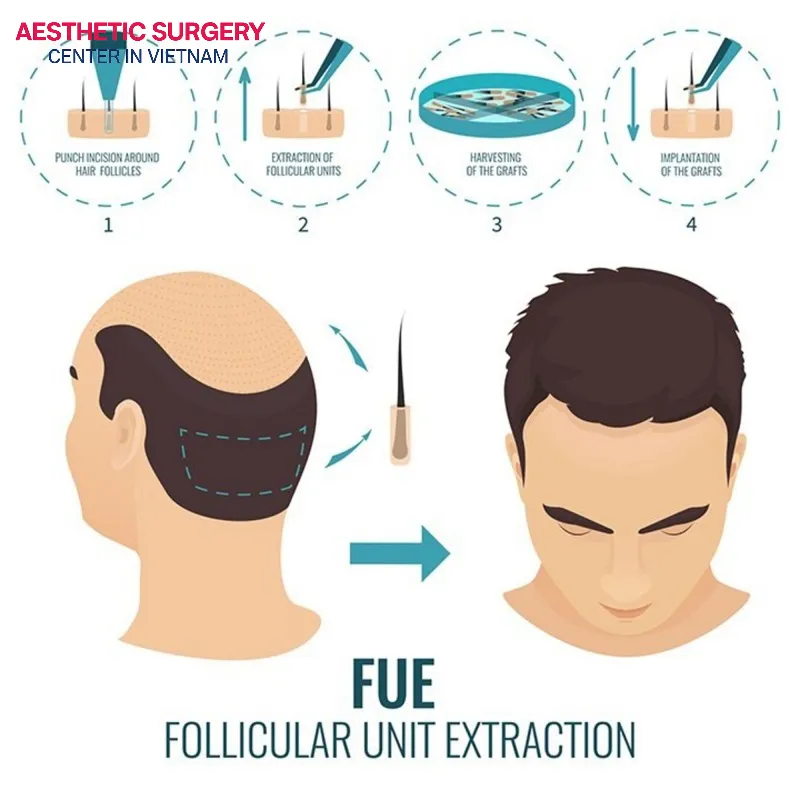
FUE stands for Follicular Unit Extraction. It is a modern, widely used method for hair transplantation. FUE involves carefully extracting individual hair follicles from the scalp using specialized equipment.
The FUE process works on a “drill and pull” mechanism. The doctor uses a tiny hollow drill with a diameter of only 0.6mm–1.0mm (about the size of a pen tip) to cut around the base of each follicle, separating it from surrounding tissue. Then, the follicle is gently removed with forceps. After extraction, the back of the head will have thousands of tiny holes. These heal naturally within a few days, leaving faint white dots that are barely visible.
According to the 2022 ISHRS survey, 75.4% of men worldwide who chose hair transplants opted for the FUE method.
What is FUT?
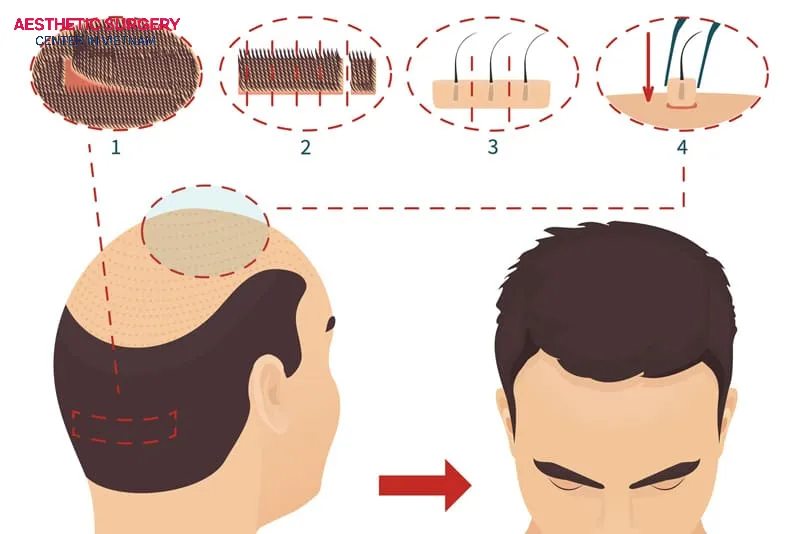
FUT stands for Follicular Unit Transplantation, also known as the strip hair transplant method. This is a traditional hair transplant technique that was the only standard for many years before FUE appeared. Although less common than FUE today, FUT still holds unique medical value, especially for severe baldness. This method is more invasive than FUE surgery.
The FUT procedure differs completely from FUE in the way follicles are harvested. The doctor surgically removes a strip of scalp about 1–1.5 cm wide and 15–20 cm long from the back of the head. After removing the strip, the edges of the scalp are carefully stitched together, usually using the Trichophytic closure technique so that hair can grow through the scar, making it less visible. The removed strip is then handed to technicians, who use a microscope to carefully divide it into thousands of small follicular units before transplanting them into the balding area.
3. What are the key differences between FUE and FUT hair transplants?
Typically, both fut and fue hair transplant difference methods can achieve similar results. However, they represent a significant leap forward in technology when comparing modern hair plugs vs transplant techniques from the past. While old-fashioned “plugs” often looked unnatural, today’s FUE and FUT methods differ mainly in procedure, recovery time, aesthetic outcome, and cost. Before choosing, you should understand these distinctions as outlined below:
Procedure
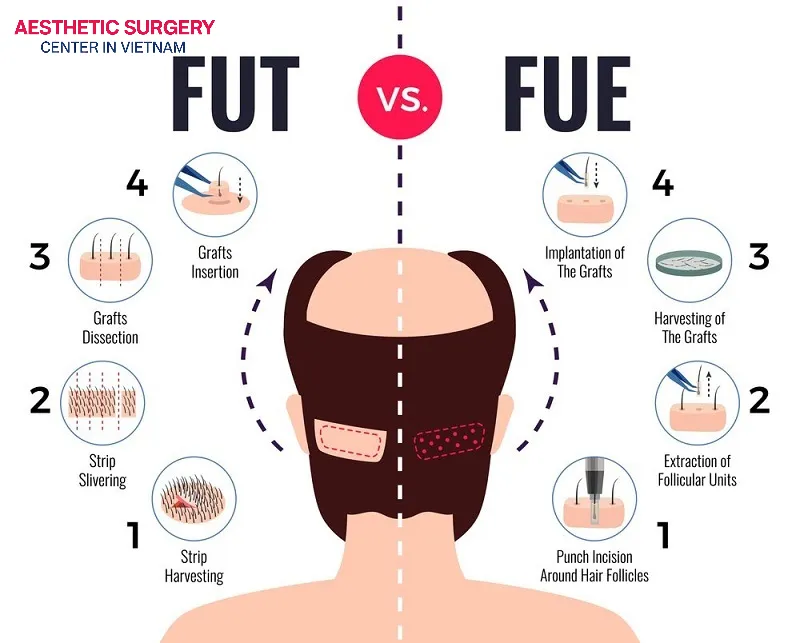
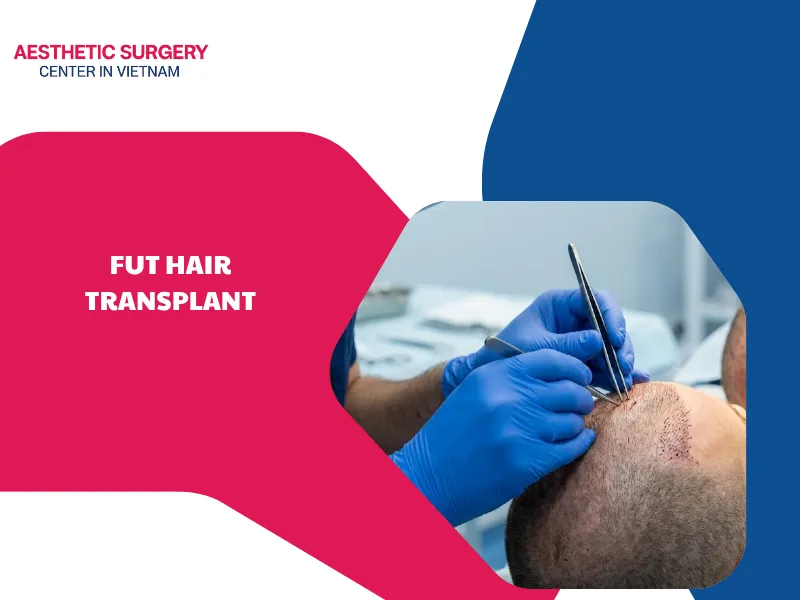
The biggest difference between FUT and FUE lies in how the doctor harvests hair from the donor area. With FUT, the doctor surgically removes a long strip of scalp from the back of the head, then stitches the wound closed. This strip is then carefully dissected under a microscope to obtain individual follicular units.
In contrast, FUE is less invasive. The doctor uses a specialized punch device with a very small tip (0.8–1.0 mm) to extract each follicular unit directly from the scalp without cutting or stitching. As a result, FUE requires more precision, effort, and time to complete compared to the quicker strip removal in FUT.
Recovery time
FUE has a clear advantage in comfort. Because it only creates tiny holes, FUE wounds heal quickly within 3–5 days, with minimal pain, and patients can resume normal activities almost immediately.
In contrast, FUT is a more invasive surgery that affects deeper tissue layers, so the hair transplant recovery process takes longer—typically 10–14 days until stitches are removed. Patients often experience pain and tightness in the back of the scalp and must avoid strenuous activity for the first few months to prevent stretching the scar.
Aesthetic outcome
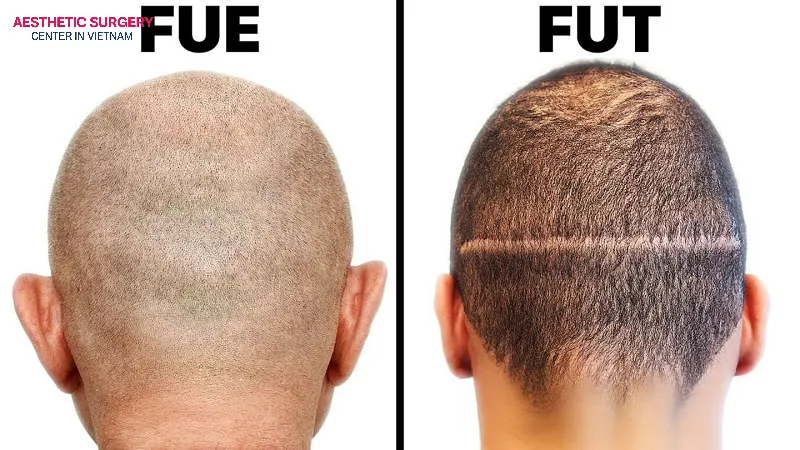
This factor determines the hairstyles you can wear afterward. FUT leaves a long horizontal hair transplant scar across the back of the head. Even with modern cosmetic stitching that produces a thin, thread-like mark, it can still be visible if you wear short hair or shave your head. Therefore, FUT is better suited for those who plan to keep their hair long to cover the area.
FUE, on the other hand, completely eliminates this drawback by creating thousands of tiny dot-like scars scattered across the donor area. These scars are small, fade quickly, and are nearly invisible even with short hairstyles like undercuts or military cuts. As a result, FUE provides a more natural appearance.
Cost
Due to differences in technology and procedure time, hair transplant costs for FUE are usually higher than for FUT—often 30% higher or even up to twice the price, depending on the clinic. This is because FUE requires the doctor to manually extract thousands of follicular units over several hours, demanding high concentration and advanced equipment. FUT is generally less expensive because the doctor’s surgery time is shorter, and most of the follicle dissection is handled by a technical team, optimizing labor costs.
Which hair transplant procedure is more painful?
Usually, during fut and fue hair transplant difference, you won’t feel pain because the doctor uses local anesthesia. However, a few days after the procedure, both methods can cause soreness and scalp sensitivity.
FUT is generally more painful because a strip of skin is removed and the edges are stretched for stitching, creating tightness and heaviness in the back of the scalp. This discomfort usually lasts about 5–7 days. If the pain is hard to tolerate, you can consult your doctor for pain relief medication.
Which procedure looks more realistic?
Both FUE and FUT produce equally natural-looking results in the new hair. Since the donor hair comes from your own scalp, the outcome appears realistic and not artificial. However, FUT leaves a small linear scar at the back of the head, which can make it slightly less natural in appearance compared to FUE, though the scar is usually hidden by surrounding hair. If your main concern is the natural look, either method can be chosen safely.
Is there a difference in success rate between FUE and FUT?
Some studies suggest that FUT may have a slightly higher success rate than FUE. In practice, however, the success rate of both methods is very similar, around 90–95%.
Other factors, such as the surgeon’s experience and post-operative care, significantly affect the final outcome. Choosing an unqualified provider is the leading cause of a hair transplant gone wrong, resulting in poor growth or unnatural scarring. Therefore, the most important factor is selecting a reputable clinic with skilled doctors to ensure safety, maximize the graft survival rate, and achieve your desired aesthetic goals.
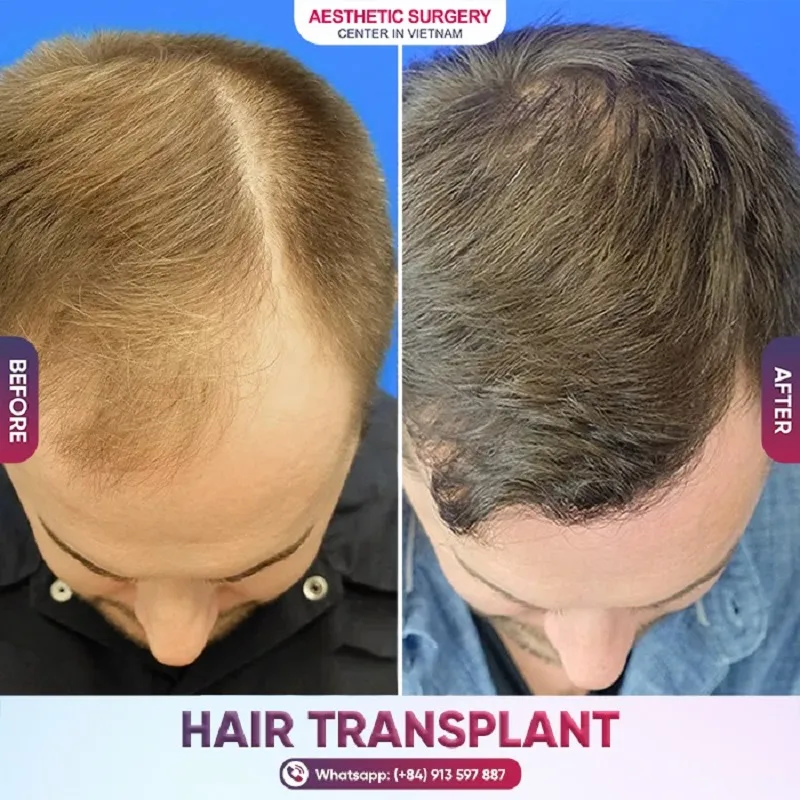
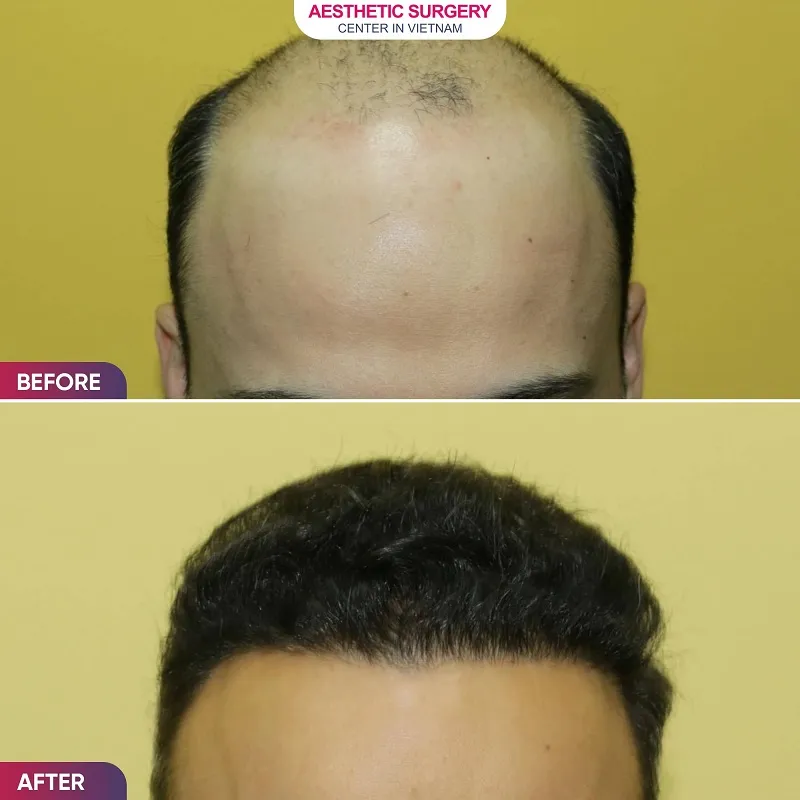
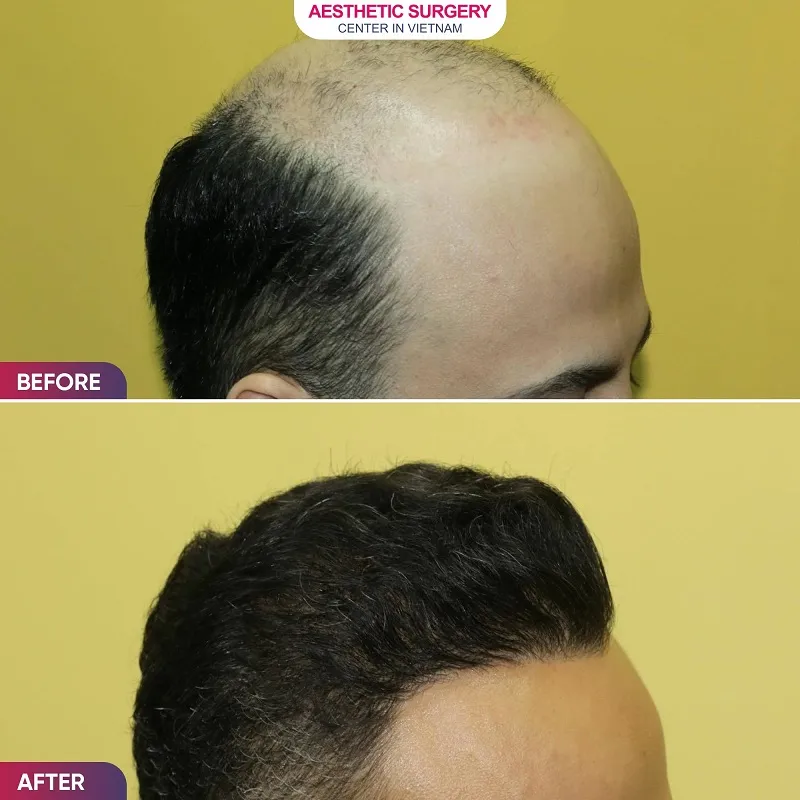
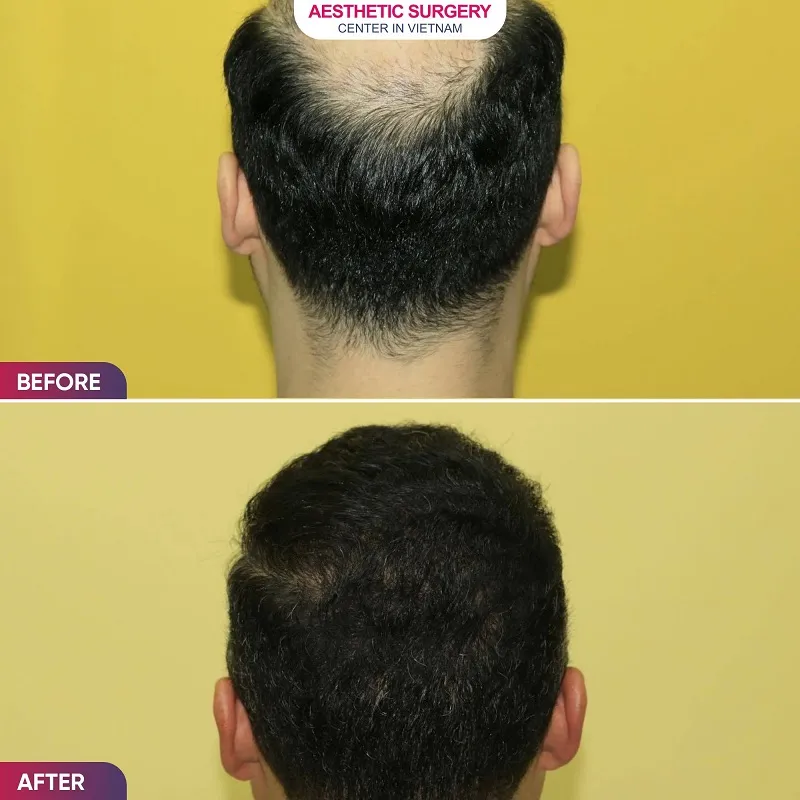
FUT vs FUE results in pictures
The results of FUT and FUE are almost identical. To see the outcomes, you can refer to real patient photos after hair transplants below:
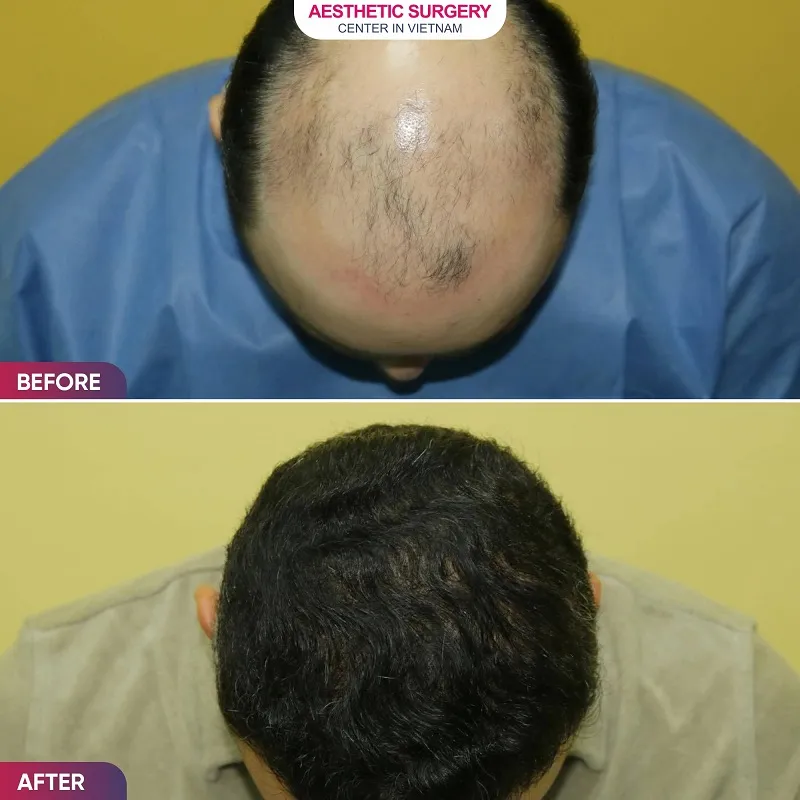
Which hair transplant method is right for you?
Each person has different hair loss patterns, budget, number of grafts, and preferences. Therefore, there is no one-size-fits-all answer. To find out which method suits you best, visit a reputable clinic for consultation and examination so that a doctor can provide the most accurate recommendation.
This article has detailed the fut and fue hair transplant difference to help you navigate your hair restoration options. You should now understand how the two methods differ and have a clearer idea of which procedure to choose. If you are still unsure, consult experienced hair transplant specialists at a trusted clinic for a personalized consultation.













Comment on the post