



Scarring is a concern for many when considering a hair transplant, as the aesthetics of the scalp are very important. Understanding the common types of scars can help you choose the right method and a reputable clinic, ensuring effective hair restoration while maintaining a natural appearance without visible scars. In this article, Aesthetic Surgery Center will answer all your questions about hair transplant scars, helping you feel more confident in your beauty journey.
Does hair transplant leave scars?
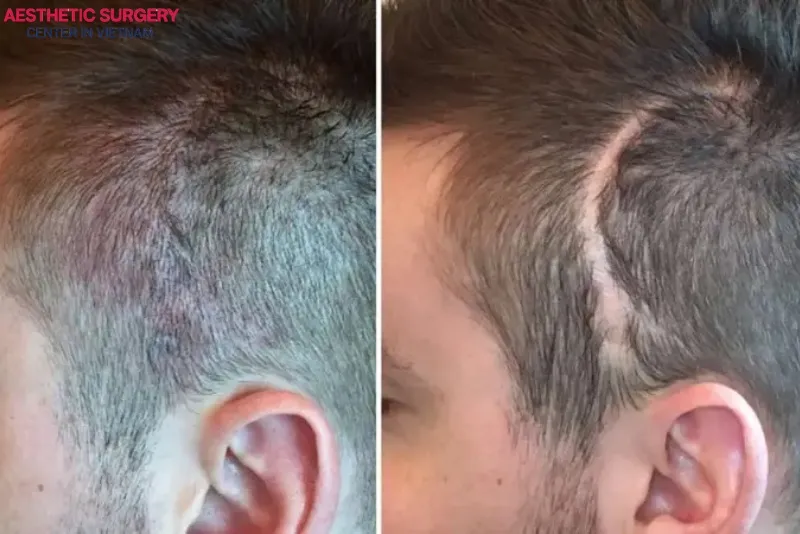
Hair transplantation is an effective method for restoring hair and addressing baldness or significant hair loss, but many people worry about potential scarring. In reality, scar formation depends on the transplant technique, the procedure itself, and individual body characteristics.
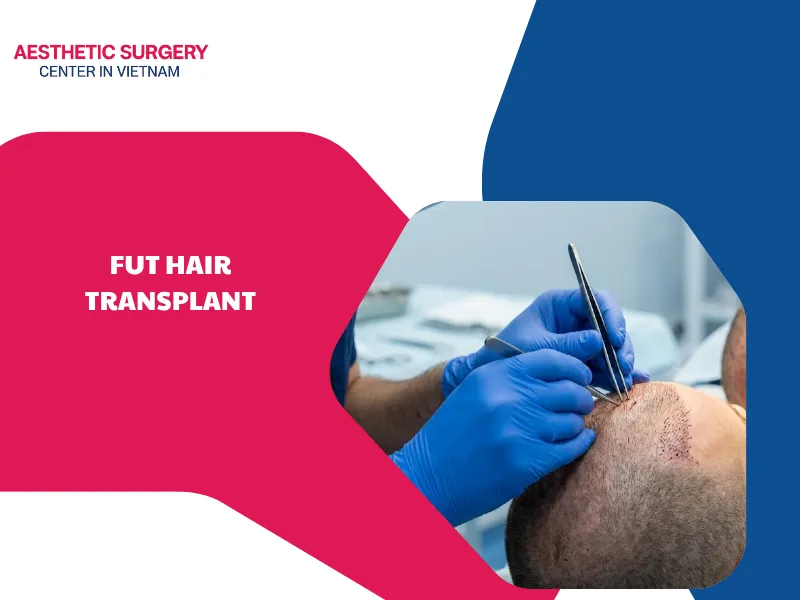
With the FUE technique, hair follicles are extracted individually and implanted into the thinning area, leaving tiny dot-like marks that are almost invisible once the hair grows. This high aesthetic value and minimal scarring make FUE a popular choice.
On the other hand, FUT involves removing a strip of skin from the donor area, which can leave a thin linear scar at the back of the head. However, this scar is usually covered by surrounding hair and rarely affects aesthetics if properly cared for. Individual body response also plays a role—those prone to keloid, hypertrophic, or slow-healing scars should consult their surgeon carefully before the procedure.
In conclusion, hair transplantation can leave scars, but with the right method and a reputable clinic, scars are minimal and nearly invisible, ensuring they do not impact the overall aesthetic results.
>>> See more: When can I wash my hair after a hair transplant?
Common types of scars after hair transplant
After a hair transplant, scar formation can occur depending on the technique used, individual body response, and post-procedure care. Understanding the common types of scars can help you prepare and choose the most suitable method.
FUE hair transplant scars
FUE is a modern hair transplant technique highly valued for its minimal scarring compared with traditional methods. However, like any cosmetic procedure, FUE can still leave some minor scars, though they are very small and hard to notice.
During FUE, the surgeon extracts individual hair follicle units using a tiny punch tool, usually 0.6–1mm in diameter. Each extraction leaves a small dot on the scalp, which heals into tiny white scars. These scars are scattered and do not form a linear mark like FUT, and they are generally well covered by surrounding hair.
The visibility of FUE scars depends on:
- The surgeon’s skill and technique, ensuring proper density and spacing to avoid thinning in the donor area.
- The size of the punch tool—the smaller the tool, the less visible the scars.
- The scalp condition and individual healing ability.
Overall, when performed at a reputable clinic, FUE scars are very faint and almost unnoticeable, even with short hair, providing natural and aesthetically pleasing results.
Donor area scars after FUT hair transplant
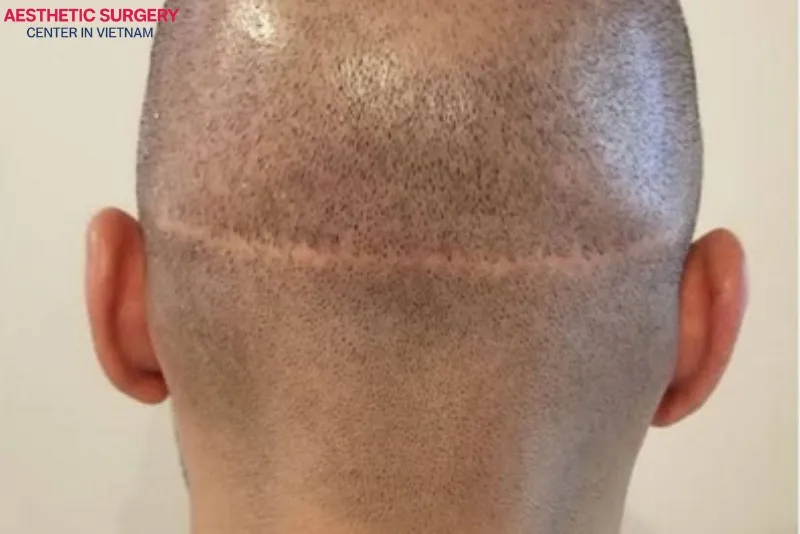
In the FUT method, the surgeon removes a strip of scalp containing hair follicles from the back of the head, then separates it into individual follicles for transplantation to thinning areas. Because a long incision is required to harvest the tissue, FUT almost always leaves a linear scar in the donor area.
After healing, this scar usually appears as a thin, horizontal line with a light white color. The visibility of the scar depends on several factors:
- The width of the incision and the suturing technique—stitching in the correct layers and using aesthetic methods—help make the scar thinner.
- The tighter the scalp, the more likely the scar will widen.
- Individual scar tendencies vary; some cases may develop keloid or hypertrophic scars.
- Hair length after healing also affects visibility, with medium to long hair effectively covering the scar.
Although FUT can leave a more noticeable scar compared with FUE, it remains suitable for those needing a large number of hair follicles, as it allows harvesting many follicles in a single session. When performed by an experienced team, FUT scars can be well-managed, thin, and inconspicuous in everyday life.
Overharvesting the donor area
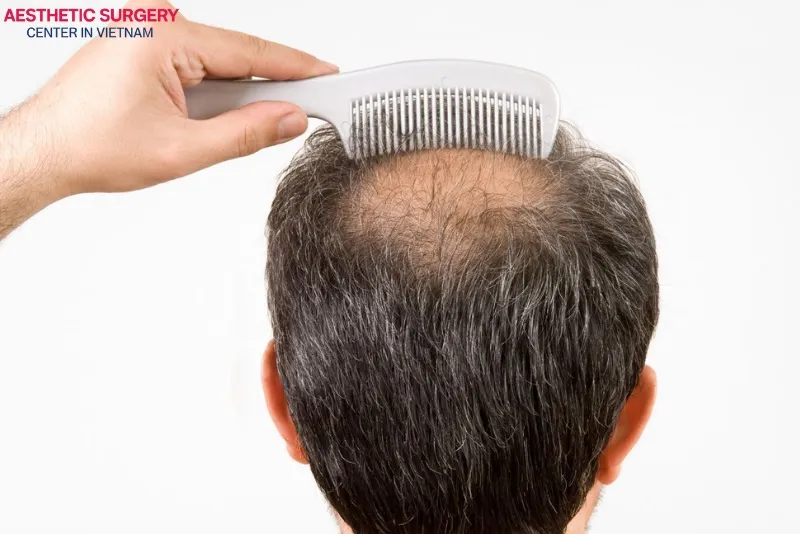
Overharvesting occurs when the surgeon removes too many hair follicles from the donor area—usually the back of the head and temples—exceeding the natural coverage capacity of the remaining hair. This is one of the common reasons why post-transplant scars become more visible and less aesthetic. When the donor area is overharvested, the following issues may arise:
- Hair becomes patchy, reducing density and making the scalp more visible, especially with short hair.
- Dot scars become denser; with FUE, if extraction points are too close, the white dot scars may cluster, creating a patchy appearance.
- Imbalanced hair density causes the donor area to appear thinner than the transplanted area, resulting in an unnatural overall look.
- Excessive follicle removal can damage the scalp, reducing elasticity and increasing the risk of larger scars or surface irregularities.
This problem often occurs at clinics lacking expertise or when surgeons miscalculate optimal density. To prevent it, the donor area should be carefully evaluated, extraction points properly distributed, and the procedure performed by highly skilled specialists to ensure enough follicles for transplantation while maintaining a natural appearance in the donor area.
Recipient area scars
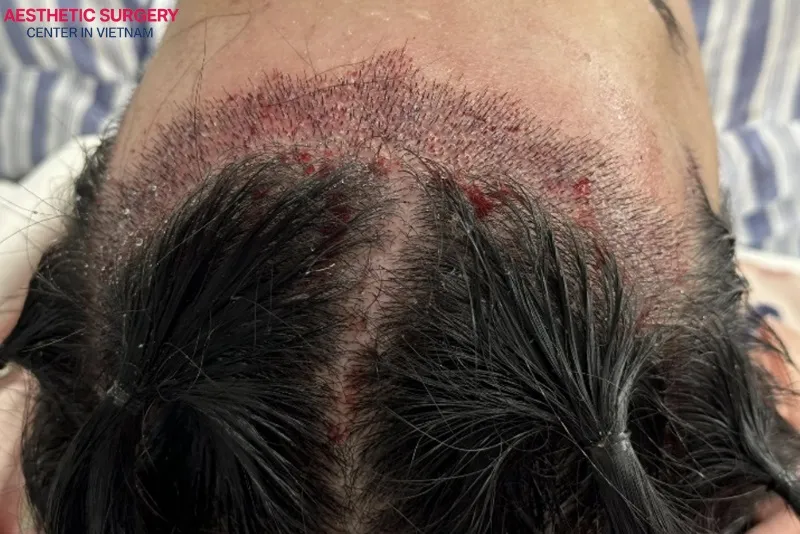
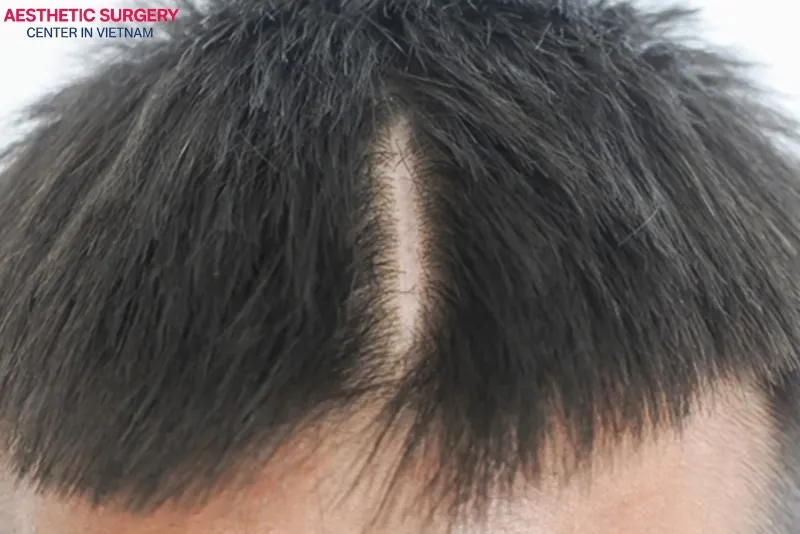
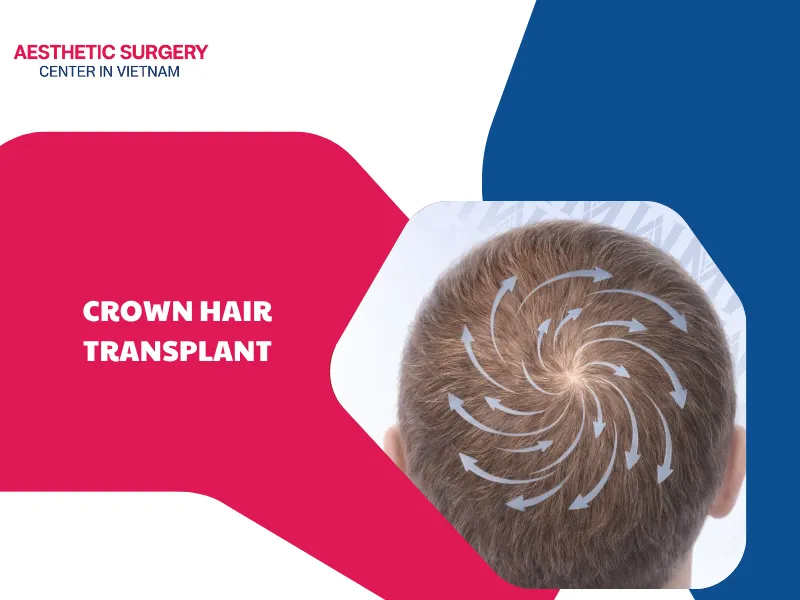
Recipient area scars appear in the regions where hair follicles are transplanted, typically on the forehead, crown, or hairline. Although modern techniques like FUE minimize invasiveness, scars in the recipient area can still occur if the procedure is not performed properly.
Common causes and signs include:
- Transplanting hair too densely, when the surgeon implants too many follicles into a small area, can damage the scalp, leading to small scars, skin contraction, or an uneven surface.
- Implanting into weak or inflamed scalp can make follicles difficult to take and increase the risk of scarring.
- Each person’s healing response is different; some are prone to dark scars, hypertrophic scars, or keloids even when the technique is precise.
- Incorrect incision technique, such as improper angle or depth, can tear tissue or leave small indentations after healing.
Typical signs of recipient area scars include tiny white dots, slight indentations, rough skin texture, uneven hair density, and gaps between hairs. Some follicles may grow weakly or not at all due to scarring interference.
>>> See more: Fut and fue hair transplant difference
Safe and reputable hair transplant clinic in Vietnam – PR Aesthetic Surgery Center
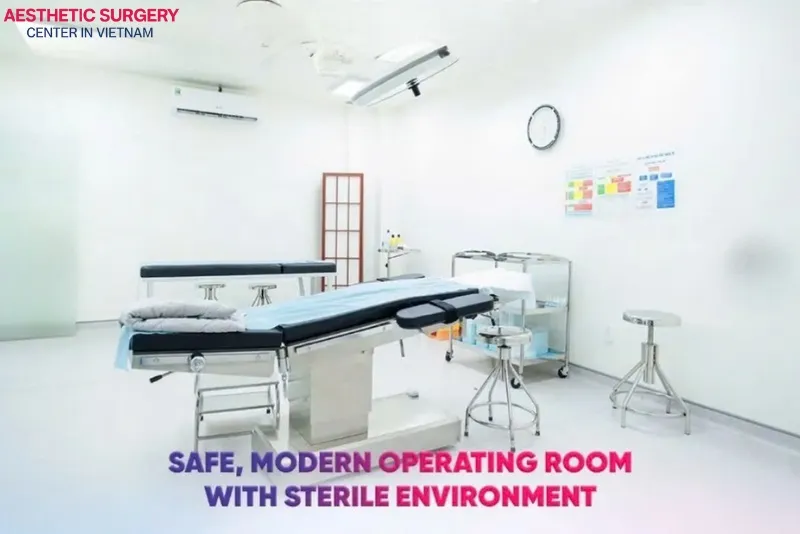
If you are looking for a safe, prestigious, and reliable hair transplant clinic in Vietnam, Aesthetic Surgery Center is an excellent choice. Built to high-end standards, the clinic meets international medical requirements. Its luxurious space includes elegant waiting areas, sterile treatment rooms, and carefully controlled lighting and temperature to ensure comfort and safety throughout the procedure.
Aesthetic Surgery Center offers advanced hair transplant technologies such as FUE and FUT, featuring minimal invasiveness, maximum scar reduction, fast hair transplant recovery, and high precision. With implantation following the natural hair growth direction, transplanted hair grows strong, thick, smooth, and long-lasting.
In addition to advanced technology, the team at Aesthetic Surgery Center consists of highly experienced hair transplant specialists. The extraction and implantation process is performed meticulously to preserve hair follicles and achieve up to a 90% survival rate after transplantation. Surgeons also calculate optimal implantation density to fully cover bald areas while ensuring adequate blood flow, helping hair grow strong, healthy, and naturally.
Aesthetic Surgery Center places special emphasis on post-operative care, a key factor in achieving the best results. After the procedure, patients receive detailed guidance on scalp care, washing, nourishing, and daily habits, along with regular follow-ups with surgeons to ensure healthy follicle growth, minimize hair transplant risks, and promptly address any issues. The support team is available throughout the recovery process, providing complete peace of mind.
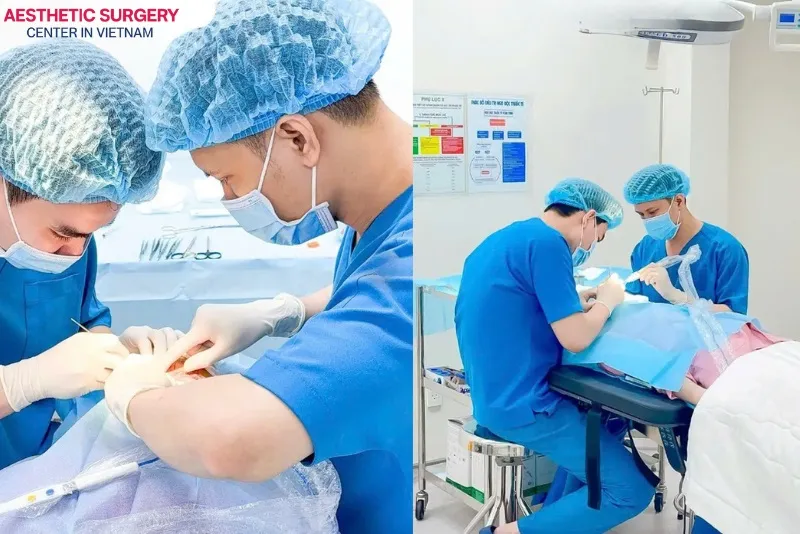
With advanced technology, highly skilled surgeons, and comprehensive care, Aesthetic Surgery Center is the ideal choice for anyone seeking a natural, aesthetic, and long-lasting hair restoration.
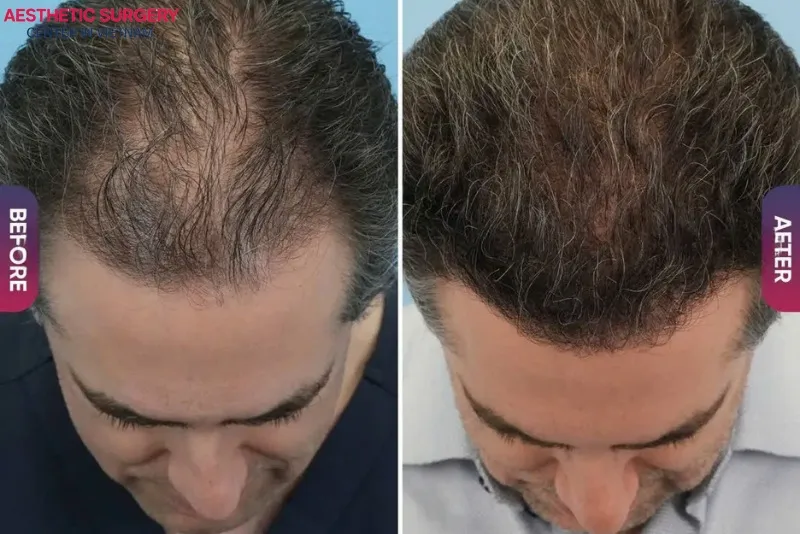
In summary, understanding hair transplant scars and the common types of scars can help you prepare better before undergoing a transplant. Choosing the right method, a reputable clinic, and an experienced medical team not only minimizes scarring but also ensures natural-looking results, with healthy, evenly growing hair. Aesthetic Surgery Center hopes this knowledge will help you have a safe, effective hair transplant while maintaining a confident appearance for the long term.
>>> See more: How long does a hair transplant take?











Comment on the post