



The biggest concern for many people when considering a hair transplant is not pain, but the need to shave part or all of the scalp. This causes inconvenience and loss of confidence in daily work and communication. Understanding this concern, no shave hair transplant was developed. This method helps restore thick, natural hair while keeping the cosmetic procedure completely discreet. Discover the “transplant without looking like a transplant” solution that is leading the current trend in this article.
Do you need to shave your head for a hair transplant?
According to leading aesthetic surgeons, shaving the head is not always required for a hair transplant. In modern aesthetic medicine, whether shaving is needed depends on the method you choose and the number of hair follicles to be transplanted.
With traditional hair transplant methods such as basic FUE, surgeons usually require shaving the donor area, often the back of the head. This helps with easier follicle extraction and ensures hygiene. However, with the development of no shave hair transplant techniques, this psychological barrier has been completely eliminated.
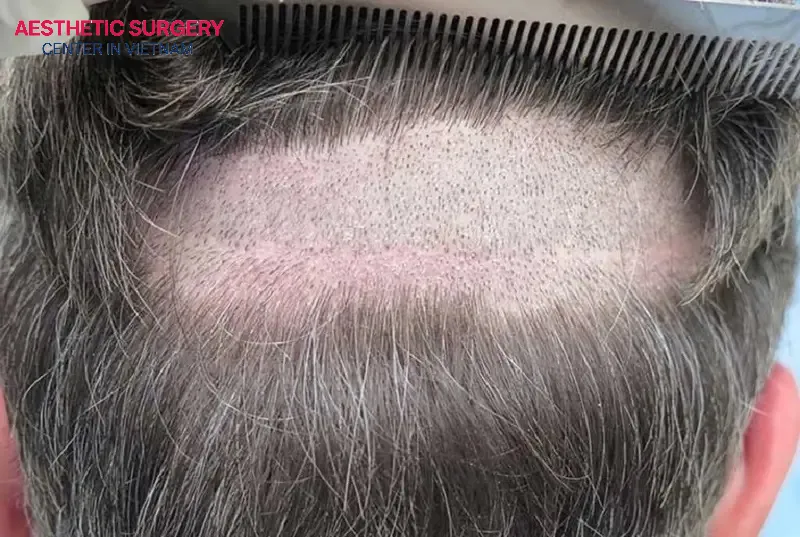
With this method, specialists use specialized devices to extract long hair follicles directly and implant them into thinning or bald areas without affecting the length of the existing hair. This is an optimal solution for people whose jobs require frequent communication or for women who want to keep their current hairstyle.
However, it should be noted that long-hair, no-shave hair transplant techniques require surgeons with very high skill levels. The procedure takes more time and the cost is higher than conventional shaved methods. In contrast, shaving is still chosen by many men because it allows surgeons to work more easily, observe the hair growth angle more accurately, and makes post-operative scalp hygiene more convenient, thereby minimizing the hair transplant risks of infection. In summary, you can completely choose a hair transplant without shaving your head, as long as you select the right technology and a reputable aesthetic clinic.
Who is suitable for a no-shave hair transplant?
A no-shave hair transplant is a technique that requires great precision and delivers immediate aesthetic results after the procedure. However, due to its technical demands and higher cost, this method is usually recommended for the following groups:
- Individuals with mild to moderate hair loss, mainly thinning at the crown or hairline, without complete baldness.
- Individuals who want to improve thinning or balding areas while maintaining their appearance immediately after the procedure.
- Individuals with thin hair density, cowlicks, a high or uneven hairline, or mild baldness.
- Women, business professionals, artists, and people working in public-facing fields who need to maintain their image and do not want visible signs of hair transplant surgery or shaved hair.
People who want instant visual results without waiting for the hair to grow long.
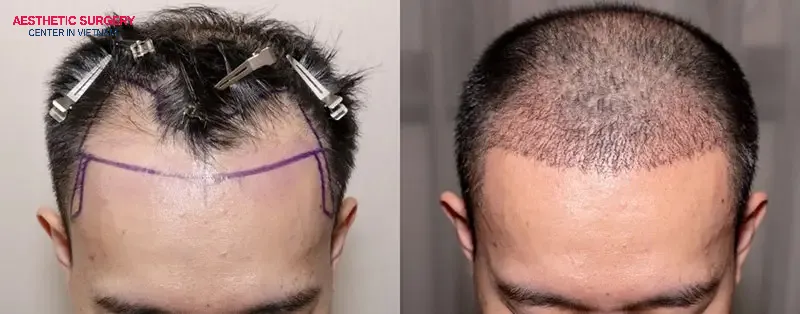
No-shave hair transplant methods
With the advancement of medical technology, there are now several methods that help restore hair density without shaving the donor or recipient areas. Below are two typical techniques:
Completely Unshaven Hair Transplant:
This is currently the most advanced technique. It allows the entire hair length to be preserved, from the donor area at the back of the head to the recipient area. The surgeon uses ultra-fine specialized devices to work between long hair strands, carefully selecting and extracting healthy hair follicles. These long hair follicles are then implanted directly into the thinning or balding areas without using clippers or scissors.
Immediately after the 4–6 hour procedure, patients can see visibly thicker hair in the mirror. There are no obvious redness or hair transplant scars because the surrounding long hair fully covers the treated areas.
Partially Unshaved Hair Transplant:
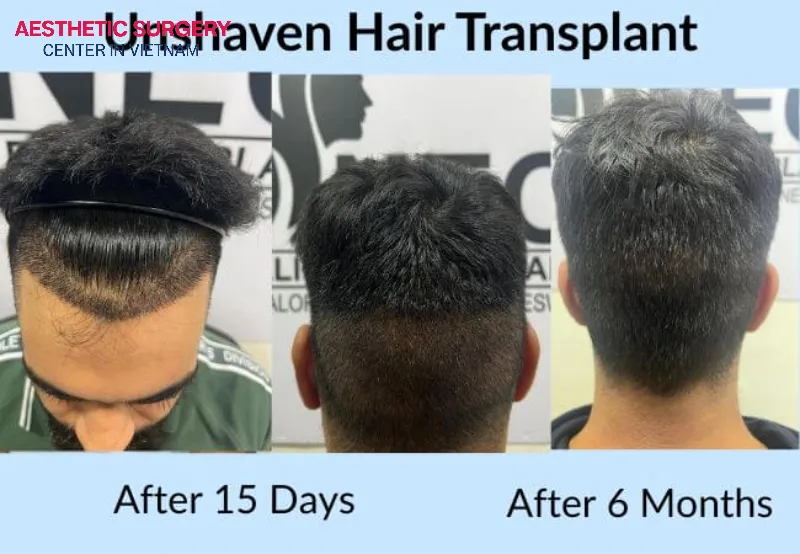
This is a balanced method that combines technical efficiency with aesthetics. It is often chosen by office workers and women. The surgeon shaves a small area at the back of the head, usually in a rectangular or “window” shape, to make follicle extraction faster and more precise. After the follicles are harvested, the longer hair above is released to fully cover the shaved area.
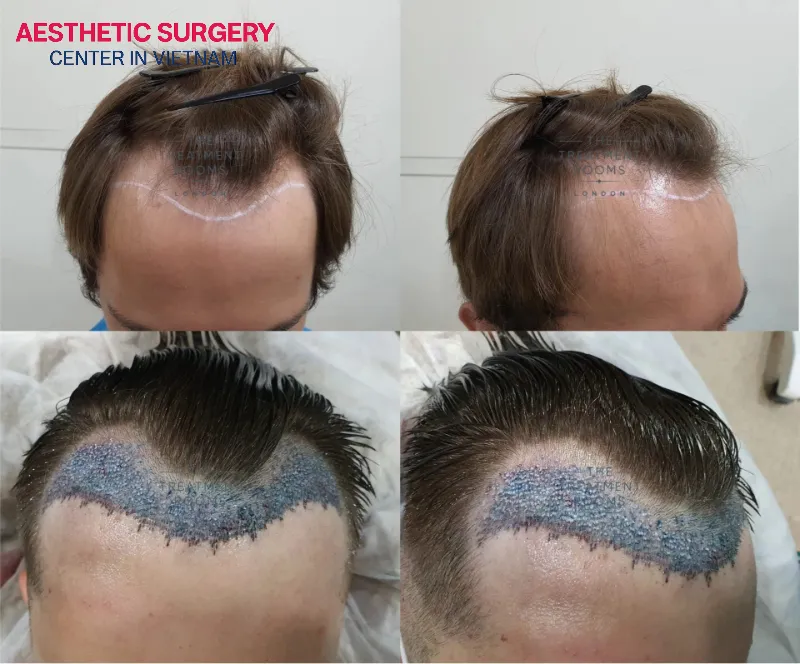
The process of no shave hair transplant
A no shave hair transplant is a delicate cosmetic procedure. It requires high concentration and advanced skills from the medical team. Compared to a traditional hair transplant, this method takes more time because the surgeon must work carefully with long hair.
Below are the standard medical steps of a hair transplant without shaving procedure:
Step 1: Consultation, measurement, and hairline design
Before the procedure, the surgeon uses a hair follicle analysis device to assess hair density in both the donor area and the recipient area. Then, the surgeon designs a new hairline that matches the patient’s facial proportions. This step is very important. When the hair is not shaved, the surgeon must accurately visualize the natural growth direction of existing hair to implant new follicles seamlessly.
Step 2: Disinfection and local anesthesia
To ensure comfort and eliminate pain, both the donor and recipient areas are carefully disinfected and injected with local anesthesia. Throughout the procedure, the patient remains fully awake and can use a phone, listen to music, or talk with the medical team.
Step 3: Ultra-micro follicle extraction
This is the most difficult step in a no shave hair transplant. Instead of using clippers, the surgeon uses a specialized punch device with an ultra-fine tip. The tool moves carefully between long hair strands. The surgeon gently extracts each follicle from the scalp without damaging the attached long hair. The extracted follicles are immediately placed in a special preservation solution to maintain maximum viability.
Step 4: Follicle classification and microscopic inspection
After extraction, technicians examine the follicles under a high-magnification microscope. The follicles are classified into groups such as single-hair, double-hair, or triple-hair grafts. This step ensures even density and a natural growth pattern in the recipient area.
Step 5: Hair implantation using the Choi pen
In the recipient area, the surgeon usually uses a DHI implanter pen:
- Long hair follicles are loaded into the pen tip.
- The surgeon performs a press-and-release motion to implant the follicle directly into the scalp without creating incisions in advance.
- This technique allows precise control of depth, angle, and direction, helping the new hair blend naturally with existing hair.
Step 6: Final inspection and post-procedure guidance
After implanting the required number of follicles, the surgeon checks the entire transplant area to ensure proper placement and stability. The donor area at the back of the head is lightly bandaged and usually hidden by surrounding long hair. The patient can go home the same day and receives detailed instructions on washing, scalp care, and follow-up visits.
>>> See more: When can I wash my hair after a hair transplant?
How much does a no shave hair transplant cost?
A no shave hair transplant usually more than a traditional hair transplant cost because it requires meticulous techniques, longer procedure time, and highly skilled surgeons.
In Vietnam, the price is commonly calculated per hair follicle or per procedure. No shave hair transplant methods are typically 1.5 to 2 times more expensive than shaved hair transplant techniques. Average cost: Ranges from 60,000 VND to 100,000 VND per hair follicle. Meanwhile, shaved hair transplant procedures usually cost only 30,000 VND to 50,000 VND per hair follicle.
Depending on the size of the thinning or balding area, the total cost usually falls into the following ranges:
| Procedure scale | Number of grafts (Estimated ) | Estimated total cost |
| Small case (hairline restoration, scar coverage) | 500 – 1,000 grafts | 40 – 70 million VND |
| Medium case (M-shaped recession, thinning crown) | 1.000 – 2.000 grafts | 80 – 150 million VND |
| Large case (extensive baldness level 4–5) | Over 2.500 grafts | Trên 180 million VND |
Frequently asked questions about no shave hair transplant
How long does it take to heal after a hair transplant without shaving?
The biggest advantage of a no shave hair transplant is the very fast aesthetic hair transplant recovery time. Because the hair is not shaved, the transplanted areas are naturally covered by existing hair right after the procedure.
However, complete healing and visible hair growth usually take 3–6 months for new hair to start growing. Optimal results are typically seen after 12–18 months.
Can women have a hair transplant without shaving?
In fact, women can absolutely choose a hair transplant without shaving. This is actually the most preferred option for women. Unlike men, who may accept shaving their head, women have higher aesthetic demands. Exposed shaved scalp is a major concern. Therefore, modern hair transplant techniques for women are designed to preserve existing long hair. This is why no shave hair transplant is widely chosen by hair transplant for women patients.
Overall, no shave hair transplant offers many advantages and is popular with both men and women. However, it is important to choose a reputable clinic with experienced surgeons to ensure safety and avoid unwanted risks.
>>> See more: How does hair transplant work?











Comment on the post