



Owning a thick, smooth head of hair is the dream of anyone facing baldness or thinning hair. However, amidst the expectations of a new look, the question “does hair transplant hurt?” remains the biggest barrier causing many to hesitate. Is this scalp intervention truly as “scary” as we imagine? Read this article for a detailed answer!
Does hair transplant hurt?
In reality, with the advancement of modern medicine, this process is not nearly as daunting as many believe. Throughout the surgery, you will feel almost no pain thanks to the effects of local anesthesia injected into both the donor and recipient areas.
The most uncomfortable sensation usually only lasts for the first 30 to 60 seconds when the doctor administers the anesthetic injection. After that, the scalp becomes numb, allowing you to relax, browse your phone, or even fall fast asleep.
Once the anesthesia wears off, you may feel some tightness, mild soreness, or a tingling sensation on the scalp. However, these symptoms are entirely manageable and will subside quickly within 1 to 3 days with the help of pain relief and anti-inflammatory medications prescribed by your doctor.
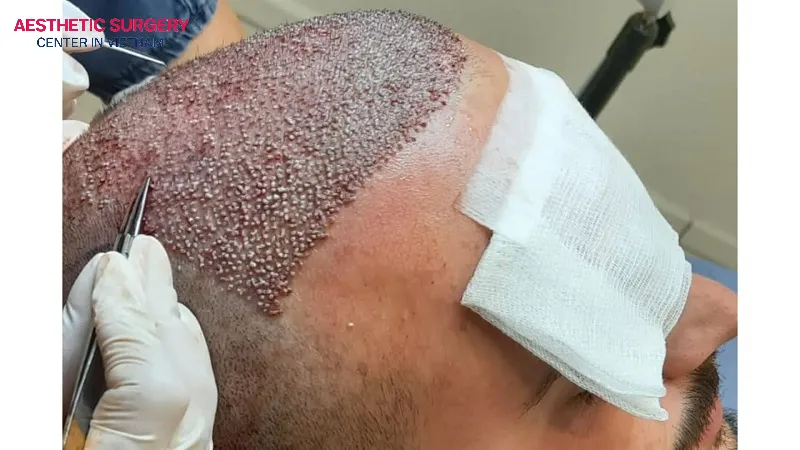
What causes pain during a hair transplant?
Although you will typically not feel any pain during the procedure, in some cases, discomfort can still occur. However, the level of pain varies depending on each stage of the process. To answer the common question, “does a hair transplant hurt”, let’s look at the specific factors involved:
The local anesthesia injection at the start of surgery
The scalp area will no longer feel pain once the doctor begins extracting and grafting follicles, but local anesthesia must be injected first. The sharp sting from the needle and the pressure as the anesthetic enters the subcutaneous tissue are the immediate causes of discomfort. Fortunately, this pain usually lasts only a few minutes until the numbing effect takes full hold.
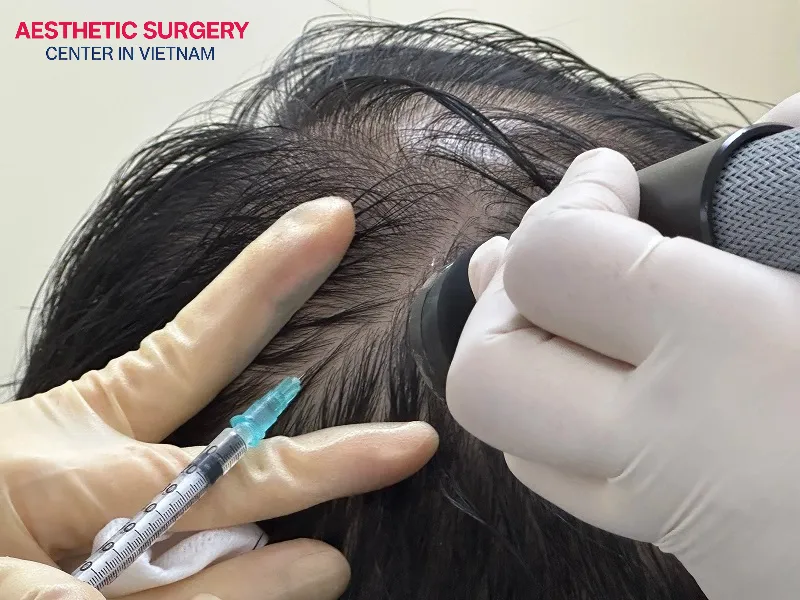
Invasive impact during follicle extraction and implantation
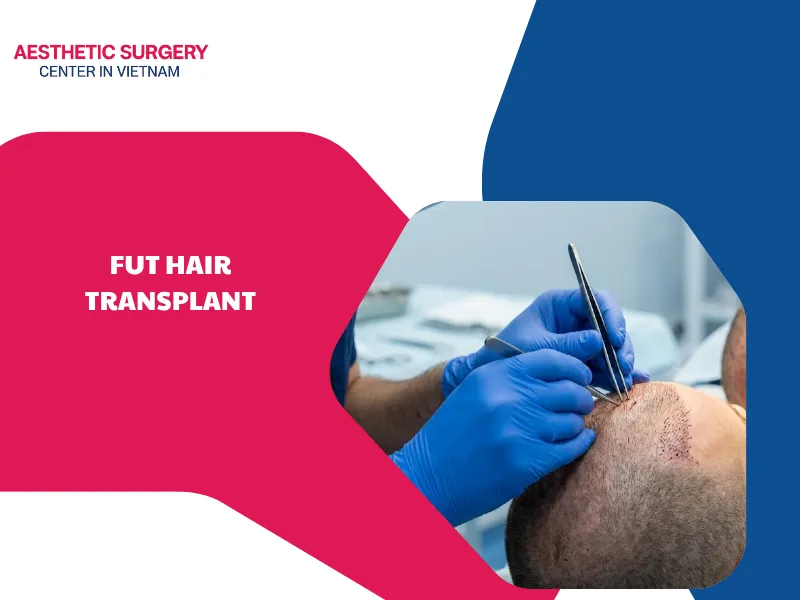
Whether using the FUT (strip surgery) or FUE (follicular unit extraction) method, doctors must use specialized tools to impact the dermal layer of the scalp. Creating thousands of tiny incisions to place the new follicles results in micro-trauma. As the anesthesia begins to wear off after the major procedure, these open wounds can cause sensations of soreness, tenderness, and stinging.
Post-operative inflammatory response and swelling
After the transplant, the body activates its self-healing mechanism, leading to a natural inflammatory response. The scalp often becomes swollen (edema) due to fluid accumulation and increased blood flow to the injured area to nourish the new follicles. The tightness of the scalp during after hair transplant swelling compresses sensory nerve endings, creating a dull ache that typically lasts for the first 2–3 days.
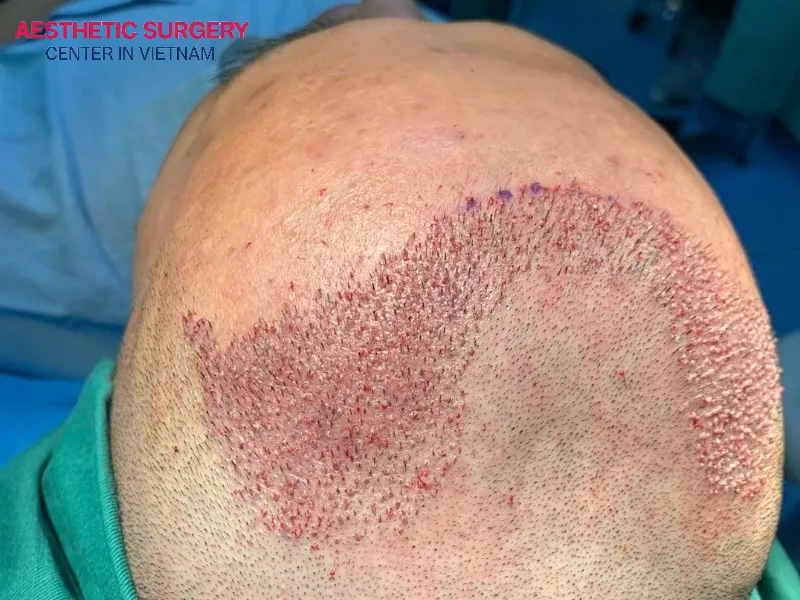
The scabbing and new hair growth process
About a week after the transplant, the wounds begin to scab over and new skin forms. This process often causes intense itching and sometimes a burning sensation if the patient accidentally scratches or touches the area firmly. Additionally, the regeneration of small nerves can cause mild “zaps” or fleeting sharp pains, which are normal signs of tissue recovery.
Does pain affect my transplant results?
In reality, the sensation of pain itself does not directly damage the hair follicles. However, your body’s physiological reactions and your physical actions in response to pain can impact the final outcome. Here are three indirect effects you should be aware of:
- Vascular constriction caused by stress: When you endure excessive pain without supportive medication, your body enters a state of stress, releasing hormones like cortisol and adrenaline. These substances can cause localized vasoconstriction, reducing the blood flow that nourishes the newly transplanted follicles—which are “starving” for oxygen and nutrients to take root within the first 72 hours.
- Risk of self-inflicted injury while trying to soothe pain: When a hair transplant is painful and accompanied by itching or burning, many people unconsciously touch, scratch, or rub the scalp for relief; however, these behaviors can increase common hair transplant risks. Even a minor physical impact can dislodge a follicle from its position, and once a follicle is dislodged, hair will no longer be able to grow in that specific spot.
- Impact of swelling (Edema): Pain often goes hand-in-hand with swelling. If the edema is severe and prolonged—due to not keeping the head elevated or failing to use cold compresses—the pressure from fluid buildup under the skin can compress the tiny blood vessels feeding the follicles. While this may not cause the entire transplant to fail, it can decrease the survival rate of follicles in the most swollen areas.
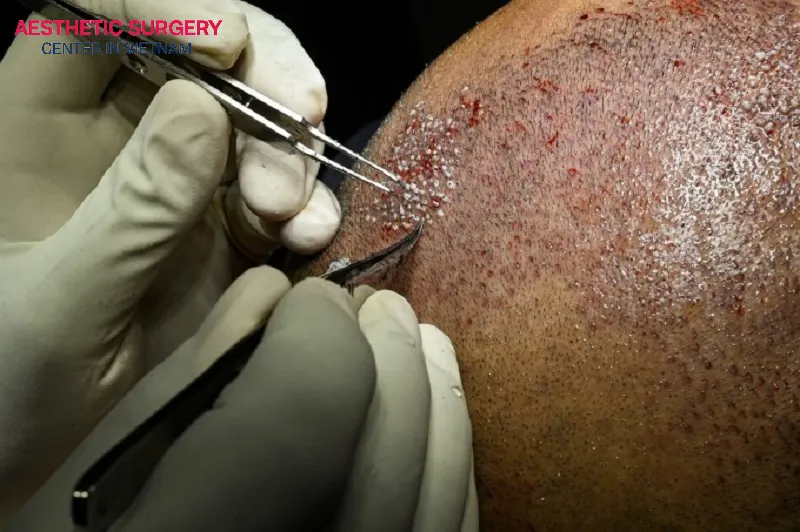
Therefore, doctors offer this advice to those who have undergone or are considering a procedure: “Do not try to stoically endure the pain. Using painkillers and anti-inflammatory medication in the correct dosage not only keeps you comfortable but also creates the most stable environment for your hair follicles to thrive.
Which part of a hair transplant is most painful?
The level of discomfort at each stage of a hair restoration procedure varies depending on an individual’s pain threshold. However, generally speaking, there are two specific moments considered the most challenging during a hair transplant painful experience:
The local anesthesia injection phase
This is the point where most clients report the most distinct pain in the entire process. The surgeon uses a fine needle to administer anesthesia into both the donor and recipient areas. The stinging sensation of the needle penetrating the skin, combined with the pressure as the anesthetic is injected into the subcutaneous tissue, often causes intense discomfort for the first 2 to 5 minutes. However, once the anesthesia takes effect, the entire scalp becomes numb, and you will feel no pain for the remainder of the surgery.
The first night post surgery
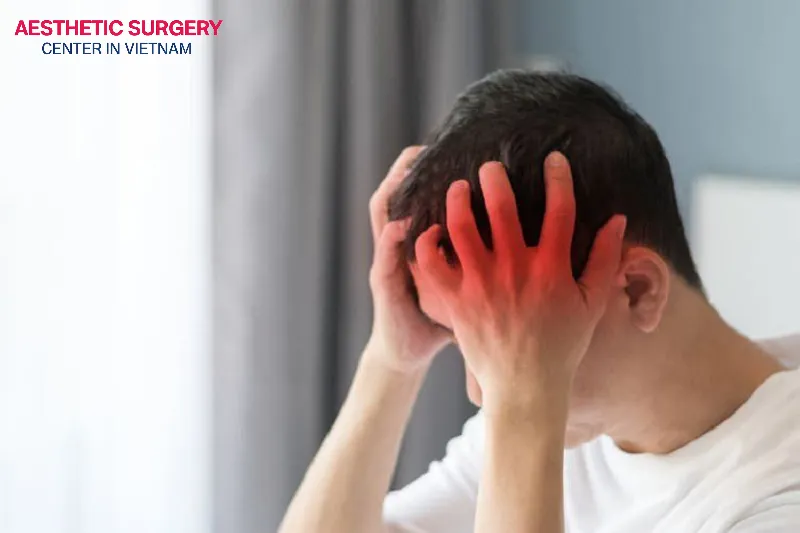
While the injections cause a sharp, brief pain, the first night brings a more prolonged sense of discomfort. As the anesthesia wears off, the scalp particularly the donor area at the back of the neck begins to register the trauma. The sensation at this stage is often described as a severe sunburn combined with a feeling of tightness. Having to sleep in a fixed supine position with the head elevated at a 45-degree angle while the donor site is still tender makes this the most psychologically and physically demanding period for the patient’s patience.
How to manage pain during and after hair transplant treatment?
Pain management is a vital part of the hair restoration process to ensure your experience is seamless and the follicles have the best environment for recovery. Many patients often wonder if a hair transplant painful experience is inevitable; however, with modern techniques, this is highly controllable. Here is how to manage pain during and after the procedure:
During the hair transplant
This stage primarily depends on the doctor’s expertise and the medical support measures at the clinic:
- Use of local anesthesia: The doctor will inject a local anesthetic mixture into both the donor and recipient areas. To reduce discomfort during injection, many clinics now use vibrating devices on the scalp to “distract” pain signals sent to the brain or utilize ultra-fine needles.
- Pre-sedation or mild sedation: If you are overly anxious or sensitive to pain, the doctor may provide a mild oral sedative or intravenous sedation to help you reach a relaxed, drowsy state while remaining conscious enough to cooperate.
- Extraction techniques: Choosing the FUE method typically results in less pain and bleeding compared to the FUT (strip) method.
After the hair transplant
To overcome post-operative discomfort, you can refer to the following methods:
- Use prescribed medication: Typically, your doctor will prescribe pain relievers and anti-inflammatory drugs. You should take the medication just before the anesthesia wears off to preemptively manage the pain rather than waiting until it becomes severe.
- Cold compresses: Applying a cold compress to the forehead and surrounding areas helps constrict blood vessels, thereby reducing swelling and temporarily numbing nerve endings. Note: Do not apply directly to the newly transplanted area as extreme cold can damage the grafts. Instead, apply it to the forehead (above the eyebrows) or the donor area at the back of the neck.
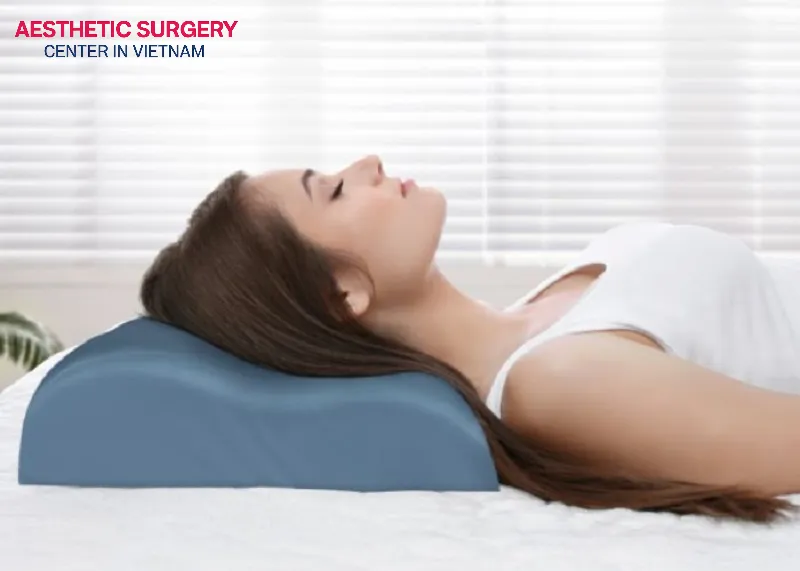
- Maintain an elevated sleeping position: For the first 3–5 days, you should sleep on your back with your head elevated at 45 angle. This position promotes better fluid circulation and reduces blood pressure on the scalp, limiting eye swelling and throbbing pain.
- Proper hygiene and moisturization: Using a specialized saline spray or moisturizing solution provided by your doctor will soothe the scalp and reduce burning or itching sensations. Keeping the hair transplant scabs moist helps them soften and flake off naturally without tugging on the skin.
Post operative care
Post-operative care during the hair transplant recovery stage is the ‘golden’ period that determines follicle survival rates.
- Sleep position: Always lie on your back, elevating your head with 2–3 pillows or a U-shaped pillow to prevent the transplanted area from touching the pillow surface.
- Avoid bending over: Do not lower your head (e.g., to tie shoelaces), as the sudden blood pressure to the head can dislodge grafts or cause bleeding.
- Gentle washing: Do not let high-pressure water from a showerhead hit the grafts directly. Use a cup to pour water gently or a misting spray. Use mild shampoos (such as baby shampoo) and dab gently without scratching.
- Drying: Let your hair air dry or pat it very gently with a paper towel. Absolutely no hair dryers on a heat setting for at least the first 2 weeks.
- Don’t pick scabs: Around days 5–7, the scalp will be itchy. Do not scratch or pick at the scabs; let them fall off naturally during washing.
- Sun protection: UV rays are harmful to healing skin. If you must go out, wear a loose-fitting hat that doesn’t touch the grafts after the first 3 days.
- Avoid stimulants: Refrain from alcohol and tobacco for at least 1–2 weeks, as they hinder blood circulation and slow the healing process.
- Restrict physical Activity: Avoid swimming, gym workouts, or sports for at least 3 weeks to prevent sweating and physical trauma.
After exploring the details surrounding the question of does hair transplant hurt, you likely have your answer and have gathered plenty of other useful information. While there may be some minor discomfort during the anesthesia injection or the initial recovery phase, it is entirely manageable and can be effectively controlled with medication. Do not let a temporary fear of pain prevent you from regaining your confidence and a thick, smooth head of hair. By choosing a reputable facility with a highly skilled medical team, your journey to a new appearance will be as gentle and worry-free as possible.
>>> See more: When can I wash my hair after a hair transplant?










Comment on the post