



After completing a hair transplant procedure, the sticky feeling, itchiness from antiseptic solutions, and dried blood scabs can make you feel very uncomfortable and want to wash your hair right away. However, washing too early can damage the newly transplanted hair follicles. So, when can I wash my hair after a hair transplant to ensure both hygiene and safety? Let’s explore the ideal timing and the medically approved hair-washing process in the article below to help you achieve the best results.
When can I wash my hair after a hair transplant?
In general, you can begin washing your hair for the first time 48 to 72 hours (2–3 days) after surgery, depending on your surgeon’s instructions. While proper hygiene is vital, patients often worry about hair transplant side effects like itching or minor redness during this initial stage. To better understand the appropriate timeline for hair washing and how to manage the healing process, you can refer to the following stages:
Period when hair washing is strictly not allowed: the first 24–48 hours
During this initial phase of hair transplant recovery, the newly transplanted hair follicles are still very loose. Blood and plasma dry to form scabs that act like a “glue” to hold the follicles in place. Therefore, you must strictly avoid letting water touch both the transplanted area and the donor area. If you feel itchy or uncomfortable, you may use a saline spray (if prescribed by your surgeon) to soothe the area, but only apply it as a very light mist.
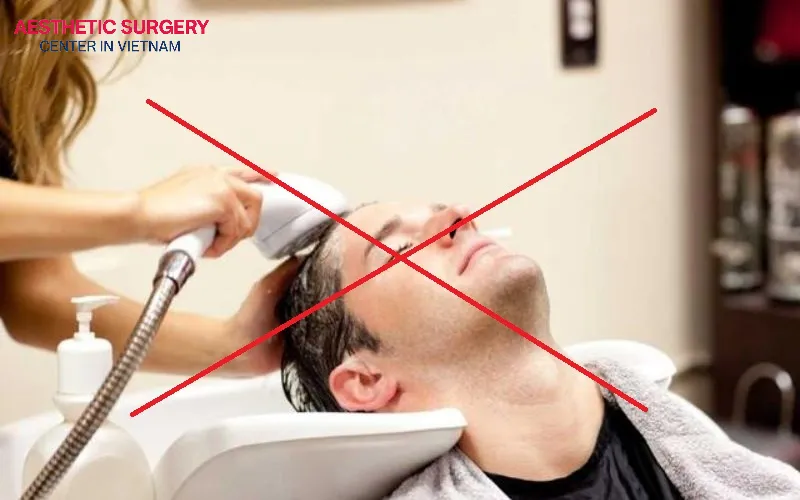
First hair wash stage: Day 3
First hair wash stage: Day 3 This is the most important time after your surgery. If you are wondering, “when can I wash my hair after a hair transplant,” Day 3 is typically the earliest milestone. Most clinics ask you to return so a nurse can perform the first wash. If you wash your hair at home, strictly follow the “cup or ladle” method to avoid direct water pressure.
- Do not rinse with direct water pressure. Use a cup or ladle to gently pour warm water over the scalp. Never use water that is too hot or too cold.
- Use only the shampoo prescribed by your surgeon. This is usually a mild shampoo with a neutral pH and no harsh cleansing agents.
- Create foam in your hands first, then gently apply the foam to the transplanted area. Leave it on for about 2–3 minutes to soften dirt and scabs. Do not rub. Use only your fingertips to lightly tap or dab.
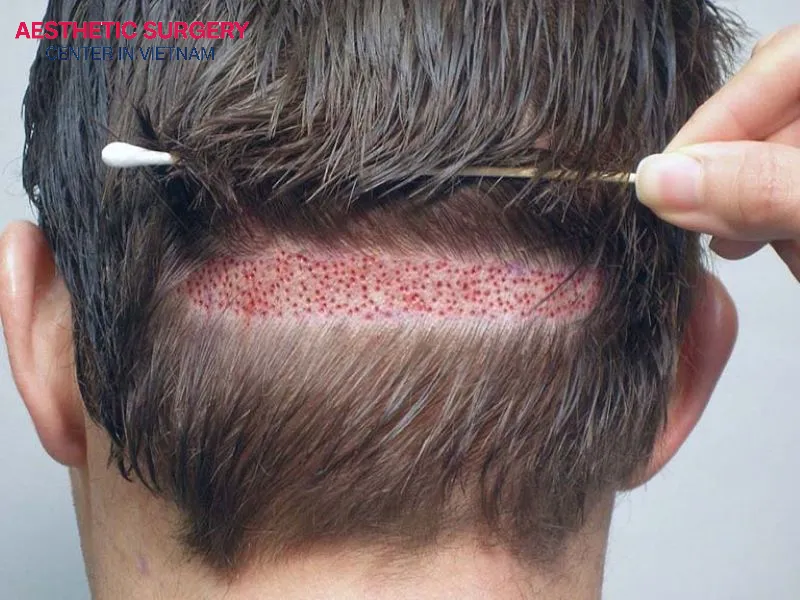
Cleansing and moisturizing stage: Day 4 to day 10
During this stage, the hair follicles begin to anchor more firmly but can still be dislodged by strong friction. The goal is gentle cleansing and infection prevention. You should wash your hair once a day to remove dirt and dried blood. Continue using the “foam covering” method and rinse gently with a cup or a shower set to very low water pressure. Remember not to scratch with your fingernails. Let your hair air-dry or gently blot it with tissue paper. Do not use a towel to rub the scalp, as towel fibers can catch on follicles and cause hair loss.
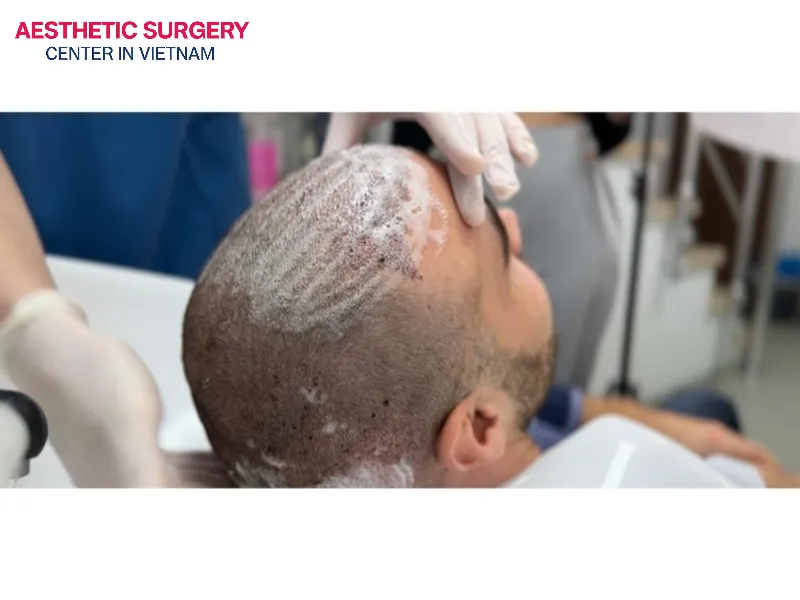
Scab shedding stage: Day 10 to day 14
This is the time to thoroughly cleanse the hair transplant scabs on the scalp. If these scabs remain for too long, they can interfere with hair follicle growth. You can begin using the pads of your fingertips to gently massage the transplanted area in circular motions while washing. This helps soften the scabs so they can shed naturally. Remember not to pick or forcefully remove hard scabs; instead, let them fall off during a gentle massage with warm water to ensure the health of your new grafts.
Choosing the best shampoo to use after hair transplant
Choosing the right product is not just about cleansing, but about protection. Using the wrong shampoo can increase hair transplant risks like irritation, folliculitis, or even chemical damage to the sensitive follicles. Below are key criteria to help you choose the best shampoo after a hair transplant:
- Do not use shampoos containing sulfates, parabens, artificial fragrances, or alcohol: These ingredients can dry out the scalp and irritate healing areas, disrupt hormonal balance, and irritate the delicate, newly healed scalp.
- Using shampoos with a balanced pH of 5.5 helps maintain the scalp’s protective barrier and prevents bacterial invasion.
- Avoid shampoos with a pH higher than 5.5 because they can be harmful to hair follicles.
- Prioritize shampoos containing Panthenol, Biotin, Keratin, aloe vera, green tea, or grapefruit essential oil.
- Choose shampoos with natural ingredients and clear, reputable origins.
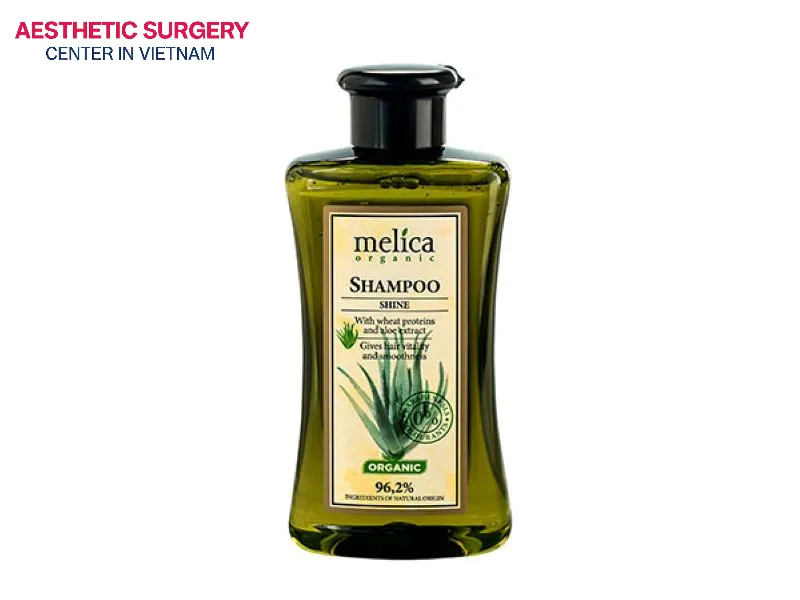
In most cases, your surgeon will provide a specialized clinic shampoo for the first two weeks. If not, or once it runs out, you can consider options such as baby shampoo or Sebamed Everyday Shampoo.
>>> See more: Can you wear a hat after hair transplant?
Expert advice and recommendations to look after your transplanted hair
Post–hair transplant care is a long-term process and does not stop at hair washing alone. Leading experts often compare it as follows: “A hair transplant is like planting seeds, and post-operative care is like watering and fertilizing them. If you plant the seeds well but do not care for them, the plant will still die.” Below are the “golden rules” and in-depth medical recommendations to help ensure a hair survival rate of over 95%:
- The forehead and eye area are prone to hair transplant swelling and edema due to the downward movement of anesthetic fluids. Therefore, you should sleep in a semi-reclined position for the first 3–5 nights, using 2–3 pillows to elevate your head and upper body. Avoid sleeping on your side or stomach.
- Use a U-shaped neck pillow to stabilize your head and prevent unconscious turning or rubbing the transplanted area against the pillow during sleep.
- High blood pressure and sweating are enemies of newly transplanted hair follicles. For this reason, you should rest completely during the first week and avoid bending forward, as this causes blood to rush to the scalp and may dislodge follicles.
- Light walking or gentle yoga can be resumed in the second week.
- You may return to the gym, jogging, swimming, and contact sports after one month.
- Avoid smoking and alcohol for at least 2–5 weeks after the transplant, as they can cause bleeding, increase swelling, and reduce oxygen supply to newly transplanted follicles.
- Do not wear tight hats or helmets during the first week after the procedure.
- Avoid direct sun exposure to the scalp for the first three months, as UV rays can cause sunburn and lead to permanent dark hair transplant scars without you realizing it.
- Be mentally prepared for the “shock hair loss” phase. From week 4 to month 3 after the transplant, the newly transplanted hair shafts will shed completely. This may cause concern, but it is a normal biological process. Only the hair shafts fall out; the follicle roots remain safely under the skin, and new hair will begin to regrow from the fourth month onward.

This article has helped answer the question: “When can I wash my hair after a hair transplant?” while also providing essential related information. With this knowledge, we hope you will care for your scalp properly after the procedure so the treated area can recover quickly, achieve the desired results, and avoid unwanted risks.
>>> See more: Hair transplant female celebrities













Comment on the post