



Having a full and rounded bust is the dream of many women. However, concerns about visible implants or capsular contracture make many hesitate. This is especially true for women with thin breast tissue, as choosing a surgical method becomes more difficult. For this reason, dual plane breast augmentation is considered a breakthrough in cosmetic surgery. This specialized technique involves placing the implant partially under the breast tissue and partially under the chest muscle to achieve more natural-looking results. To help you understand this procedure better, this article will explore the different types and methods available to suit various body types.
What is dual plane breast augmentation?
Dual plane breast augmentation, also known as the compressed submuscular technique, is an advanced cosmetic surgery method. In this technique, the implant pocket is created at a special intersecting position. The upper half of the implant is covered by the pectoralis major muscle, while the lower half lies beneath the breast gland tissue. Thanks to this combined mechanism, the dual plane technique uses the muscle layer to effectively conceal the upper implant edge. This helps create a natural feel and prevents implant visibility or rippling. At the same time, the lower pole is released, allowing the breast to expand fully, appear rounder, softer, and achieve ideal projection.
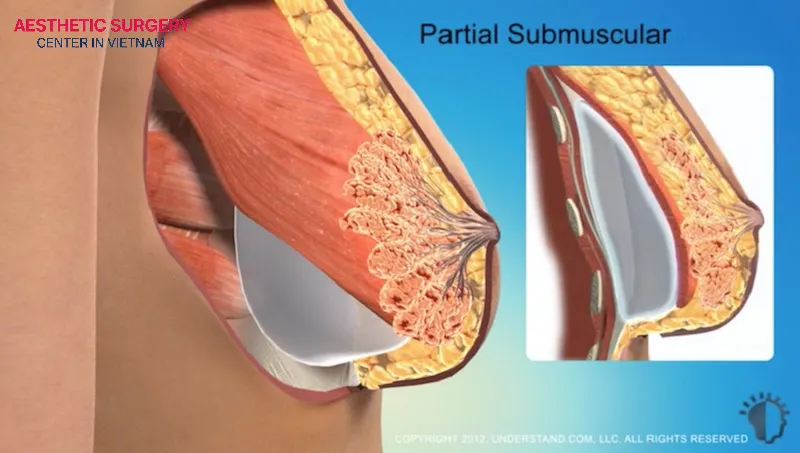
It is considered an optimal solution that effectively overcomes the limitations of older methods such as full submuscular or subglandular placement, delivering long-lasting aesthetic results and reducing the breast augmentation risks of capsular contracture.
Types of dual plane breast augmentation
Depending on the extent of muscle and tissue dissection, two-plane breast augmentation is divided into three types:
Standard dual plane
This is the most basic and least invasive technique among the three types, often referred to as dual plane I. With this method, the surgeon creates an implant pocket beneath the pectoralis major muscle, with minimal release of the attachments between the muscle and the breast gland tissue above the inframammary fold. This technique allows the implant to be firmly stabilized by the muscle, limiting soft tissue movement.
Standard dual plane is an ideal choice for women with small or flat breasts, minimal breast tissue, firm skin, good elasticity, and no sagging. It helps create a naturally lifted breast shape while preserving the original tissue structure.
Moderate release
This type of dual plane breast augmentation, also known as dual plane II, involves a wider range of dissection compared to the standard technique to address issues related to the lower breast pole. The surgeon separates the pectoralis major muscle from the posterior surface of the breast gland tissue up to approximately the level of the lower border of the areola.
This release allows the pectoral muscle to move slightly upward, while the breast tissue “slides” downward to better cover the lower portion of the implant. Moderate Release is especially suitable for cases of mild breast ptosis or a short lower pole, helping to enhance fullness in the lower breast and create a softer, more natural curve.
Advanced release
This is the most extensive level of intervention, also known as dual plane III, where the separation between the muscle and breast tissue is performed most thoroughly. The surgeon releases the pectoralis major muscle from the glandular tissue all the way to the upper border of the areola. This technique allows the breast tissue to spread maximally over the implant and helps correct tissue tightness.
Advanced release is a “rescue” solution for cases of moderate breast sagging, constricted breasts, tubular breasts, or breast deformities. It helps effectively reshape the breast into a fuller, rounder form while maximizing expansion of the lower pole.

Benefits of two-plane breast augmentation
Dual plane breast augmentation not only enhances breast size but also ensures aesthetic results, safety, and long-term durability after surgery. It meets the increasing beauty demands of modern women. The detailed benefits of two-plane breast augmentation are as follows:
- Perfectly natural breast shape: With the upper portion of the implant covered by the pectoralis major muscle, the contour from the collarbone to the breast appears smooth and natural. This avoids an unnaturally high profile or a “ball-like” appearance, a common issue with subglandular placement.
- Conceals implant edges: The thick muscle layer in the upper breast effectively hides the implant margins. This is especially important for women with thin breast tissue or a slim body type, ensuring the breasts look and feel natural without visible or palpable implant edges.
- Full and rounded lower pole: Because the lower half of the implant is not compressed by muscle and lies beneath the breast tissue, the lower breast has enough space to expand. This creates ideal projection and a soft, rounded curve, correcting the “double-bubble” deformity.
- Minimizes rippling: One of the biggest concerns with breast augmentation is skin wrinkling or rippling when bending forward. The dual plane technique significantly reduces this risk thanks to the protective muscle layer above the implant.
- Reduces the risk of capsular contracture: When implants are placed under or partially under the muscle, as in the dual plane technique, the continuous movement of the pectoralis muscle acts as a form of “natural massage.” This helps maintain a softer implant pocket and lowers the likelihood of hard capsular contracture forming around the implant.
- Softer to the touch: The combination of muscle coverage and glandular release gives the breasts better elasticity and a more natural feel compared to full submuscular placement, which can feel firm, or subglandular placement, where the implant is more easily detected.
- Correction of mild breast sagging: With dual plane II and III techniques, the surgeon can reposition the breast tissue to sit lower than the muscle. This helps support mildly sagging breasts without the need for complex breast lift incisions, thereby avoiding additional scaring.
- Less pain than full submuscular placement: Compared to total submuscular techniques that require extensive muscle dissection, dual plane breast augmentation involves only partial muscle release. As a result, postoperative pain is usually milder and recovery time is shorter.
- Safer for breast screening: With two-plane breast augmentation, imaging during breast health screening shows clearer results and does not interfere with breast cancer detection.
- Faster recovery: Recovery time after dual plane breast augmentation is generally shorter than with full submuscular implant placement methods.

Who is a candidate for dual plane breast augmentation?
Two-plane breast augmentation is a modern technique that offers many benefits. However, it is not suitable for everyone. The following are ideal candidates for dual plane breast augmentation:
- Women aged 18 and over who have small or flat breasts, limited breast tissue, thin breast skin, or minimal glandular tissue.
- Those who desire a fuller, natural-looking, soft, and well-rounded bust that feels like natural breasts.
- Individuals with mild breast sagging or ptosis at grade 1 or 2.
- Those who want to minimize the risk of capsular contracture, as the dual plane technique places the implant partially under the muscle, helping protect the implant and reduce capsular tightening.
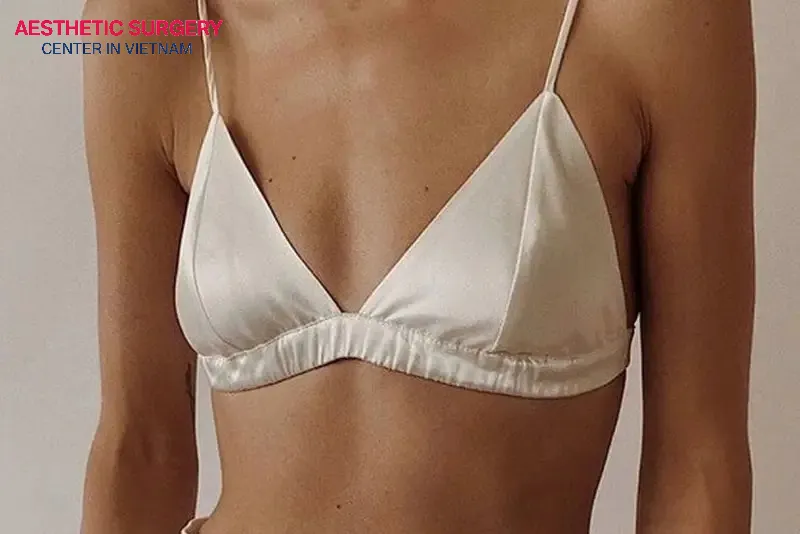
Note: Individuals who are not suitable for two-plane breast augmentation include pregnant or breastfeeding women; people with underlying conditions such as cardiovascular disease, diabetes, or hypertension; and those with significant breast sagging.
What is recovery from dual plane breast augmentation like?
To prepare both mentally and physically for breast augmentation recovery, it is important to understand the healing process after dual plane breast augmentation. Each patient recovers differently, but most experience the following stages:
Stage 1: The first 1–2 days
In the first days immediately after surgery, patients usually feel the most pain and tightness due to the impact on the chest muscles. The breasts may feel very firm, swollen, and tight, with a sensation of pressure, as if a heavy weight is pressing on the chest. This is a normal response because the muscle is tightening around the implant. Mild shortness of breath during deep breathing may occur due to muscle pain. During this stage, patients are prescribed pain medication to manage discomfort. In addition, patients usually stay overnight at the hospital or may return home depending on their condition.
Stage 2: Days 3–7
After about three days, pain usually decreases significantly, although swelling may still persist. The breasts may appear high and remain firm. These are normal signs of the healing process. During this stage, patients can move their arms but should avoid lifting them overhead or carrying objects heavier than 2 kg. After about 5–7 days, most patients can return to normal office work.
Stage 3: Weeks 2–4
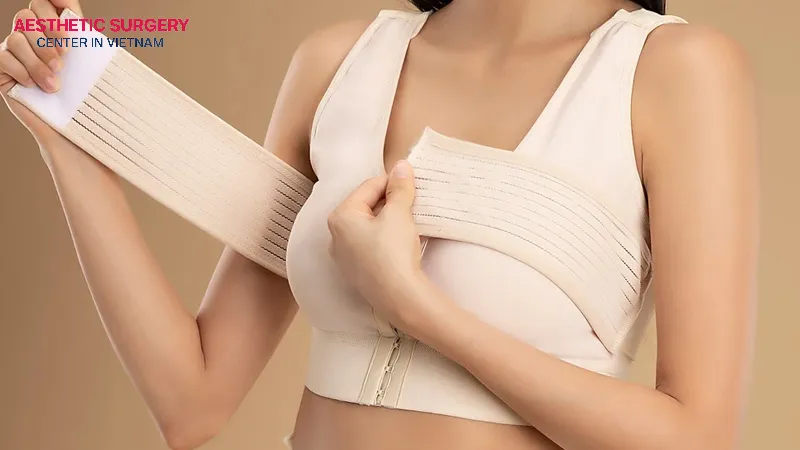
At this stage, most bruising gradually fades and the external incisions begin to heal, with new skin forming that may cause mild itching. The feeling of tightness is reduced by about 70–80%, allowing patients to resume light office activities. However, the implants may still sit relatively high, and the breasts may not yet look fully natural. Patients must strictly follow instructions to wear a supportive compression bra and avoid strenuous activities such as heavy lifting or long-distance driving. Light cardio exercise may be started after two weeks, but chest workouts should be avoided.
Stage 4: Months 1–3
During this period, the muscle gradually relaxes, allowing the implants to settle slightly into the lower breast pole and create a more natural drape. The skin and muscle tissues soften and conform around the implants, making the breasts feel softer. Sensory nerves around the nipples may experience tingling or temporary hypersensitivity before fully recovering. Patients may begin gentle lower-body exercises such as brisk walking or stationary cycling.
Stage 5: Months 3–6
By the third month, the breasts have achieved about 90% of their final shape. The chest muscles have fully adapted to the presence of the implants, allowing better cleavage and a very natural breast drape. Breast augmentation scars begin to fade from pink to white or blend with the natural skin tone, depending on individual healing. At this point, continuous use of a compression bra is usually no longer necessary, and patients can switch to soft, wire-free bras.
Stage 6: 6 Months and beyond
After six months, the recovery process is nearly complete, and scars continue to fade. The breasts not only look aesthetically pleasing but also feel natural, similar to real breast tissue during daily activities. All movement restrictions are lifted, allowing patients to freely participate in vigorous sports such as gym workouts, swimming, or tennis. Ongoing care typically involves simple annual check-ups to ensure the implants remain in optimal condition.
How long will my results from two-plane breast augmentation last?
The results of dual plane breast augmentation do not appear immediately but develop through a gradual process. Typically, noticeable results can be seen after about three months, once the implants have settled into position. However, achieving the final natural and soft outcome usually takes from 6 to 12 months or longer, depending on individual healing, implant type, and surgical technique.
You can visualize the timeline through the following three main milestones:
Temporary results: After 1 month
After about four weeks, most of the major swelling has subsided. At this point, you can clearly see your new breast size and wear your favorite outfits. However, this is not the final result, as the breasts may still feel firm, the implants often sit higher than desired, and the cleavage is not yet fully soft and natural.
“Settling” results: After 3 months
With the dual plane technique, the pectoralis major muscle needs time to relax and adapt around the implant. After three months, the implants begin to settle into a more natural position. This creates a gentle teardrop slope in the upper pole and fuller projection in the lower pole. The breasts also start to feel softer, similar to natural fat tissue.
“Final” results: From 6 months to 1 year
This is when the breasts reach their most beautiful and fully stable state:
- Softness: Reaches its maximum level, as the implants and breast tissue blend seamlessly.
- Shape: Extremely natural, with slight movement and bounce during motion.
- Scars: Gradually fade and flatten, no longer appearing red or irritated.
After reviewing the information about dual plane breast augmentation, we hope you now have a deeper understanding of this modern cosmetic surgery method. Although it offers many outstanding advantages, it is essential to choose a reputable facility with a highly skilled medical team to achieve beautiful results and avoid unwanted risks.












Comment on the post