



After a hair transplant, many people feel concerned when they notice scabs forming on the scalp. Are they a sign of a problem, or simply a normal part of the healing process? So, what exactly are hair transplant scabs, and how can they be removed? Aesthetic Surgery Center in Vietnam explores this in detail in the article below.
What are scabs after hair transplant?
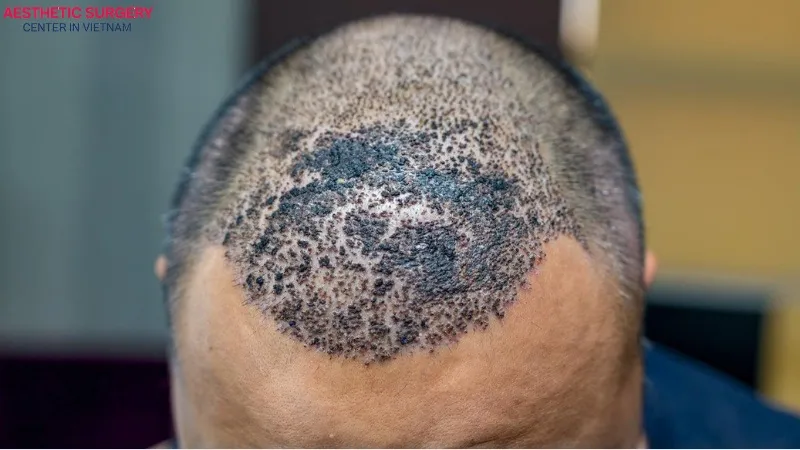
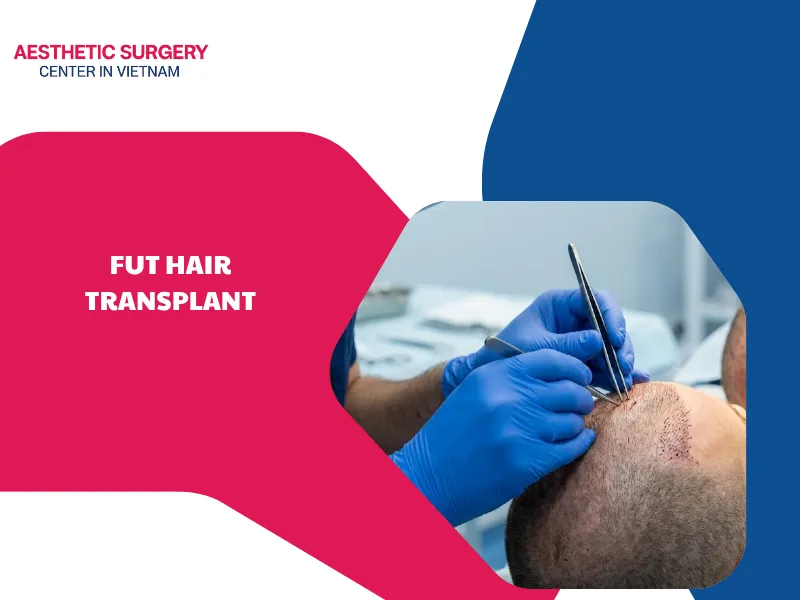
Scabs after a hair transplant are a thin, natural layer that forms on the scalp following the procedure. They are composed of plasma, clotted blood, and secretions from the tiny holes where the follicles were implanted. Scabs protect the newly treated area, help the follicles stay in place, and support faster, smoother healing.
Typically, scabs begin to appear around 2–3 days after the procedure and fall off naturally within 7–14 days. During this period, avoid scratching, picking, or applying strong pressure to the scabs, as this can dislodge the new follicles and affect hair growth outcomes.
Keeping the scalp clean and washing gently according to your surgeon’s instructions is essential. Proper care ensures the scabs fall off at the right time and promotes a safe, effective recovery.
>>> See more: No shave hair transplant
What do hair transplant scabs look like?
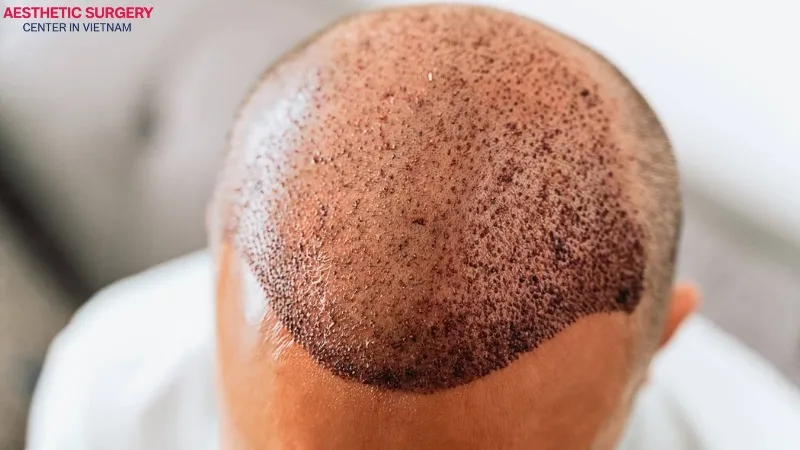
Hair transplant scabs are usually easy to recognize by their shape and color. They appear as small patches or tiny dots around the base of the transplanted hairs. Initially, scabs may be light red or dark brown due to dried blood, then gradually turn pale yellow or whitish as the scalp begins to dry and heal.
Overall, the scalp with scabs looks like it is covered with a thin, slightly rough layer, similar to dry skin flakes or thick dandruff. This is a completely normal reaction, reflecting the natural healing and regeneration process of the scalp after a hair transplant.
How long do scabs last after hair transplant?
Typically, hair transplant scabs last for 7–14 days. In the early stage, scabs form around the transplanted area to protect the scalp and help the follicles stabilize. From around day 7, the scabs begin to dry and naturally fall off.
By days 10–14, most of the scabs will have completely shed, revealing a slightly pink scalp, a sign that the skin is healing well. However, this timeline may vary depending on individual factors, including hair transplant age, the specific transplant technique used, and post-care practices.
It is important not to peel or pick at the scabs, as this can dislodge the new follicles, causing hair loss or infection. Instead, follow your surgeon’s washing and care instructions so the scabs fall off naturally, ensuring a safe and effective transplant outcome.
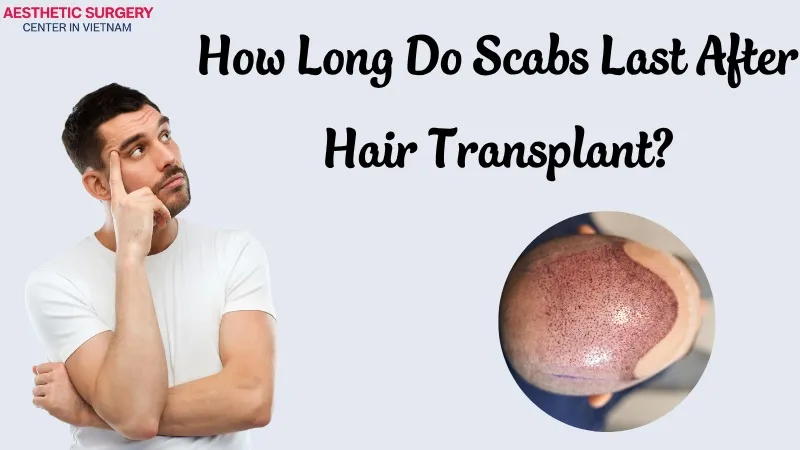
How do I remove or soften my hair transplant crust?
How do I remove or soften my hair transplant crust? This is a common question during the hair transplant recovery process. Removing scabs should be done gently, patiently, and according to your surgeon’s instructions to avoid damaging the new hair follicles. Here are safe and effective steps to help remove scabs properly and support faster scalp healing:
- Step 1: During the first 3–5 days, do not wash your hair or touch the transplanted area. This is when the scalp forms a natural protective layer for the new follicles, allowing safe healing.
- Step 2: After 3–5 days, you can lightly spray the transplanted area with saline solution to soften the scabs. When your surgeon allows shampooing, use a gentle, sulfate-free, fragrance-free shampoo to avoid irritating the scalp.
- Step 3: While washing, massage very gently. Do not use your nails or scrub forcefully. You can massage with your fingertips or let water flow lightly over the scalp so the scabs fall off naturally.
- Step 4: After washing, gently pat the area with a soft towel. Avoid rubbing. Dry the hair using cool air and minimize wearing hats, as well as avoid direct sun exposure or high heat immediately afterward.
Scabs will naturally fall off within 7–14 days, depending on individual healing. Picking at scabs too early can dislodge follicles, cause reduce hair regrowth, or hair transplant scar
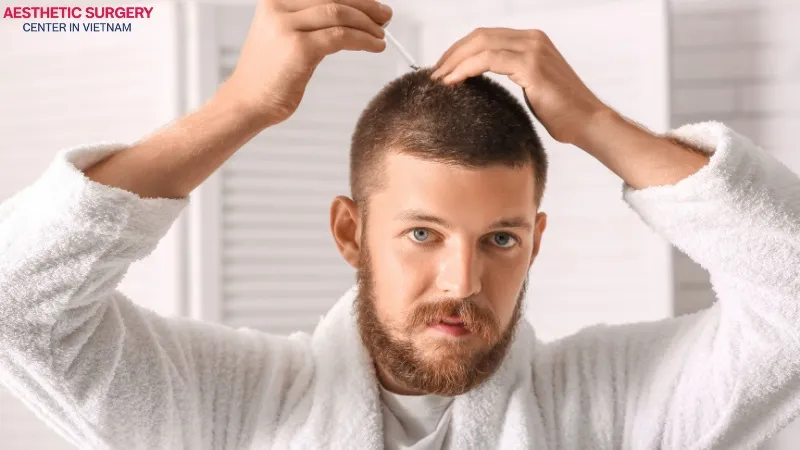
In conclusion, hair transplant scabs are completely normal, indicating that the scalp and follicles are gradually stabilizing. However, to achieve optimal results and ensure the healthy growth of new hair, it is important to know how to remove scabs properly. Aesthetic Surgery Center in Vietnam hopes that the guidance above will help you care for and protect your follicles, restoring thicker, natural, and long-lasting hair over time.
>>> See more: Can you wear a hat after hair transplant?













Comment on the post