



The midface is considered the origin of most visible aging signs on the face. The boundaries of this area are clearly defined: the upper boundary is the lower orbital rim and tear trough, the outer boundary is the cheekbone, while the inner and lower boundaries are the nasolabial folds.
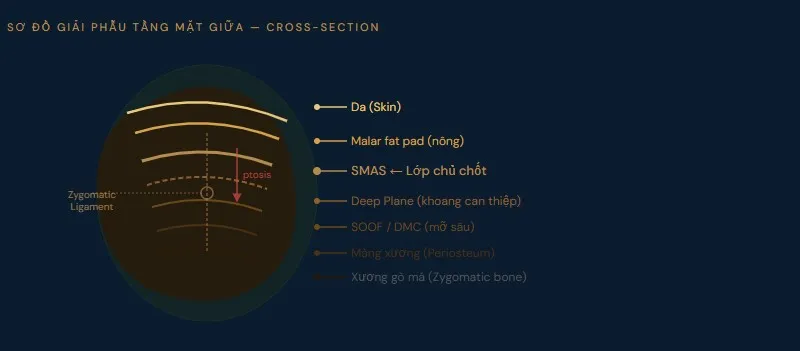
Aging in the midface is a multi-layer transformation process. Based on anatomical structure from superficial to deep, the midface is divided into six layers. Each layer has its own characteristics and role in rejuvenation and facelift techniques:
- Skin layer: This is the outermost surface layer, mainly formed by collagen and elastin networks. Over time, the breakdown and reduction of these two proteins cause the skin to lose its natural elasticity, leading to sagging skin, wrinkles, and rough texture.
- Superficial fat layer: Located directly beneath the skin, this area contains superficial fat pads that create facial fullness, especially the malar fat pad in the cheek area.
- Superficial musculoaponeurotic system (SMAS): The SMAS is a connective tissue layer surrounding the facial muscles. It acts as a support framework for the skin and fat above it. In aesthetic anatomy, this is the key layer involved in facelift surgery.
- Sub-SMAS layer (Deep plane): Directly beneath the SMAS is a potential space that does not contain major nerves or blood vessels. This is considered the ideal treatment area for deep dissection techniques such as the Deep Plane Facelift.
- Deep fat layer (SOOF, DMC): This layer lies beneath the muscular support system and includes fat compartments that cushion the facial bone structure, such as the Sub-Orbicularis Oculi Fat (SOOF) and Deep Medial Cheek fat (DMC). This layer tends to shrink and atrophy early with aging.
- Periosteum: This is the deepest layer, directly covering the surface of the facial bones. Because it is firmly attached to the bone structure, the periosteum is extremely stable and rarely shifts position.














Comment on the post