


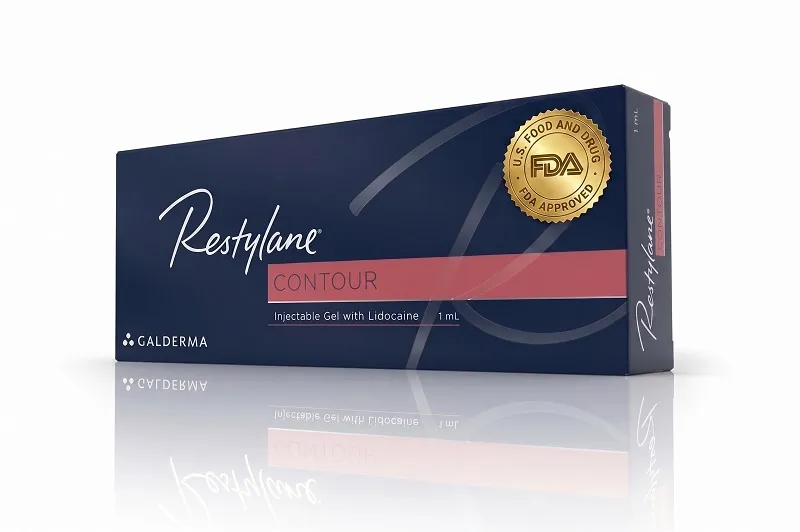
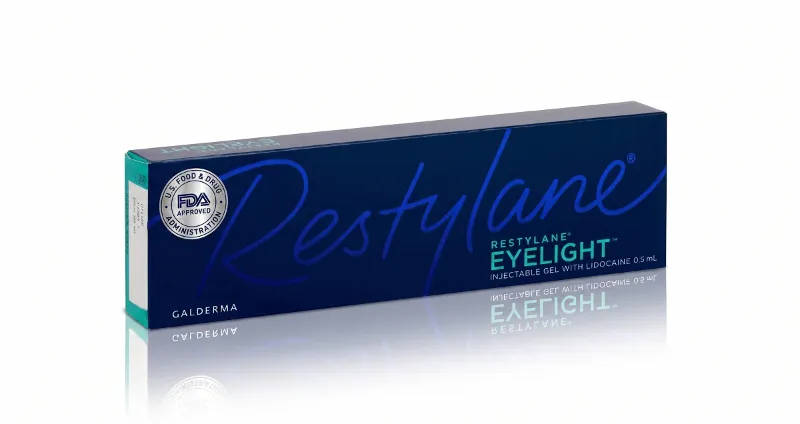
Restylane® Contour is a Hyaluronic Acid (HA)-based dermal filler in the form of a soft, clear gel, manufactured by Galderma. Notably, it has been approved by the U.S. FDA for cheek augmentation, correction of midface contour deficiencies, and improvement of temple hollowing in patients over 21 years of age. However, treatment with this product should always be based on the patient’s facial anatomy, degree of volume loss, and a physician’s clinical assessment.
Restylane® Contour – A solution for cheek, midface, and temple contouring
If you are looking for a solution to restore midface volume and improve facial contours, Restylane® Contour is one of the products a physician may consider for cheek augmentation, correction of midface contour deficiencies, or improvement of temple hollowing. The product incorporates XpresHAn™/OBT™ technology, which creates a flexible gel designed to adapt naturally to facial expressions. Learn more about this dermal filler below.
What is Restylane® Contour?
Restylane® Contour is a cross-linked Hyaluronic Acid (HA) dermal filler containing 20 mg/mL HA with integrated lidocaine to help reduce pain and discomfort during the injection procedure.
Using advanced XpresHAn™/OBT™ technology, the product was specifically developed to restore facial volume and enhance facial contours while maintaining a soft and natural appearance. However, treatment outcomes may vary depending on each individual’s facial anatomy and biological characteristics.
Notably, according to the U.S. FDA Premarket Approval (PMA) supplement P140029/S032 and the expanded indication supplement P140029/S054, Restylane® Contour has been officially approved by the U.S. Food and Drug Administration (FDA) for cheek augmentation, correction of midface contour deficiencies, and improvement of temple hollowing.
Intended uses
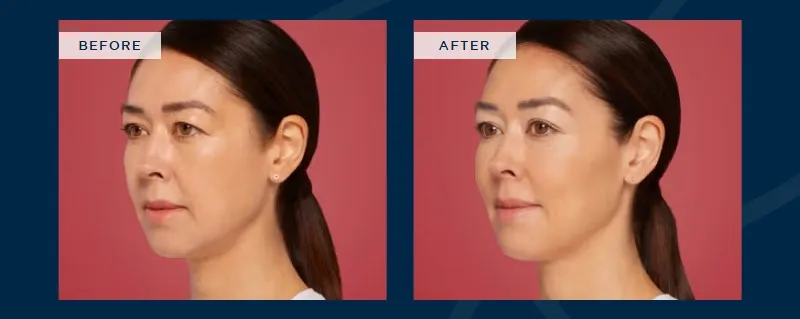
According to the FDA-approved indications for patients over 21 years of age, Restylane® Contour is used in aesthetic treatments for the following purposes:
- Restore volume and enhance the cheeks.
- Correct midface contour deficiencies.
- Improve the appearance of temple hollowing.
- When clinically appropriate, treatment may help create a smoother visual transition between these facial areas.
What indications is Restylane® Contour approved for by the U.S. FDA?
According to the U.S. FDA approval documents and the expanded indication supplement, Restylane® Contour is approved for use in the cheeks, midface, and temples. Details regarding the approval dates, eligible patients, and PMA application numbers are provided in the table below.
| Indication | Eligible patients | FDA approval date | PMA supplement |
| Cheek augmentation | patients over 21 years of age . | June 28, 2021. | P140029/S032. |
| Correction of midface contour deficiencies | Adults over 21 years old. | June 28, 2021. | P140029/S032. |
| Improvement of temple hollowing | Adults over 21 years old. | March 20, 2026 (FDA expanded the indication for this treatment area). | P140029/S054. |
*Information is based on the U.S. FDA Premarket Approval (PMA) supplement P140029/S032 and the expanded indication supplement P140029/S054.
What does FDA evaluation and approval mean?
A product that has been evaluated and approved by the U.S. FDA has provided reasonable assurance of safety and effectiveness for the specific indications that have been reviewed. Before granting approval, the U.S. Food and Drug Administration (FDA) conducts a rigorous and comprehensive review of the product. In addition, even after approval is granted, the manufacturer must continue to comply with ongoing FDA regulatory requirements.
What does the FDA review?
- Product composition and characteristics.
- Biocompatibility data.
- Technical documentation.
- Manufacturing processes and quality control systems.
- Clinical study data.
- Safety and effectiveness for the approved indications.
- Side effects, adverse events, and potential risks.
- Contraindications, warnings, and instructions for use.
After FDA approval, manufacturers are still required to:
- Submit periodic reports.
- Continuously monitor safety data.
- Report serious adverse events.
- Maintain a robust quality management system.
- Notify the FDA or obtain approval before making significant product changes.
- Conduct post-approval studies if required by the FDA.
Overall, FDA approval indicates that the product’s submission provides reasonable assurance of safety and effectiveness for its approved indications. However, this does not mean that the product is completely risk-free or suitable for every patient.
Why is Restylane® Contour chosen for cheek and midface contouring?
Restylane® Contour may be considered for cheek augmentation and correction of midface contour deficiencies because its safety and effectiveness have been clinically evaluated for these FDA-approved indications.
In addition, the approved indications for Restylane® Contour have been expanded to include the improvement of temple hollowing. This broader range of indications allows for a more comprehensive aesthetic approach. Rather than restoring volume in isolated areas, the filler helps create a smooth, balanced transition from the temples to the cheeks and throughout the midface, resulting in a more harmonious facial contour.
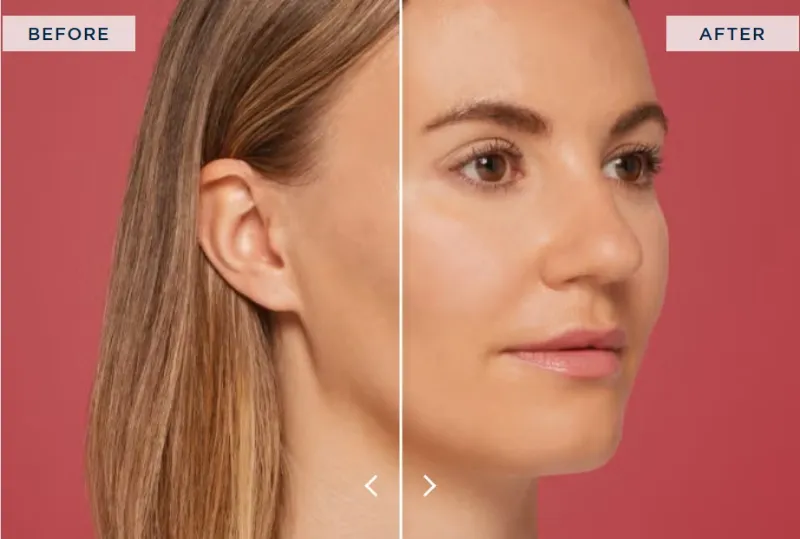
The key factor that distinguishes Restylane® Contour is its use of XpresHAn™ technology (also known as OBT™). This advanced technology creates a soft and flexible Hyaluronic Acid (HA) gel that is designed to adapt to the natural movements of facial expressions, allowing patients to maintain a natural smile and facial expressions without a stiff appearance. In addition, the gel’s adaptable properties enable treatment to be personalized by adjusting the injection sites and amount of product according to each patient’s unique facial anatomy.
Despite these product characteristics, achieving safe and harmonious aesthetic results requires proper patient selection and treatment planning. Therefore, Restylane® Contour should only be administered after a qualified physician has performed a comprehensive facial assessment and developed an individualized treatment plan based on the patient’s facial anatomy and clinical needs.
Seoul Center Clinic chooses Restylane® Contour – Prioritizing patient confidence
At Seoul Center Clinic, patient safety and treatment experience are always our top priorities. That is why we have chosen Restylane® Contour for our facial contouring treatments while implementing a rigorous quality assurance process throughout every stage of care.
When receiving treatment at Seoul Center Clinic, patients can feel confident because of the following standards:
- Transparent product authenticity: We are committed to using only genuine products with clear origins and legal distribution documentation.
- Commitment to safety standards: Seoul Center Clinic prioritizes products that have been approved by reputable regulatory authorities, such as the U.S. FDA, for their specific indications, for specific approved indications, based on evidence providing reasonable assurance of safety and effectiveness.
- Product verification before treatment: Before the procedure begins, patients are invited to inspect the product’s labels, barcodes, expiration date, and sealed packaging for complete peace of mind.
- Treatment performed by qualified physicians: Every patient receives a comprehensive consultation and facial assessment performed directly by a qualified physician before any treatment is recommended.
- Personalized treatment planning: Based on the physician’s clinical evaluation, an individualized treatment plan is developed, including the injection sites, injection technique, and product volume, to achieve the most natural and harmonious aesthetic outcome.
- Strict infection control: All procedures are performed in an appropriate clinical setting following established aseptic protocols, with properly sterilized instruments and medical supplies to help minimize the risk of infection.
- Comprehensive follow-up care: After treatment, patients receive detailed aftercare instructions from their physician and are scheduled for follow-up visits to monitor recovery and help maintain optimal aesthetic results.
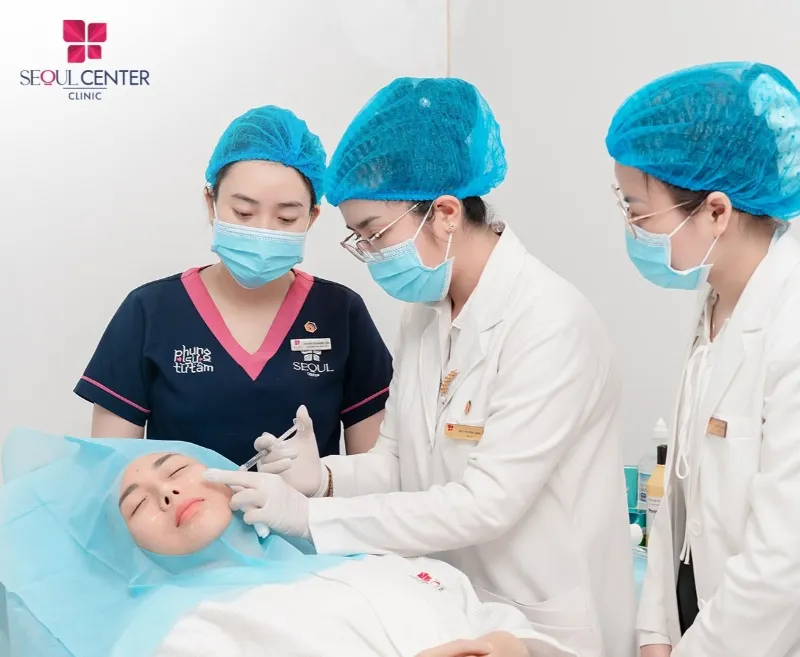
Overall, the selection of Restylane® Contour reflects Seoul Center Clinic’s commitment to prioritizing genuine products, transparent product sourcing, and clearly approved indications. However, the product itself is only one part of the treatment outcome. The physician’s clinical assessment, treatment planning, and injection technique remain the most important factors in achieving safe, natural-looking, and harmonious results.
Who is a suitable candidate for Restylane® Contour?
According to the FDA-approved indications, Restylane® Contour is intended for patients over 21 years of age who have one or more of the following concerns:
- Volume loss in the cheeks.
- Midface contour deficiencies caused by volume loss.
- Temple hollowing.
- Individuals seeking non-surgical facial contour enhancement.
- Individuals who are considered suitable candidates following an evaluation by a qualified physician.
Note:
Not every case of sunken cheeks or temple hollowing is appropriate for treatment with dermal fillers. A qualified physician should first determine whether the concern is caused by soft tissue volume loss, underlying bone structure, skin aging, or an underlying medical condition before recommending the most appropriate treatment.

Can Restylane® Contour cause side effects or complications?
Yes. Like any dermal filler, Restylane® Contour may cause certain side effects or complications. Depending on the individual’s biological response and the injection technique, these can generally be divided into two categories.
Common reactions
After treatment, temporary injection-site reactions may occur and usually resolve on their own. These include:
- Swelling.
- Redness.
- Pain or a feeling of tightness.
- Bruising.
- Itching.
- Tenderness at the injection site.
- Temporary firmness or unevenness beneath the skin.
Rare but serious complications
In rare cases, filler may be inadvertently injected into a blood vessel, potentially leading to vascular occlusion, tissue ischemia, tissue necrosis, vision impairment, blindness, or stroke. These risks may occur even when appropriate precautions are taken. Therefore, the injector must have a thorough understanding of facial anatomy, appropriate injection techniques, and the ability to recognize and manage complications promptly.
To minimize these risks, treatment should only be performed by a qualified healthcare professional who has received appropriate training and has a comprehensive understanding of the anatomy of the treatment area.
Factors that increase the risk of complications
- Use of counterfeit, fake, or unverified dermal fillers.
- Products that have not been stored according to the manufacturer’s recommended conditions.
- Procedures performed at facilities that do not meet appropriate medical standards.
- An injector with insufficient knowledge of facial anatomy or inadequate injection skills.
- Incorrect treatment planning, inappropriate injection sites, or unsuitable product volumes.
- Patients failing to disclose their complete medical history, allergies, or current medications before treatment.
- Inadequate post-treatment monitoring or a facility that is unable to recognize and manage complications promptly.
Counterfeit or unauthorized products may introduce additional and unpredictable risks. However, serious complications, including vascular occlusion, tissue necrosis, vision impairment, blindness, or stroke, may also occur with genuine dermal fillers, even when appropriate precautions are taken.
Frequently asked questions
Below are answers to some of the most common questions about Restylane® Contour.
1. When was Restylane® Contour approved by the FDA?
Restylane® Contour was officially approved by the U.S. Food and Drug Administration (FDA) on June 28, 2021.
2. What treatment areas is the product FDA-approved for?
According to the FDA-approved indications, Restylane® Contour is approved for cheek augmentation, correction of midface contour deficiencies, and improvement of temple hollowing in patients over 21 years of age.
3. Can Restylane® Contour be used for temple hollowing?
Yes. In addition to the cheeks, Restylane® Contour has an expanded indication for the improvement of temple hollowing, helping create a smoother and more harmonious transition between the temples and cheeks.
4. Is Restylane® Contour suitable for individuals under 21 years of age?
No. The FDA-approved indications apply to patients over 21 years of age.
5. How long do the results last?
The results are temporary and vary depending on the treatment area, the degree of volume loss, the amount of product injected, the injection technique, and each individual’s metabolism. According to Galderma’s published data for the treatment of temple hollowing, results may last up to 18 months. Whether additional treatment is needed should be determined by a qualified physician.
6. Can Restylane® Contour cause complications?
Yes. Restylane® Contour may cause mild side effects, such as swelling and bruising, or serious complications, including vascular occlusion, tissue necrosis, vision impairment, blindness, or stroke. These complications are rare but may occur even when genuine products are used and appropriate precautions are taken.
7. How can I verify that the product is genuine?
You should ask to inspect the sealed packaging, barcode, product labels, and expiration date before treatment. It is also important to receive treatment only at a reputable medical aesthetic clinic.
8. Is dermal filler suitable for everyone with sunken cheeks?
No. A qualified physician should evaluate the underlying cause of the contour deficiency, including the bone structure, soft tissue volume, skin laxity, previous treatments, and the patient’s aesthetic goals. Based on this assessment, the physician will determine whether Restylane® Contour or another treatment option is more appropriate.
9. Who should not use Restylane® Contour?
Restylane® Contour is contraindicated in individuals with a history of severe allergies, anaphylaxis, or multiple severe allergies; those who are allergic to Gram-positive bacterial proteins; those with allergies to lidocaine or other amide-type local anesthetics; and individuals with bleeding disorders.
If the intended injection site has an active skin lesion or infection, treatment should be postponed until the condition has resolved. Patients taking anticoagulants or medications that may prolong bleeding should inform their physician before treatment.
For more information or to schedule a consultation, please contact Seoul Center Clinic via the hotline 1800 3333 to receive a comprehensive evaluation and personalized treatment recommendations from a qualified physician.











Comment on the post