



Are you looking for a facial rejuvenation treatment but wondering whether a thread lift or surgical facelift can provide effective, safe, and long-lasting results? Let’s compare facelift vs thread lift to help you choose the right method.
Understanding facelift and thread lift
To make the right and safe aesthetic decision, the first step is to understand the nature, mechanism, and level of intervention of each method. Below are the medical concepts of surgical facelift and bio-thread lift technology that are widely used in the aesthetic industry today.
What is a surgical facelift?
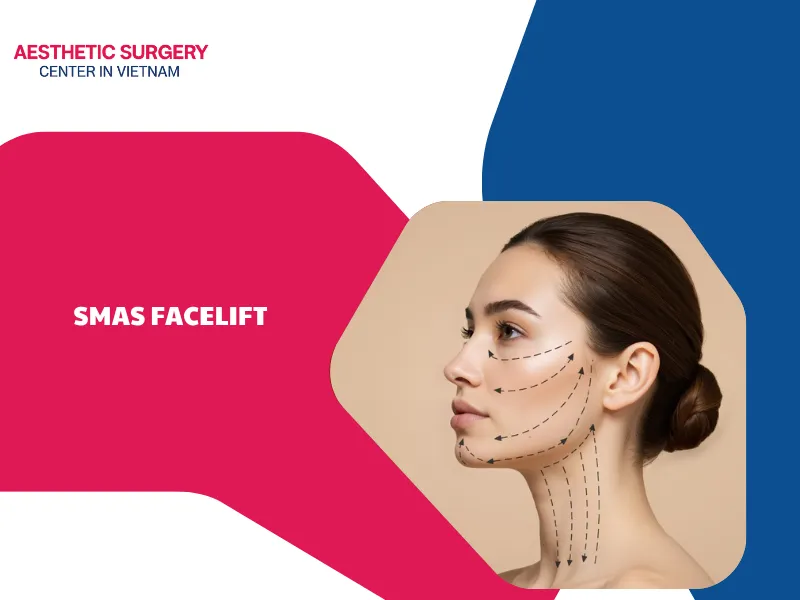
A surgical facelift is a cosmetic surgery designed to treat severe signs of aging, sagging skin, and excess fat on the face. Through surgical incisions carefully hidden around the temples, ears, or along the hairline, the surgeon performs deep tissue dissection. The surgeon then lifts and tightens the superficial musculoaponeurotic system (SMAS) and removes excess skin.
This method helps restructure the entire face and provides significant rejuvenation results. The lifting effect may be long-lasting or last from 10 to 15 years. It is especially suitable for older patients with severe facial sagging.
What is a minimally invasive thread lift?
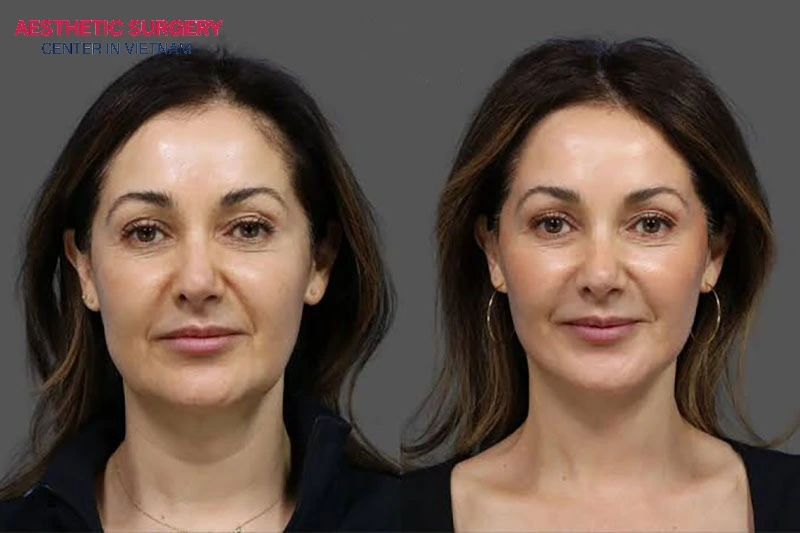
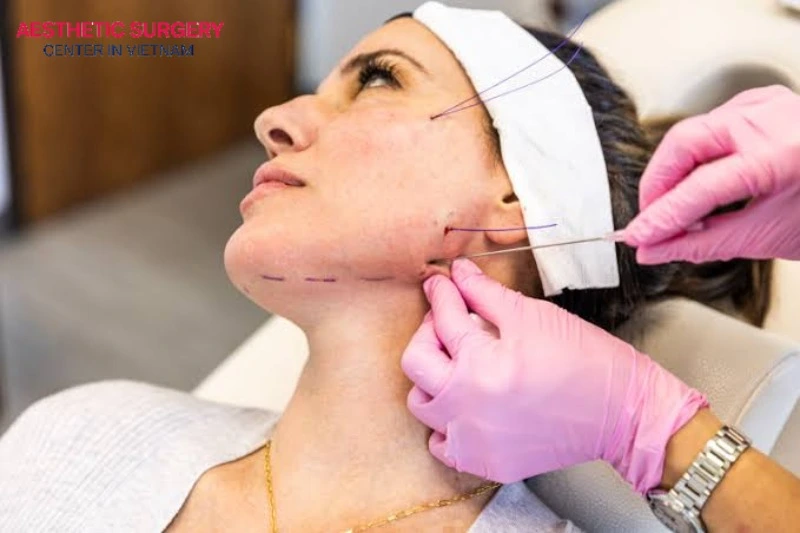
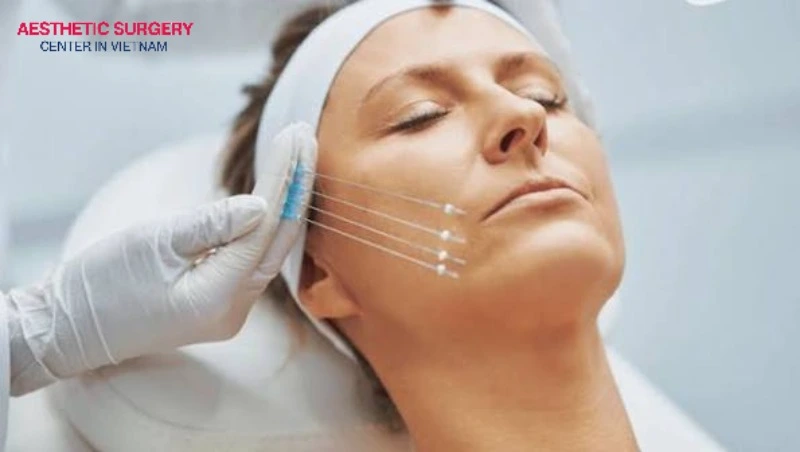
A thread lift is a minimally invasive cosmetic procedure that provides a lifting effect without surgery or complex anesthesia. The surgeon uses specialized ultra-fine needles to insert biological threads with tiny barbs into the tissue beneath the skin. These threads attach firmly to the fascial layer and form a supportive network that immediately lifts sagging areas.
Over time, the thread network also stimulates the body’s natural production of collagen and elastin. This helps the skin maintain firmness and elasticity for 1 to 3 years, with less swelling, discomfort, and a shorter facelift recovery time.
Key differences between facelift and thread lift
The main differences between facelift vs thread lift lie in the technique, level of intervention, and how long the results last. Understanding these differences can help patients choose a method that suits their aging condition and personal needs.
Invasiveness and anesthesia requirements
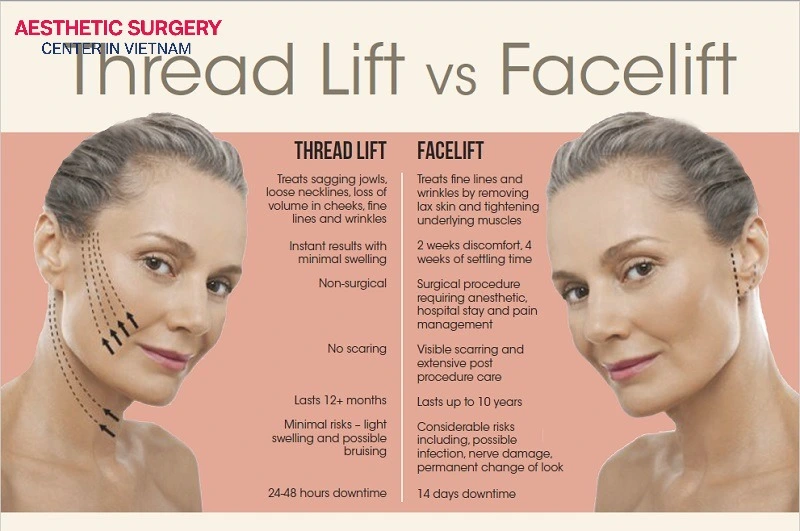
A surgical facelift is a major surgical procedure that requires general anesthesia or sedation. The surgeon makes incisions and performs deep tissue dissection to remove sagging excess skin. In contrast, a thread facelift is a minimally invasive procedure that only requires local anesthesia. Specialized ultra-fine needles are used to insert a network of biological threads beneath the skin without surgical incisions.
Recovery time and downtime
After facelift surgery, patients usually need about 2 to 4 weeks for swelling and bruising to decrease and for sutures to be removed. The procedure also requires careful postoperative care at home. In contrast, a thread lift has a much shorter recovery period. Patients can usually return to normal daily activities and work quickly, while mild swelling often disappears within a few days.
Longevity and maintenance of results
A surgical facelift provides comprehensive facial rejuvenation by restructuring the facial tissues. The results can last from 10 to 15 years. In contrast, thread lift results are shorter-lasting. The threads gradually dissolve over time, while the lifting and firming effects may last from 1 to 3 years. After this period, patients may need additional treatments to maintain the results.
Cost comparison and long term value
The initial cost of facelift surgery is significantly higher because it requires a more complex surgical setting and medical team. However, the results can last for many years after a single procedure. A thread lift has a more affordable and accessible initial cost. However, repeated thread lift treatments may be needed over time, so the total accumulated cost may eventually become similar to or higher than that of surgery.
Which procedure is right for you?
Choosing between facelift vs thread lift does not depend on which method is better. It depends entirely on the degree of aging, your health condition, and your personal preferences. Below are some criteria that can help you determine which option may be suitable for your needs.
Who is the ideal candidate for a thread lift?
A thread lift may be a suitable choice if you meet the following conditions:
- Patients between the ages of 30 and 50 who are beginning to show early signs of skin aging.
- Individuals with mild to moderate facial sagging and not much excess skin.
- Individuals who are concerned about surgery, pain, scars, or the risks associated with surgery and anesthesia.
- Individuals with busy schedules who want a quick aesthetic treatment with minimal downtime.
When is a surgical facelift the better option?
You may consider a surgical facelift if your condition meets the following factors:
- Older patients, usually aged 50 or above, with more advanced signs of aging and noticeable weakening of the facial structure.
- Individuals with severe sagging, deep wrinkles, and a large amount of loose skin and excess fat around the face, double chin, and neck.
- Individuals who want comprehensive rejuvenation and restructuring of the face with long-lasting results of 10 to 15 years.
- Patients who are healthy enough to undergo surgery and can arrange a longer postoperative recovery period of about 2 to 4 weeks.
Potential risks and side effects to consider
Whether you choose a minimally invasive procedure or major surgery, every aesthetic treatment carries certain risks. Therefore, it is important to understand the potential complications below so you can be well prepared and make a safe decision.
Risks associated with thread lifts
Although a thread lift is a relatively gentle procedure, it may still cause swelling, bruising, and mild tingling during the first few days. If the surgeon inserts the needle into the wrong tissue layer or uses poor-quality threads, patients may experience thread breakage, visible threads under the skin, infection at the insertion site, skin pulling, dimpling, or facial asymmetry.
Risks associated with surgical facelifts
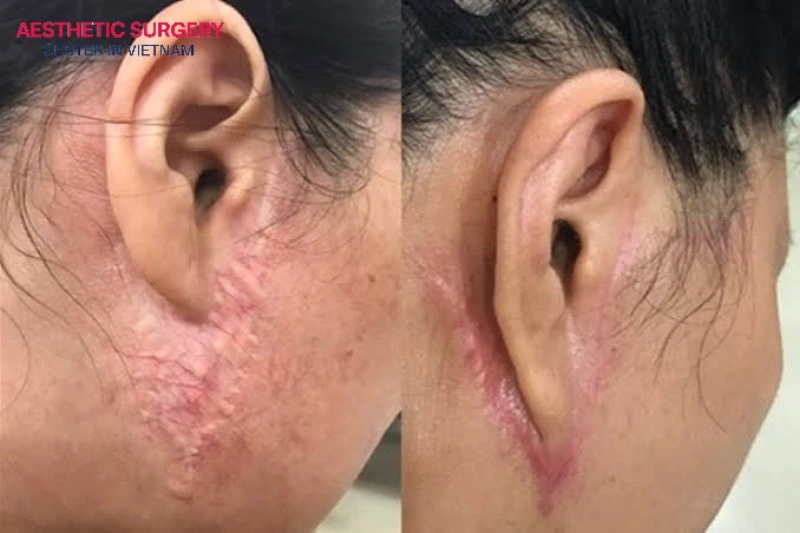
As a complex major surgical procedure, facelift surgery may involve more serious medical risks. These include anaphylactic reactions to anesthesia, postoperative hematoma, or surgical wound infection. If the procedure is performed by someone without proper expertise in tissue dissection, complications may result in a severe facelift scar, skin flap necrosis, or nerve damage that can cause facial muscle weakness or paralysis.
Making your decision
To make your final decision more easily, you can consider the following factors:
- Choose a thread lift if: You are between 30 and 45 years old and your skin is beginning to show mild to moderate sagging. You have a busy schedule, are concerned about pain or surgery, and want to see an immediate lifting effect without spending much time recovering at home.
- Choose a surgical facelift if: You are over 50 and have severe sagging skin with significant excess fat around the chin, cheeks, and neck. You want comprehensive facial rejuvenation and are willing to spend 2 to 4 weeks recovering after surgery in exchange for results that may last 10 to 15 years.
However, the best approach is to visit a reputable aesthetic hospital or clinic for a direct examination by a specialist. By carefully evaluating the underlying tissue structure, skin elasticity, and amount of excess skin, the surgeon can develop a personalized rejuvenation plan that focuses on safety and natural-looking results.
After comparing facelift vs thread lift, it is clear that each method has its own advantages and limitations. The right choice depends on your degree of aging, personal needs, and budget. If you are still unsure whether to choose a surgical facelift or thread lift, visit a reputable clinic, hospital, or aesthetic center for a professional consultation. You can also contact Aesthetic Surgery Center in Vietnam if you have questions about these two facial rejuvenation methods.


















Comment on the post