



Are you wondering, “when can I sleep on my side after a facelift” without the fear of compromising your facial contours? According to experts, you need to maintain a back-sleeping position for 2 to 4 weeks to protect the muscle tissues and sutures. Let’s explore the detailed safe timeline, medical reasons, and your body’s signs of recovery before returning to your favorite sleeping position in this article.
When can I sleep on my side after a facelift?
Addressing the concern of when you can sleep on your side after a facelift, doctors recommend maintaining a back-sleeping position for the first 2 to 4 weeks post-surgery. The exact timeline will depend on the recovery speed of your muscle tissues and the level of intervention of the dissection technique, whether it’s a deep plane SMAS facelift or an endoscopic facelift.
Sleeping on your side too early can increase pressure on the incisions around the ears, causing fluid retention and asymmetrical swelling. More seriously, the friction between your facial skin and the pillow can easily shift the muscle tissues that are currently setting, directly affecting the slimness and symmetry of your face.
Therefore, during routine follow-up appointments, your doctors will evaluate the healing process of your incisions and advise you on the safe time to return to your normal sleeping positions.
Why is back sleeping crucial after facelift surgery?
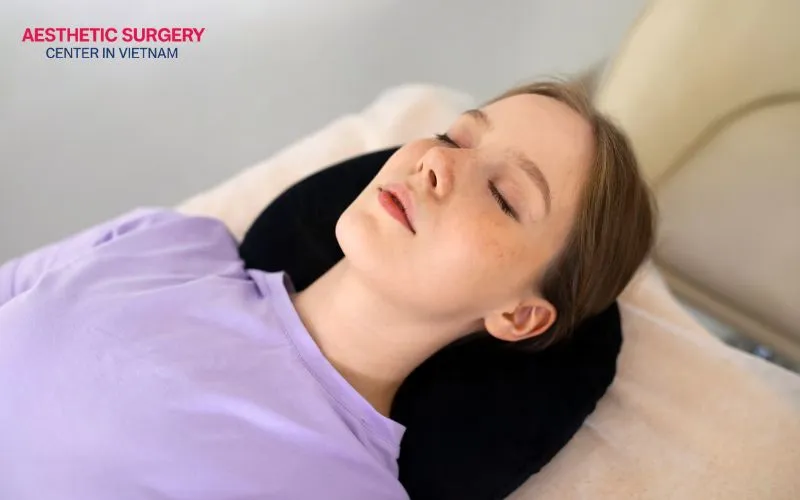
According to experts, the early postoperative period is when muscle tissues are highly sensitive and require space to restructure. Maintaining a back-sleeping position with your head elevated at a 30 to 45-degree angle is highly recommended by doctors for the following 4 outstanding benefits:
- Optimizes the healing process and reduces swelling: Sleeping on your back with your head elevated supports lymphatic drainage and improves blood circulation. This minimizes fluid buildup, thereby reducing swelling, bruising, and uncomfortable tightness on the face upon waking up.
- Protects incisions and prevents complications: The back-sleeping position keeps the face from coming into direct contact with the pillow, thereby avoiding friction and pressure on the wounds. As a result, you can prevent the risk of popped stitches, infections, or the shifting of newly tightened muscle tissues.
- Prevents asymmetry: If you sleep on your side too soon, pressure and gravity will cause fluid to accumulate more on one side of your face. This causes uneven swelling and can distort facial contours, leading to facial asymmetry.
- Maintains and prolongs long-lasting rejuvenation results: Continuous contact between the facial skin and the pillow surface during sleep can lead to the formation of deep sleep wrinkles. Therefore, maintaining a back-sleeping position helps protect the skin from pulling pressures, setting a slim facial contour and safeguarding long-term lifting results.

How to know when it’s safe to return to the side sleeping position?
To know if your body is ready for the side-sleeping position, you shouldn’t guess; instead, rely on the following 3 core criteria:
Doctor’s clearance: You must absolutely not change your sleeping position on your own without your doctor’s approval, even if you feel your body is completely stable. During follow-up visits, your doctor will comprehensively evaluate the closure rate of the incisions, the reduction in swelling after facelift surgery, and the recovery of subcutaneous tissue layers to provide precise instructions.
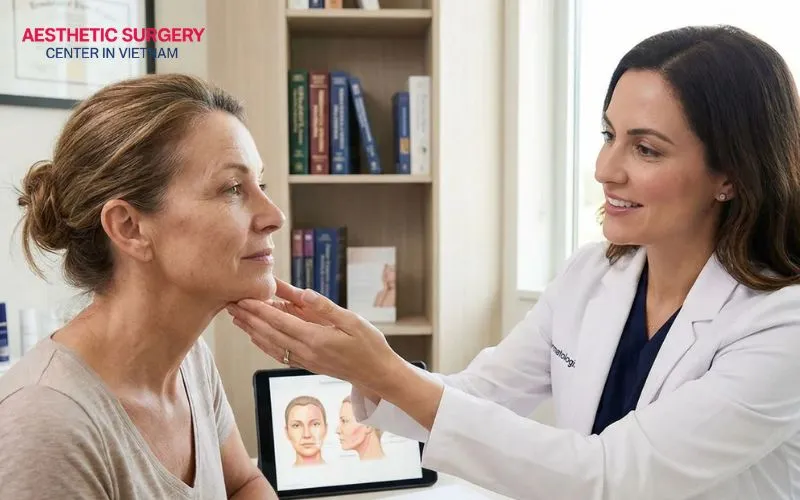
Physical indicators: The safe time to sleep on your side is when the majority of swelling and bruising has disappeared. Your face returns to a natural state, no longer feeling stiff or distorted whenever you move your facial muscles. Especially, when you gently press your fingertips on your facial and neck skin without feeling pain or tightness, it proves that the muscle tissues have firmly reattached. At this point, if you want to switch your sleeping position, you should start by tilting slightly for a few days before fully transitioning to side sleeping.
Individual factors: Everyone’s recovery speed is determined by multiple personal factors, which explains why some people can return to side sleeping after 3 weeks while others might need up to 6 weeks. Among these factors, age and health play the biggest roles, as younger individuals typically have faster cell regeneration rates. Furthermore, lifestyle and the level of surgical invasiveness also affect this timeline. Specifically:
- Maintaining a scientifically balanced diet, a relaxed mind, and refraining from smoking will help accelerate the healing process.
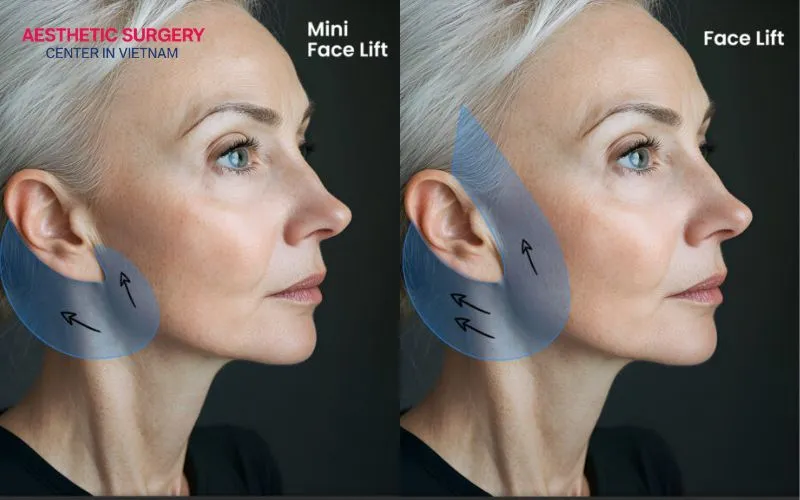
- Minimally invasive mini-facelifts usually have a shorter facelift recovery time, allowing patients to return to side sleeping sooner (around weeks 2 – 3) compared to comprehensive deep plane facelifts (which require 4 – 6 weeks).
Will sleeping on my side ruin my facelift results?
If you are still complacent and wondering if sleeping on your side a little bit is okay, the short answer is YES. Sleeping on your side within the first 14 days can severely impact the final aesthetic results through the following effects:
- Stretching and tearing postoperative incisions: The weight of your head pressing against the pillow when sleeping on your side will pull on the sutures around your ears and hairline. This pressure not only causes pain and skin irritation but also stretches the incisions, easily leaving large, depressed scars, or even causing stitches to burst.
- Causing muscle tissue distortion and asymmetrical swelling: Soft tissues and the superficial musculoaponeurotic system (SMAS) layer require time post-facelift to stably adhere to the bone structure. A side-sleeping position allows gravity to push fluids to one side of the face, causing swelling and bruising. Moreover, this force easily shifts muscle tissues, resulting in a skewed and asymmetrical face.
- Obstructing blood circulation and creating micro-traumas: Sleeping on your side compresses blood vessels and the lymphatic drainage system, leading to a significant drop in the oxygen supply nourishing regenerating cells. Additionally, tossing and turning continuously during sleep creates micro-traumas, disrupting deep sleep and prolonging the wound healing time.

Overall, understanding when can I sleep on my side after a facelift is a necessary preparation step for the postoperative recovery process. This safe timeline will depend largely on the unique regeneration speed of each individual’s body. Therefore, please be patient, attend your routine follow-up appointments, and strictly adhere to your doctor’s instructions; do not rush to change your sleeping position too early, as doing so could compromise your facial contours.





















Comment on the post