



Eyelid surgery is a solution that helps many people achieve larger, well-defined double eyelids as desired. However, along with expectations of an improved appearance, the question “Does eyelid surgery leave a scar?” remains the biggest concern that makes many clients hesitate. Will this procedure leave unwanted cosmetic marks? This article will provide a detailed explanation from an expert perspective.
Does eyelid surgery leave a scar?
The eyelid cutting technique involves surgical instruments applied to the eyelid area to remove excess fat and skin, forming a natural eyelid crease and enhancing eye aesthetics. Therefore, many people wonder whether eyelid surgery leaves a scar. Technically, any incision that cuts through the skin will result in a scar. Eyelid surgery helps correct conditions such as single eyelids, hidden eyelid crease, uneven eyelids double, or drooping eyelids, creating larger and more attractive double eyelids.
However, during eyelid surgery, the surgeon creates an ultra-fine incision close to the eyelid margin, then adjusts it to ensure the crease is balanced with the overall facial features. The incision is closed using specialized cosmetic sutures along the eyelid line. This technique allows the incision to be hidden within or just beneath the eyelid crease. As a result, the scar is well concealed and the risk of visible or poor scarring is minimized.
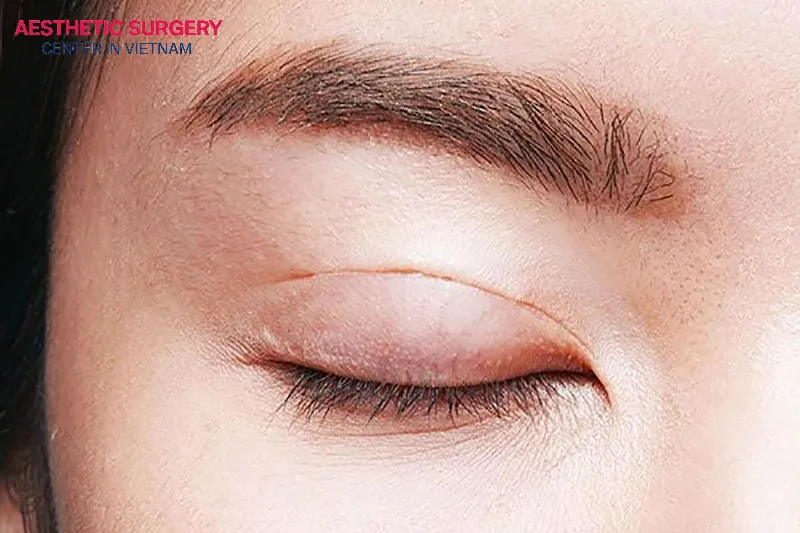
In general, while the answer to “Does eyelid surgery leave a scar?” is technically yes, the mark is usually very thin and carefully concealed. Over time, with proper healing, the scar fades and blends into a natural eyelid crease. Factors such as the surgeon’s skill and modern plasma technology play a huge role in this process. By sealing blood vessels immediately, these technologies lower the risk of dark scarring.
Factors that can cause scarring after eyelid surgery
Cases of noticeable scarring after eyelid surgery are rare, but they can still occur. The formation of scars after eyelid surgery depends on several factors, including:
The surgeon’s skill and experience
During eyelid surgery, the surgeon creates an ultra-fine incision that aligns precisely with the natural eyelid crease. When the eyes are open, this crease folds inward, completely concealing the scar. If the surgeon is highly skilled and eyelid surgery experience, the incision is closed with specialized cosmetic sutures using precise techniques. This helps the wound heal smoothly and allows the scar to gradually fade over time until it becomes nearly invisible to the naked eye.
>>> See more: Blepharoplasty surgeon in Vietnam
Eyelid surgery technology
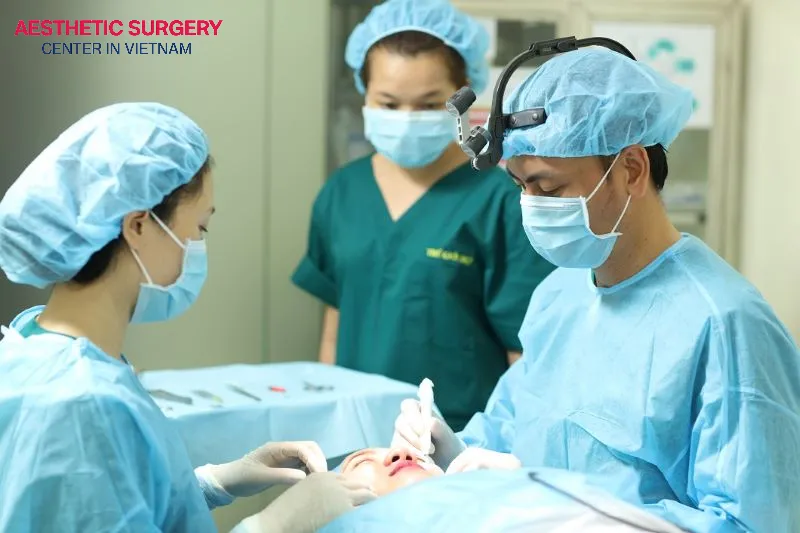
The use of modern technologies, such as plasma surgical devices, allows blood vessels to be sealed immediately upon contact. This helps minimize swelling and bruising while reducing damage to surrounding tissue. With lower levels of invasiveness, the body responds more gently, thereby lowering the risk of hypertrophic or dark scarring after healing.
Post-operative care
Furthermore, post-operative care determines 30–40% of the final result. If you are asking “Does eyelid surgery leave a scar?” because you are worried about the recovery phase, remember that avoiding foods like water spinach or beef and using silicone-based gels can make the scar almost invisible. Protecting your eyes from UV rays and following medical cleansing routines are also essential steps to ensure that any remaining mark becomes nearly impossible to detect with the naked eye.

Individual healing characteristics
No matter how skilled the surgeon is, individual healing characteristics still play an important role. People with slow wound healing, a tendency to develop hypertrophic scars, or very sensitive skin have a higher risk of visible scarring than others. In these cases, scars may remain red for a longer time or appear slightly raised on the skin surface. Therefore, consulting carefully with the surgeon about your personal scar history before surgery is extremely important.
How to prevent scarring after eyelid surgery
To achieve natural-looking eyes without visible cosmetic marks, postoperative care is just as important as the surgeon’s technique. If you strictly follow the guidelines below, the chance of achieving an almost “invisible” eyelid crease can be significantly improved when proper technique and postoperative care are followed.:
Proper medical wound cleansing
Keeping the incision clean is the golden rule to prevent infection, which is the leading cause of poor scarring. During the first 3–5 days, gently clean the eyelid incision with a cotton swab soaked in saline solution to remove discharge and dried blood.
Absolutely avoid letting tap water, sweat, or facial cleansers come into contact with the wound until the stitches are removed. Moist environments and chemical products can slow wound closure and increase the risk of scar formation.

Use medications and scar treatment gels at the right time
You should strictly follow the doctor’s prescriptions for antibiotics and anti-inflammatory medications to reduce swelling. In particular, about 1–2 days after stitch removal, start using a specialized scar treatment gel. Silicone-based gels create a thin protective layer over the wound, retain moisture, and inhibit excessive collagen production. This helps the scar become flatter and blend better with the surrounding skin.
Avoid foods that cause raised or dark scars
Nutrition directly affects the flatness and color of scars. During at least the first month, you should eliminate water spinach from your diet, as it stimulates fibrous tissue growth and may cause hypertrophic scarring.
In addition, avoid beef to prevent darkening of the eyelid crease; avoid sticky rice and chicken to reduce the risk of inflammation or infection. You should also stay away from stimulants such as cigarettes and alcohol, as they affect blood circulation. Proper circulation supports faster tissue regeneration and recovery.
>>> See more: How long to avoid eggs after eyelid surgery?

Protect the eyes from environmental factors
UV rays from sunlight are harmful to fresh wounds and can cause increased pigmentation, making scars darker. Therefore, whenever you go outside, always wear sunglasses and a wide-brimmed hat to protect your eyes. In addition, avoid rubbing your eyes or applying eye makeup too early. Physical friction or cosmetic particles entering the incision can cause irritation, widen the scar line, and interrupt the healing process.
Rest and regular follow-up visits
A healthy body heals faster. You should get enough sleep, avoid staying up late, and limit prolonged use of electronic devices to prevent excessive eye strain and tension in the eyelid area.
Finally, remember to return for follow-up visits as scheduled by your doctor. This helps detect and manage abnormal signs early, such as prolonged redness, severe itching, or scars that begin to thicken or rise.
After addressing the question “Does eyelid surgery leave a scar?”, readers can gain clearer answers and more useful information about eyelid cosmetic procedures. Most importantly, you should choose a reputable aesthetic facility with skilled surgeons and proper postoperative care to achieve satisfying results and prevent unwanted risks.















Comment on the post