


Brow lift scars are often a major concern for many patients who want facial rejuvenation. The appearance of the scar and how well it fades depend on the surgical technique and each person’s skin condition. Let’s explore the characteristics of brow lift surgery scars and useful care tips to help reduce scarring and achieve natural, refined brows.
What do brow lift scars look like?
After surgery, the appearance of a brow lift scar changes during each stage of the healing process. In most cases, surgeons carefully place the incision along the brow line or within the eyebrow to improve aesthetic results.
During the first few weeks, the scar may appear light pink or reddish-purple and slightly raised due to the body’s natural inflammatory response. Depending on the surgical technique and post-operative care, brow lift surgery scars may appear in several forms:
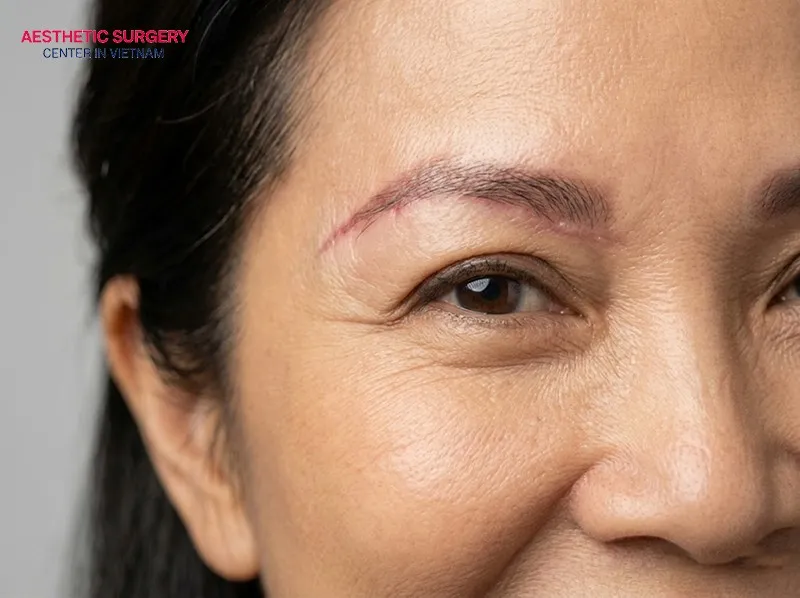
- Fine-line scar: This is the ideal result. The scar gradually fades into a very thin white line that is almost invisible under the natural eyebrow hairs.
- Dark scar: This is common among Asian patients due to melanin buildup. The incision line may appear darker than the surrounding skin.
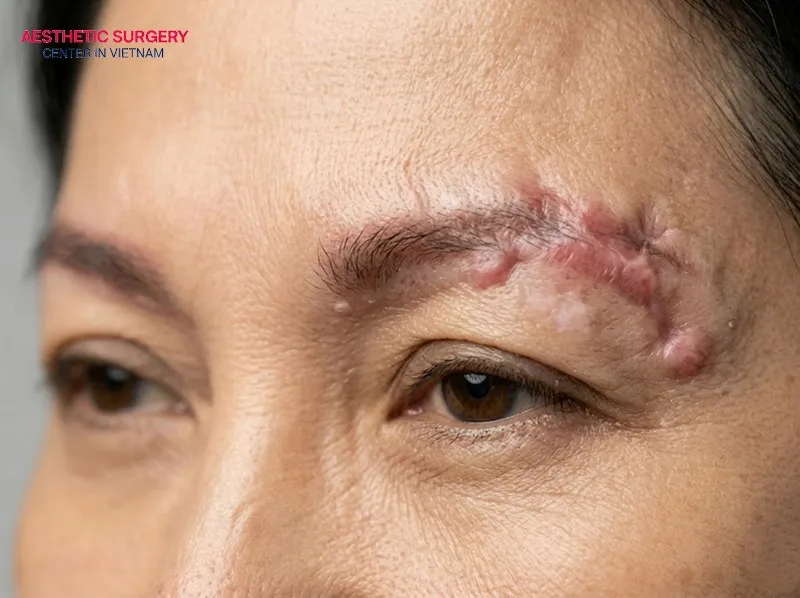
- Raised or hypertrophic scar: This may occur in sensitive skin types or when the wound is under excessive tension. The scar tissue becomes raised and firm, affecting the natural appearance of the brow line.
Will a brow lift with botox leave scars?
A brow lift with Botox does not leave scars because it is a non-surgical cosmetic procedure. Instead of making incisions, the surgeon uses a very fine needle to inject botulinum toxin into specific muscle groups around the eyes.
This method works by relaxing the muscles that pull the brows downward. The brows lift naturally without creating open wounds. As a result, the skin surface remains intact and the risk of scarring is completely eliminated.
What do gone wrong endoscopic brow lift scars look like?
Gone wrong endo brow lift scars often appear when the wound heals poorly or when the surgical technique is not performed properly. The scars may look tight, uneven, or clearly visible on the skin surface. In some cases, deep tissue damage can lead to raised scars, depressed scars, or long-term pigmentation loss, which directly affects facial appearance.
In particular, temporal brow lift scars may appear as rough incision lines that feel firm or fibrous. Some patients may also experience hair loss around the incision site. Improper handling of the wound, infection, or excessive tension during healing can lead to darker and more noticeable brow lift surgery scars, which may affect confidence.
How to minimize scarring after a brow lift?
To achieve the best aesthetic results, controlling tissue regeneration after surgery is essential to help the incision fade quickly. Below are effective methods that help prevent and reduce brow lift scars at home.
Follow proper post-operative wound care
Keeping the eye area clean and dry during the first few days helps prevent infection, which is a major cause of raised scars. You should gently clean the area with saline solution and avoid letting water or dirt come into direct contact with the sutures.
At the same time, avoid touching or scratching the wound. This protects the new skin that is forming and helps the surface heal smoother and more evenly.

Use specialized scar treatment creams
After the sutures are removed and the wound has fully closed, applying specialized scar treatment creams is an effective way to smooth the skin surface. These products create a protective layer, maintain moisture, and help control excessive collagen production in the brow area.
Applying the cream regularly 2 to 3 times a day helps the surgical scar become smaller and gradually change from pink to a lighter color that blends with the natural skin tone.
Maintain a healthy diet and lifestyle
Proper diet plays an important role in how quickly skin cells recover and helps prevent common brow lift complications after cosmetic procedures.
You should avoid certain foods after a brow lift that may increase the risk of raised scars or dark pigmentation, such as water spinach, beef, seafood, and sticky rice, for at least the first month to ensure smooth healing. Instead, add foods rich in vitamin C, vitamin E, and zinc to support healthy tissue regeneration. In addition, protecting the area from direct sunlight helps prevent hyperpigmentation and keeps the scar from becoming darker.

Brow lift scars can be controlled and gradually fade if you choose the right method and follow proper aftercare. Understanding the characteristics of each type of scar and following your surgeon’s instructions are key to achieving a youthful and radiant appearance without visible signs of cosmetic surgery. Hopefully, the information above helps you feel more confident on your journey to enhancing your beauty and achieving refined, natural-looking brows.













Comment on the post