



Among the risks associated with cosmetic injections, experts consider vascular occlusion lip filler to be the most dangerous. With just a slight deviation of the needle, the injected filler can completely block the blood flow that nourishes the cells, causing severe, excruciating pain… So, what are the causes of this condition? How can it be treated? Let’s find out the details here.
What is filler-induced vascular occlusion?
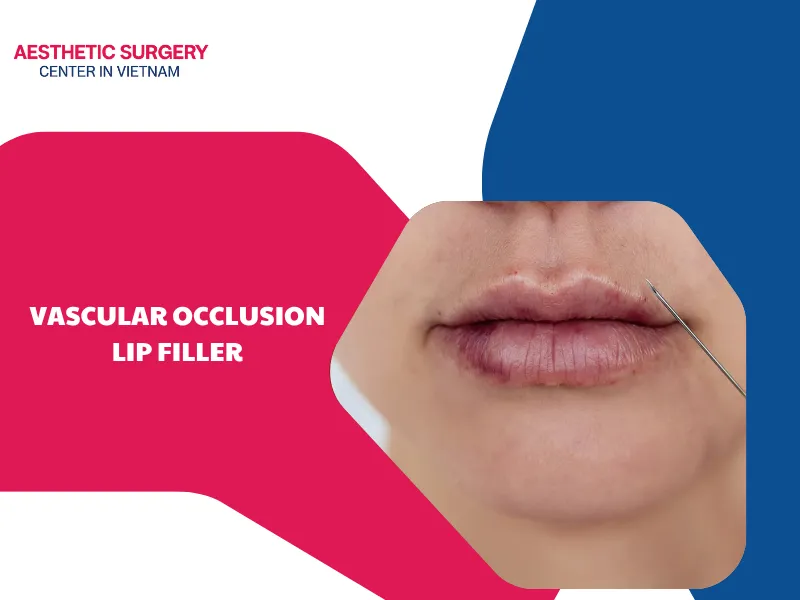
Filler-induced vascular occlusion (often encountered in cases such as a vascular occlusion lip filler complication) is a severe and emergent medical complication in aesthetic medicine. It occurs when filler is accidentally injected directly into a blood vessel or when an excessive amount is injected, causing external compression on the blood vessel.
The mass of filler disrupts or completely blocks the natural circulation of blood flow. As a result, the adjacent skin and tissues are cut off from their supply of oxygen and essential nutrients.
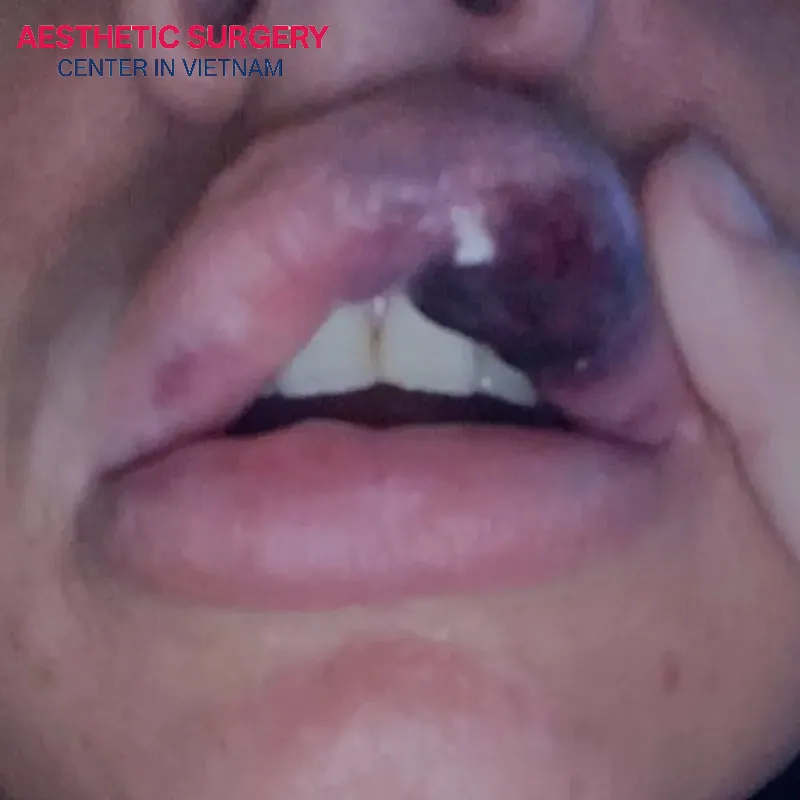
If not detected immediately and managed with timely intervention, this ischemia will rapidly progress to tissue necrosis, resulting in permanent scarring, anatomical deformity, and severe aesthetic damage to the patient.
Signs of vascular occlusion after lip filler injections
Below are the typical clinical warning signs indicating the risk of vascular occlusion after lip filler injections, briefly listed for easy identification:
- Severe pain: Unusual, intense pain that exceeds the normal discomfort of standard injections and does not subside over time. This pain may radiate beyond the lip area.
- Blanching: The skin of the lips or surrounding areas immediately turns stark white or pale during or right after the injection due to blocked blood flow.
- Sluggish capillary refill time (CRT): When light pressure is applied to the blanched skin with a finger and then released, it takes an extended amount of time (more than 3 seconds) for the blood to return and the skin to turn pink again.
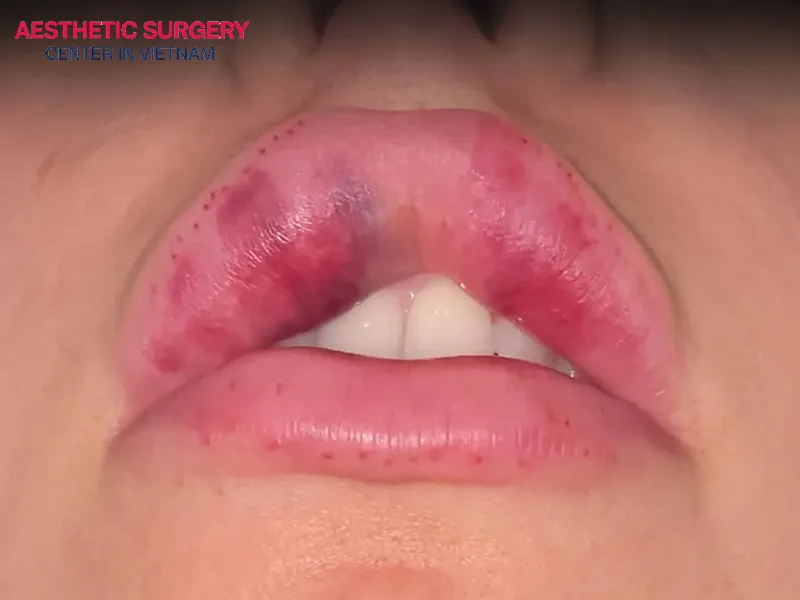
- Mottled skin discoloration: The skin surface develops pale gray, bluish-purple, or dark patches, or exhibits a crisscrossing, net-like pattern (Livedo reticularis).
- Decreased temperature at the injection site: To the touch, the lips and surrounding skin feel noticeably cooler compared to normal body temperature.
- Blistering and ulceration (Late signs): If not treated promptly, the ischemic (blood-starved) area will develop small blisters, pustules, skin peeling, or ulcers, warning that the tissues are entering the stage of necrosis (tissue death).
Causes of vascular occlusion during lip filler injections
Vascular occlusion during lip filler injections is not a random accident, but often stems from direct physical impacts on the circulatory system or procedural errors. Below are the 4 main causes leading to this serious aesthetic emergency:
Accidental intravascular injection
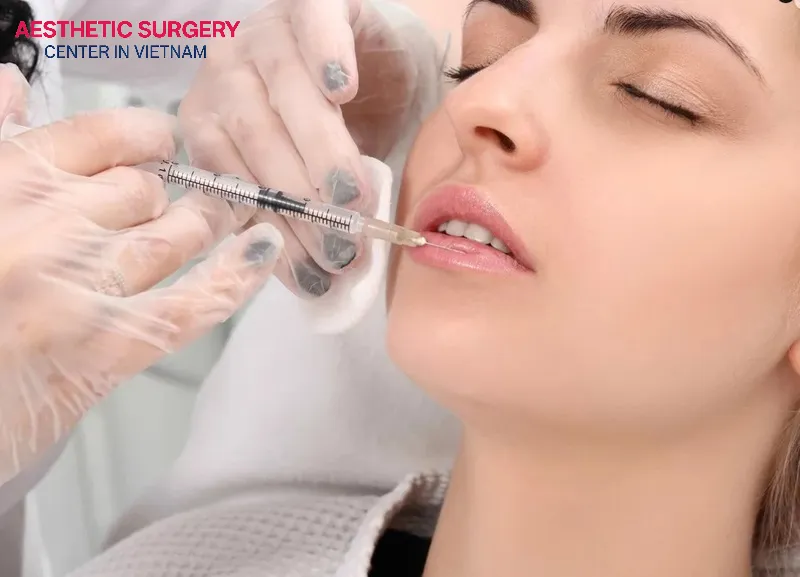
This is the most direct cause and brings about the most rapid consequences. This condition occurs when the needle pierces the vessel wall and the injector inadvertently pumps the filler directly into the lumen of an artery or vein. The filler mass then acts as an artificial blood clot, instantly obstructing the vessel and completely cutting off the flow of oxygen- and nutrient-rich blood that nourishes the cells in the lip area.
External compression
Occlusion is not necessarily caused by direct injection into a blood vessel. When the practitioner injects an excessive amount of filler or concentrates too much of it within a narrow tissue space, this mass creates enormous physical pressure. This external compressive force presses heavily on adjacent blood vessels, causing the vessel walls to collapse, narrowing their caliber, or closing them completely, thereby obstructing natural blood circulation.
Anatomical variations
Although medical literature always provides standard anatomical diagrams, in reality, every individual’s vascular system is unique and highly variable. The course of the superior and inferior labial arteries in some clients may be located in a more superficial or deeper layer, or follow an abnormal trajectory compared to the standard position. These natural discrepancies serve as a dangerous “trap,” meaning that even practitioners who flawlessly execute basic techniques can still encounter risks if they lack clinical assessment experience.
Errors in injection technique
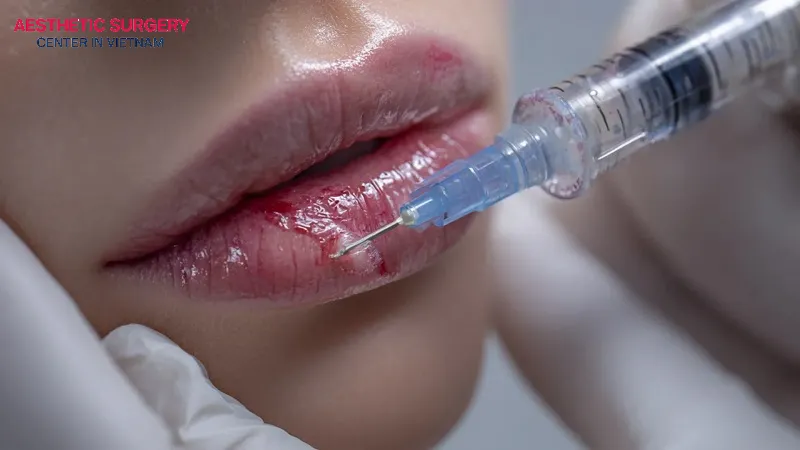
Technical mistakes such as injecting filler with excessive pressure, extruding the product too quickly, using an incorrectly sized sharp needle, injecting into the wrong anatomical plane, or neglecting the aspiration step to ensure safety prior to injection… It is precisely these factors that drastically increase the risk of occluding the vascular system supplying the lips.
Progression of vascular occlusion symptoms after lip fillers
Vascular occlusion is a medical complication that progresses rapidly, with its severity increasing over time. Closely monitoring and understanding the changes in clinical symptoms from the first few minutes to several days post-injection is the key to timely medical intervention, saving the damaged tissue before necrosis occurs. Below are the typical stages of symptom progression that require special attention:
Severe, persistent pain
Unlike the typical mild stinging or soreness after an aesthetic injection, pain caused by vascular occlusion is extremely intense and appears almost immediately. The pain is usually aching and persistent, and it does not subside even with ice application or rest. This pain also tends to radiate along the path of the compressed blood vessel, extending beyond the initially injected lip area.
Prolonged blanching or paleness of the skin
This is one of the earliest warning signs, often occurring right in the treatment chair or within the first few hours. When the flow of oxygenated blood is suddenly blocked, the skin of the lips and surrounding areas will immediately lose its natural pink hue, turning stark white or pale. If this condition persists and the color does not naturally return, it is clear evidence of a severe blockage in blood circulation.
Skin discoloration
Over time, as the tissues begin to suffer damage from prolonged oxygen deprivation, the skin color will deteriorate. From the initial stark white, the affected skin will gradually develop dark gray or purplish-blue patches, or display a distinct mottled, net-like pattern (Livedo reticularis). This is a red flag indicating that the cells are entering the necrosis stage.
Cold skin
Circulating blood not only supplies nutrients but also maintains a stable body temperature. Therefore, when arterial blood flow to the lips is interrupted, the temperature in this skin area and its surroundings will drop significantly. Upon touch, you can easily feel that the damaged tissue is noticeably colder compared to the natural warmth of adjacent normal skin.
Sluggish capillary refill
Doctors often use the “Capillary Refill Time” (CRT) test to evaluate circulation. When pressing firmly on the pale skin with a finger and then releasing it, a healthy vascular system will push blood back to pink up the skin within 1-2 seconds. In cases of vascular occlusion, this process is very sluggish, taking more than 3 seconds, or the skin may fail to regain its pink color altogether.
Increasing swelling
Although mild swelling is a normal physiological response of the body after filler injection, lip filler swelling caused by occlusion is abnormal and progressively worsens. The swelling will become severely tense, spreading rapidly alongside a feeling of heaviness. In later stages, tiny blisters, purulent discharge, or ulcers may begin to appear on the surface of the swollen skin, marking the point where necrosis has destroyed the skin structure.
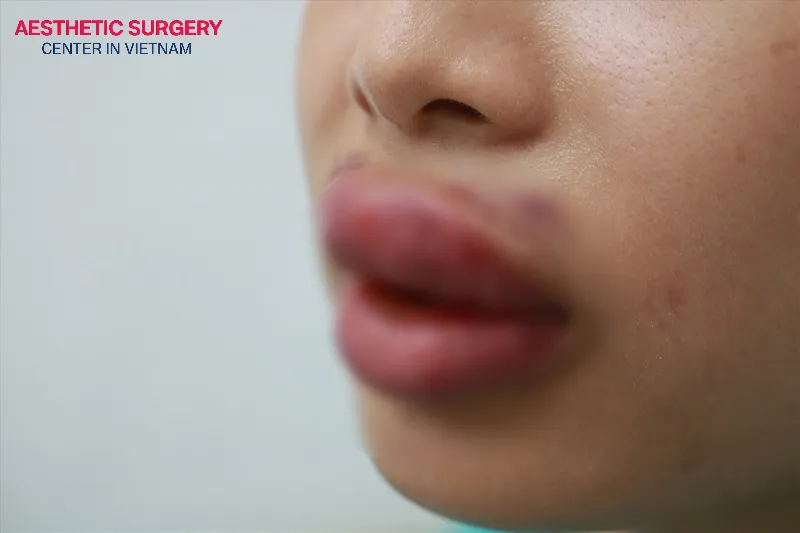
How to resolve a vascular occlusion lip filler complication?
Vascular occlusion is a medical emergency that requires an urgent, accurate response and strict adherence to treatment protocols. Depending on the time of detection and the level of severity, the doctor will immediately apply the following intervention steps to restore blood circulation and protect lip tissues from the risk of necrosis:
Stop the injection
As soon as early warning signs are detected in the injection chair—such as the lip skin instantly turning pale (blanching) or the client crying out due to an unusual, sharp pain the first and mandatory action is for the doctor to withdraw the needle and stop injecting the filler immediately.
Any attempt to continue injecting filler at this point will only increase the compression pressure on the vessel walls or inadvertently introduce more foreign material deep into the blood vessel. Stopping promptly will help minimize damage and create favorable conditions for the subsequent emergency steps.
Warm compress and massage
Unlike standard swelling, which is typically treated with cold compresses, when there are signs or suspicions of a vascular occlusion, the doctor will apply a warm compress to the affected lip area. The warm temperature helps to dilate blood vessels, promotes blood circulation, and assists the blood in navigating past the blockages to nourish the adjacent tissues.
Simultaneously with the warm compress, the doctor will perform a massage technique using firm, direct pressure on the injected area. This mechanical manipulation aims to break up the clumped filler and disperse it away from the compressed blood vessel, thereby creating space for the blood flow to resume.

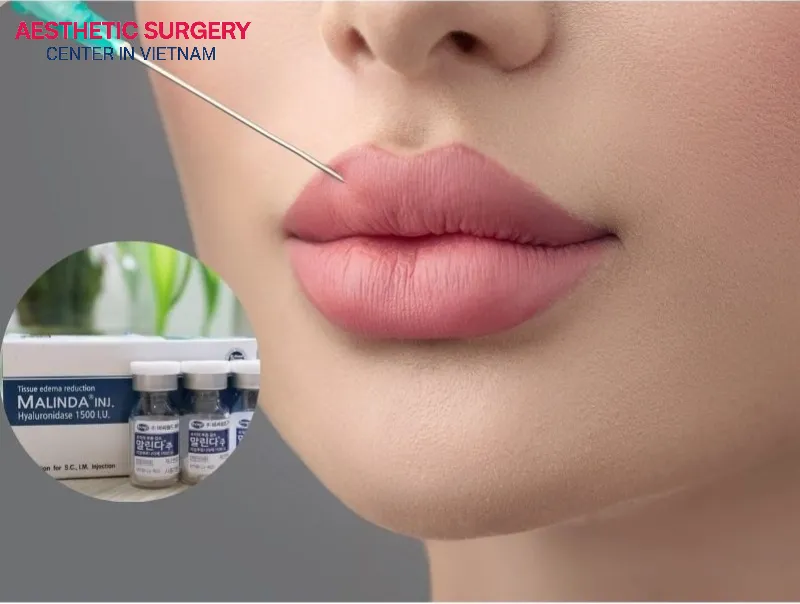
Hyaluronidase injection
The injection of the Hyaluronidase enzyme is considered the “gold standard” and a vital intervention for vascular occlusion cases caused by the misuse or accidental injection of Hyaluronic Acid (HA) fillers. The doctor will inject a high dose of this enzyme, directly flooding the site of the blockage and the surrounding tissues.
Upon entering the tissue environment, Hyaluronidase acts as a highly potent catalyst, breaking down the cross-links of the filler mass and rapidly dissolving it into a liquid state. Once the physical cause of the obstruction is cleared and the pressure is relieved, the blood vessels will naturally reopen, thereby “rescuing” the threatened lip tissue.
>>> See more: How can you avoid complications from dermal fillers?
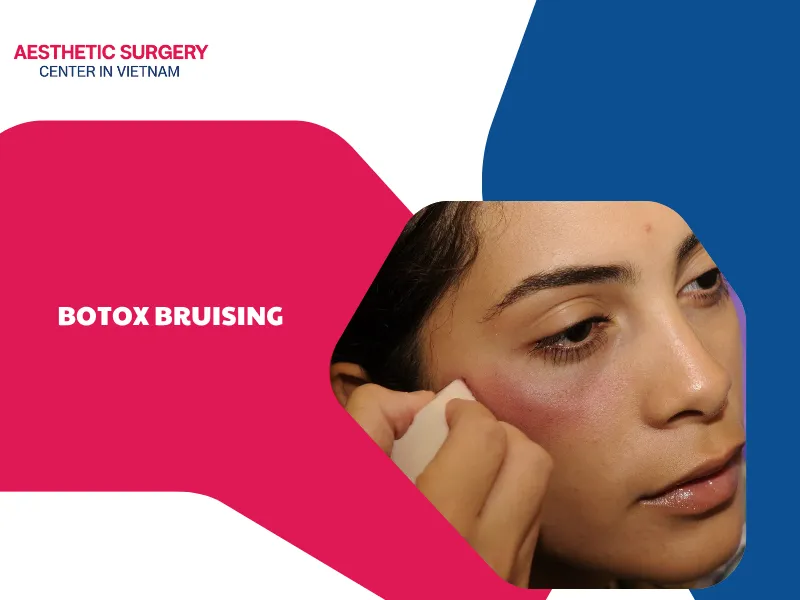
Vascular occlusion vs. bruising after lip filler injections
Confusing bruising after lip filler with vascular occlusion can lead to serious aesthetic and anatomical consequences. Below is a detailed comparison table to help you quickly identify and accurately distinguish between these two conditions:
| Distinguishing criteria | Bruising (Normal reaction) | Vascular occlusion (Medical emergency) |
| Time of onset | Appears after a few hours or 1 – 2 days post-injection. | Usually occurs immediately in the treatment chair or within the first few hours. |
| Skin color | Dark red or bluish-purple, then gradually turns yellow/green as the blood breaks down. | Immediate blanching (pale white), followed by a gray/blue-black mottled or reticular pattern (livedo reticularis). |
| Pain level | Mild aching or swelling, only painful when the injected area is pressed firmly. | Severe, persistent, and excruciating pain that spreads to surrounding areas. |
| Skin temperature | Normal and warm, consistent with the surrounding skin areas. | Cold to the touch, with a noticeably reduced temperature due to the lack of warming blood circulation. |
| Capillary refill time | Normal (when you press a finger on the skin and release, it instantly returns to a pink color within 1 – 2 seconds). | Very slow (takes more than 3 seconds) or the skin fails to return to a pink color after pressing and releasing. |
| Clinical progression | Swelling gradually reduces, the color fades, and it resolves completely on its own after 5 – 14 days. | Worsens very rapidly; tiny blisters, pus discharge, or tissue ulceration (necrosis) may appear. |
| Management | Cold compresses, apply bruise-healing topical treatments, and rest (resolves on its own). | Medical emergency: Immediate injection of a dissolving enzyme (Hyaluronidase) is absolutely mandatory. |
Overall, vascular occlusion lip filler complications are preventable and treatable if detected early. If you notice signs like pale skin, severe pain, or mottled patterns after injections, seek emergency care immediately. Contact our specialist doctors right away for a safety consultation or prompt, effective support for botched injections!















Comment on the post