



Before breast augmentation, asking can breast implants cause cancer is a common concern for many women. In fact, medical evidence shows that standard breast implants do not increase the risk of common breast cancer. However, some rare conditions have been reported. Therefore, it is important to understand the essential information below to help protect your overall health when undergoing breast augmentation.
Can breast implants cause cancer?
According to medical experts, breast implants do not cause breast cancer and do not increase the risk of developing malignant tumors in breast tissue as many individuals fear. Medical data from reputable organizations have shown that silicone or saline breast implants do not increase the incidence of breast cancer or affect diagnostic imaging results.
However, modern medicine has identified some rare conditions that can occur outside the breast tissue after breast augmentation. One of these is a specific type of lymphoma that develops in the scar tissue surrounding the breast implant. This rare condition is known as BIA-ALCL, which stands for breast implant-associated anaplastic large cell lymphoma. It is a type of non-Hodgkin lymphoma. It is important to understand that BIA-ALCL is not breast cancer. The malignant cells do not originate from the milk ducts or normal breast tissue. Instead, they develop in the fluid or fibrous tissue surrounding the implant.
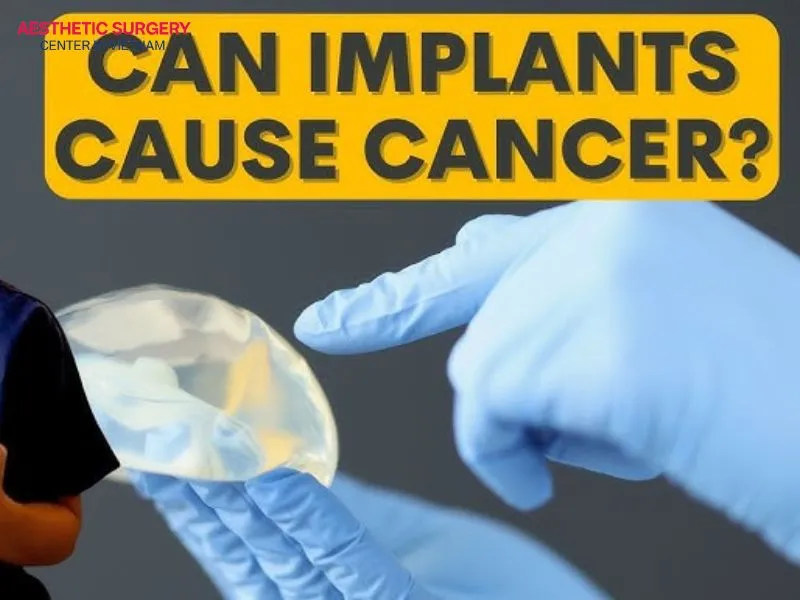
Medical experts have identified textured surfaces as a key breast augmentation risk associated with this type of anaplastic large cell lymphoma. Textured implants are designed to adhere better to surrounding tissue and reduce the risk of implant rotation. However, the textured surface may trigger a chronic local immune response in some sensitive individuals. Over time, this may contribute to abnormal changes in T lymphocytes.
Current statistics estimate the risk of BIA-ALCL at around 1 in 30,000. This means that approximately one case may occur for every 30,000 breast augmentation procedures involving implants. However, the risk depends greatly on the type of breast implant used. Older textured breast implants have shown a much higher risk than completely smooth implants. Understanding this information can help women make more informed decisions when choosing safe breast implants.
Understanding BIA-ALCL
Recognizing unusual breast changes after augmentation can help detect BIA-ALCL before it spreads to nearby areas. Persistent swelling in one breast several years after breast augmentation is an important clinical sign. This condition is often associated with fluid buildup around the implant. The affected breast may suddenly become larger, firm, or painful without a clear cause. In some cases, the patient may also feel a lump in the scar tissue surrounding the implant.
Identifying symptoms of BIA-ALCL requires a careful examination by surgeons with expertise in plastic surgery. In many cases, these symptoms may be confused with capsular contracture or a common infection. Capsular contracture occurs when the body forms a thin layer of scar tissue around the implant to isolate the foreign object. This tissue may sometimes tighten and cause pain or breast deformity, but it does not produce malignant cells. In contrast, BIA-ALCL often causes sudden fluid buildup around the breast implant. It may develop 3 to 14 years after surgery. Because symptoms often appear many years after implant placement, many women may mistake them for a common infection or a minor breast injury.
After breast augmentation, women should continue checking their breasts even several years after surgery. They can look in a mirror to check whether both breasts remain symmetrical. They can then gently use their fingers in a spiral motion from the outside toward the center to feel for changes in softness, hard lumps, or uneven skin. If one breast suddenly changes in size and persistent tightness lasts for several weeks, the patient should visit a major hospital for evaluation with appropriate medical imaging and diagnostic equipment.
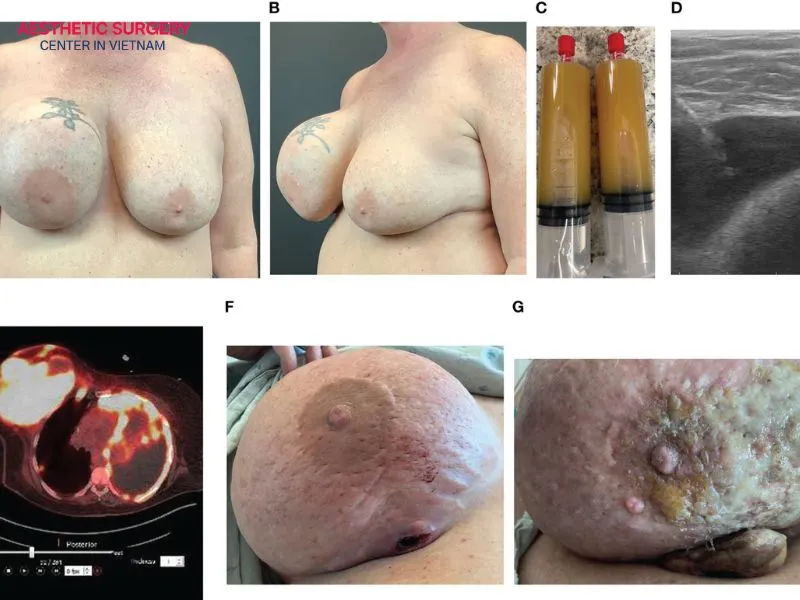
Symptoms of breast implant related complications
Warning signs of breast implant complications often develop gradually and may progress slowly over many years. Patients should closely monitor changes in their bodies. Common clinical signs include:
- Swelling in one breast caused by excessive fluid buildup between the implant shell and the surrounding capsule. This can make the breast feel tight and suddenly increase in size. It may also cause dull or sharp pain around the implant area.
- Lumps, firm areas under the skin, or unusual changes in breast shape are also warning signs that should not be ignored.
Early recognition of these symptoms through self-monitoring and regular medical checkups plays an important role in treatment outcomes. Medical experts recommend that individuals with breast implants pay attention to even small changes. These may include increasing asymmetry between the breasts, a feeling of heaviness, or persistent discomfort that spreads toward the armpit. If these unusual signs appear, patients should avoid strong massage or home treatments. They should see a plastic surgeon promptly for a thorough medical evaluation.

Diagnosis and treatment of BIA-ALCL
The diagnosis and treatment of BIA-ALCL require close coordination between plastic surgeons, oncologists, and diagnostic imaging specialists. The cure rate is very high when the condition is detected and treated early. At this stage, the disease remains confined within the capsule and has not spread to surrounding tissues. In advanced cases or when nearby lymph nodes are involved, surgeons may recommend additional treatments such as chemotherapy or radiation therapy according to standard oncology protocols.
How doctors detect the disease
BIA-ALCL is detected through a combination of clinical examination, diagnostic imaging, and specialized laboratory tests. When a patient has breast swelling, pain, and fluid buildup around the implant, the surgeon may recommend an ultrasound or MRI scan to examine the implant area in detail. The surgeon then uses a fine needle to collect a sample of the fluid for laboratory analysis and evaluation. Detecting abnormal lymphocytes that express the CD30 antigen in the fluid sample is a key part of making an accurate diagnosis.
Steps in the treatment process
The standard treatment process for patients with BIA-ALCL combines surgical and medical approaches to remove the disease as completely as possible. The specific steps include:
- Step 1: Completely remove the breast implant together with the entire surrounding capsule in one piece to reduce the risk of spreading abnormal cells to nearby healthy tissues.
- Step 2: Remove affected lymph nodes through the armpit if preoperative imaging shows signs of lymph node involvement.
- Step 3: Perform a detailed pathological examination after surgery to determine whether the patient needs additional chemotherapy or radiation therapy based on the actual stage of the disease.
Monitoring your breast health
Monitoring and caring for breast health requires patience and a proactive approach from individuals who have undergone breast implant surgery. Regular checkups are important not only for the early detection of rare conditions such as BIA-ALCL but also for checking implant integrity, rupture, or leakage. Medical experts recommend that individuals with breast implants maintain a regular health checkup schedule at reputable medical facilities to receive accurate professional assessments.
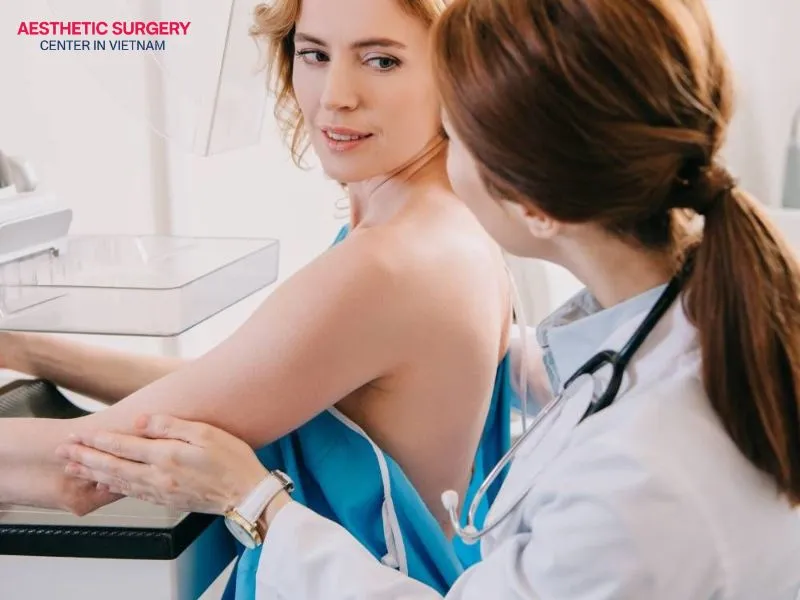
Importance of regular checkups
Regular screening serves as an important safeguard for health after breast augmentation surgery. It helps detect abnormal changes inside the breast implant pocket at an early stage. Some serious complications or silent implant ruptures can develop without causing pain or obvious symptoms. This may cause patients to overlook the condition.
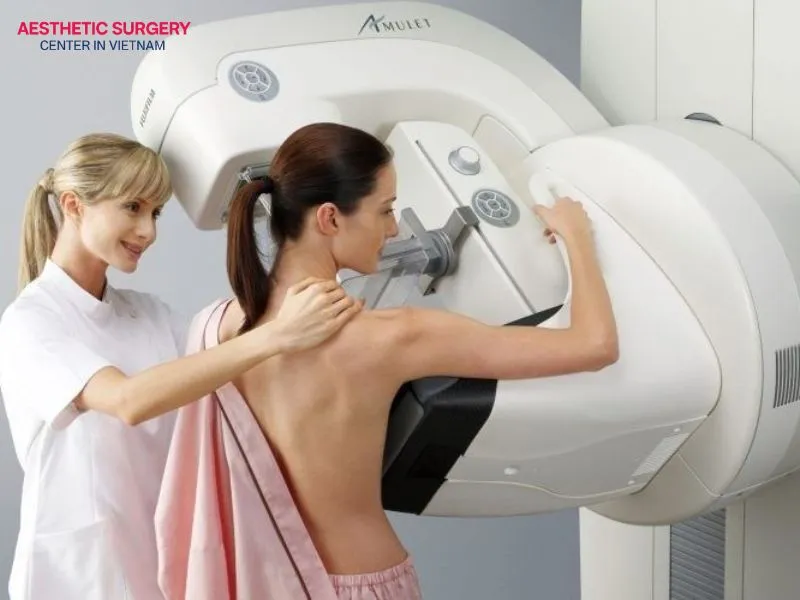
Breast implant examinations using specialized imaging methods should follow the recommended schedule to help detect any developing problems. Regular follow-up is generally recommended around 6 months to 1 year after the initial surgery. This allows the surgeon to check incision healing and how well the breast implants have settled. After this period, patients should continue regular screening with ultrasound or MRI every 2 to 3 years according to the guidance of their plastic surgeon.

When to consult your surgeon
Individuals with breast implants should see their surgeon immediately if they notice any unusual changes in the breast area. These signs may include persistent swelling, fluid buildup around the implant, prolonged pain, or an unusual lump. Urgent medical attention is also needed if the breast suddenly changes shape, becomes unusually firm, or shows signs of implant rupture during routine screening. Contacting a specialist promptly can help reduce concerns and provide timely, safe, and effective treatment to protect overall health.
Overall, understanding the scientific information about whether can breast implants cause cancer helps women make more informed decisions for a safer breast augmentation journey. Through the information above, readers can better understand this concern and find an appropriate answer. Although the risk of complications is very low, choosing a specialized medical facility and following a strict screening schedule remain important for protecting overall health. If you are planning to undergo breast augmentation in Vietnam and have not yet found a suitable option, you should consult a specialist at Aesthetic Surgery Center in Vietnam for an appropriate care plan. Contact us today to schedule an examination and receive an in-depth consultation with a plastic surgeon.
>>> See more: Factors affecting breast augmentation treatment













Comment on the post