



Large, round eyes with defined eyelid creases are a beauty standard many Asians aspire to. For those with single eyelids, hidden creases, or uneven eyelid folds, cosmetic surgery can create a defined crease to enhance facial balance. This article provides a detailed guide to Asian blepharoplasty surgery and essential information to help you choose the method best suited for your eyes.
What is asian blepharoplasty surgery?
Asian blepharoplasty is a cosmetic procedure that creates a clearly defined upper eyelid crease. This technique is well-suited for Asians with single eyelids or faint creases, helping the eyes appear larger and more harmonious with the face. The surgery forms a permanent eyelid fold, customized to each individual’s eye shape, resulting in a natural-looking outcome without an artificial appearance.
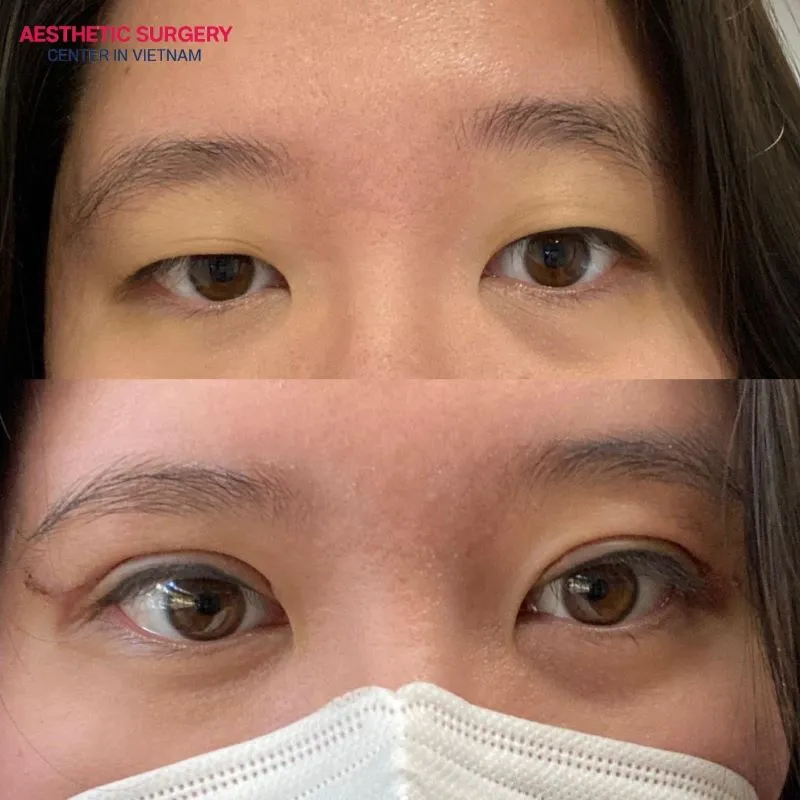
Before selecting the appropriate technique, the surgeon will assess each patient’s eyelid skin thickness, excess fat, and levator muscle structure. Based on these results, the surgeon will recommend one of two common methods to create a natural eyelid crease:
- Suture method: Also called non-incisional or stitch method, this technique uses specialized threads to connect the eyelid skin to the levator muscle, forming a new crease. The surgeon carefully threads the sutures through specific points on the eyelid to fix the crease in the predetermined position.
- Incision method: The incision technique is widely chosen for its long-lasting results. The surgeon makes a fine incision along the upper eyelid at the desired position to create a permanent crease.
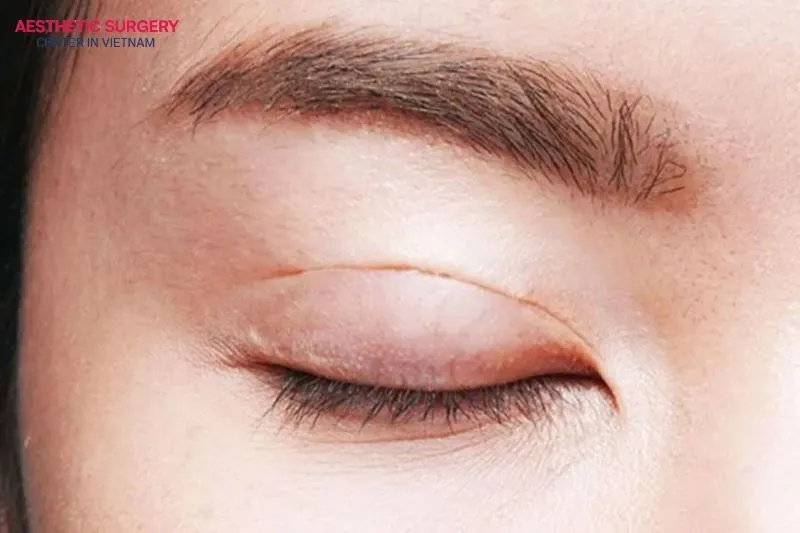
Suitable candidates for Asian blepharoplasty
Asian eyelid surgery is an ideal solution for those who want a well-defined crease that looks natural and harmonious with East Asian facial features. Suitable candidates include:
- Individuals with single eyelids or a hidden eyelid crease who lack a clearly defined fold.
- Those seeking to enhance the eye area aesthetically and make their eyes appear larger.
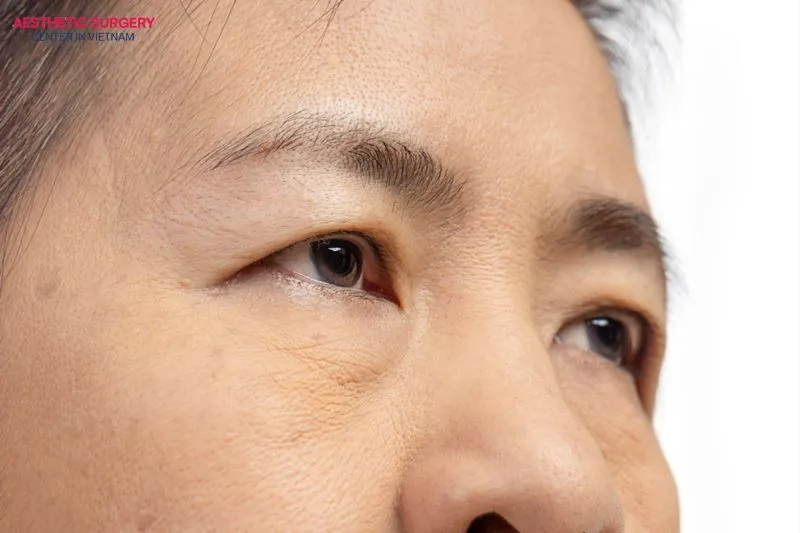
- Individuals requiring upper and lower blepharoplasty to address sagging upper lids and puffiness, which can be effectively treated via transconjunctival lower eyelid blepharoplasty for a scar-less result.
- Individuals with uneven or asymmetrical eyelid folds.
What to expect during your surgery?
During an Asian blepharoplasty surgery, the surgeon follows medical-standard procedures to ensure natural results and patient safety. Here are the specific steps:
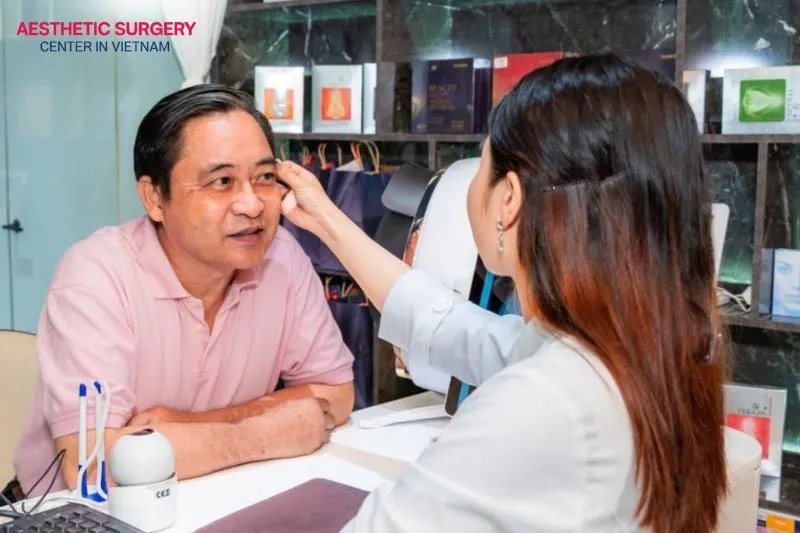
- Step 1: The surgeon examines the eye area, including eyelid skin elasticity and upper eyelid fat. Based on this assessment, the surgeon plans and marks the precise position to create a natural-looking crease at the desired height.
- Step 2: Local anesthesia is applied around the eyelids to ensure a smooth, comfortable, and pain-free procedure. For sensitive patients, the surgeon may administer additional medication to reduce discomfort.
- Step 3: Depending on the chosen method, the surgeon either threads specialized sutures through the skin and muscle to form a new crease (suture method) or makes a fine incision along the eyelid and shapes the crease at the pre-marked position (incision method).
- Step 4: Once the crease is formed, the surgeon closes the area with fine sutures to minimize scarring and ensure the eyelid looks natural after recovery.
- Step 5: After the surgery, the surgeon or staff provides detailed at-home care instructions, including wound cleaning, medication, a healthy diet, and activities to avoid, ensuring optimal recovery and natural-looking results.
Recovery stages after Asian blepharoplasty
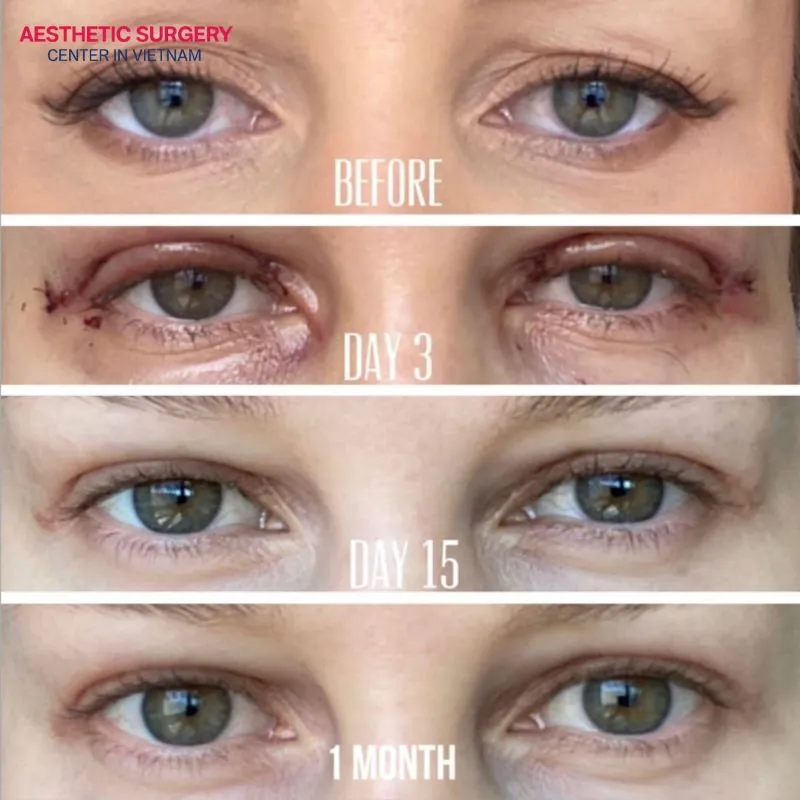
The recovery process after Asian eyelid surgery is relatively quick, though healing times may vary depending on individual factors. The eyelids go through distinct stages of recovery before fully stabilizing:
- Days 1–3: This is when swelling is most noticeable. Mild bruising may appear around the eyes, along with a heavy or tight feeling in the eyelids. During this period, gentle cold compresses can help reduce swelling, and plenty of rest is recommended.
- First week: By day 4, swelling and bruising start to decrease and change color from purple to yellowish-green, which is a normal part of healing. Sutures may be removed depending on individual healing rates, and the crease may still appear slightly red or dark.
- Second week: At this stage, you can resume light daily activities but should avoid applying makeup on the eyelids. Strenuous movements, rubbing, or strong pressure on the eyelids should be avoided to allow the crease to set evenly and naturally.
- Weeks 3–4: By the third to fourth week, the eyelids are almost fully healed. Swelling and bruising have mostly disappeared, and the crease becomes softer, losing the initial tightness or prominent appearance from the early stage.
- Months 2–3: At this point, the eyelids look natural and soft, without stiffness. Internal scars fade, making the crease fine and well-defined. The eyelid shape settles into its final form, delivering the stable, natural results you expect from the surgery.
What is the cost of Asian blepharoplasty surgery?
The cost of Asian blepharoplasty surgery currently ranges from 15–40 million VND, depending on factors such as eyelid condition, chosen technique, and the surgeon’s expertise.
The suture (non-incisional) method is generally less expensive because it is minimally invasive and does not deeply affect the underlying muscle structure, allowing for a quicker procedure. This method is suitable for individuals with thin eyelid skin, minimal excess skin, and those seeking a natural-looking crease.
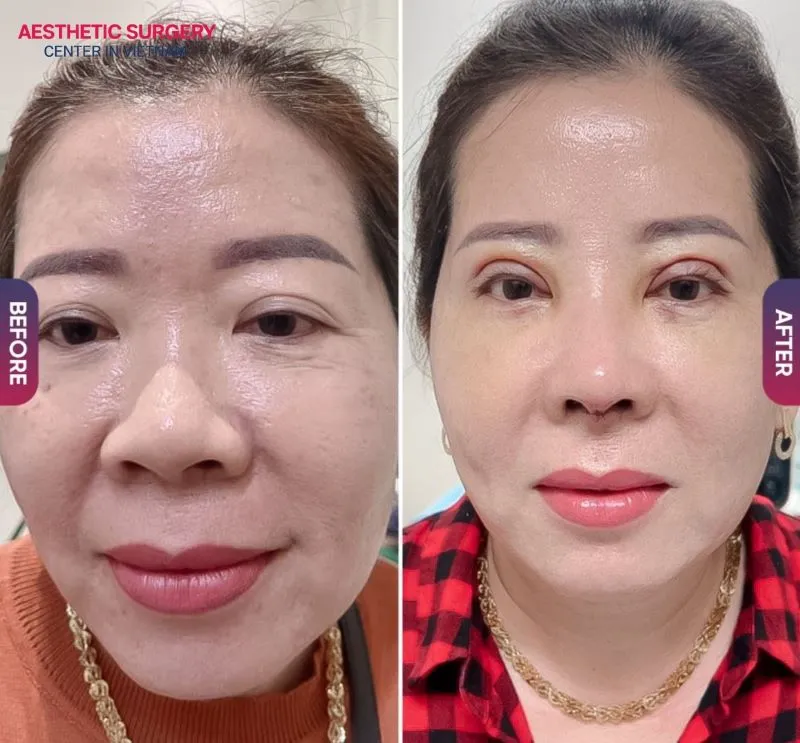
In contrast, the incision method requires deeper intervention and the support of modern equipment to create a sharp, long-lasting eyelid crease. Therefore, the cost of eyelid crease surgery using the incision method is higher compared to the suture technique.
We hope this article has helped you better understand Asian blepharoplasty surgery, including the procedure, recovery timeline, and expected costs. To achieve a sharp and natural-looking crease, proper eyelid care and following a suitable post-operative routine are essential for quickly obtaining naturally large, round eyes.
>>> See more: Eyelid surgery clinic in Vietnam














Comment on the post