


In breast enhancement surgery, deciding whether to place the implant beneath or above the chest muscle is just as vital as choosing implant volume and profile. Each anatomical plane possesses distinct pros and cons; the ideal choice depends on your baseline anatomy and cosmetic objectives. Understanding the differences regarding breast augmentation over vs under muscle will help you make an informed decision for an optimal aesthetic outcome.
Understanding breast implant placement planes
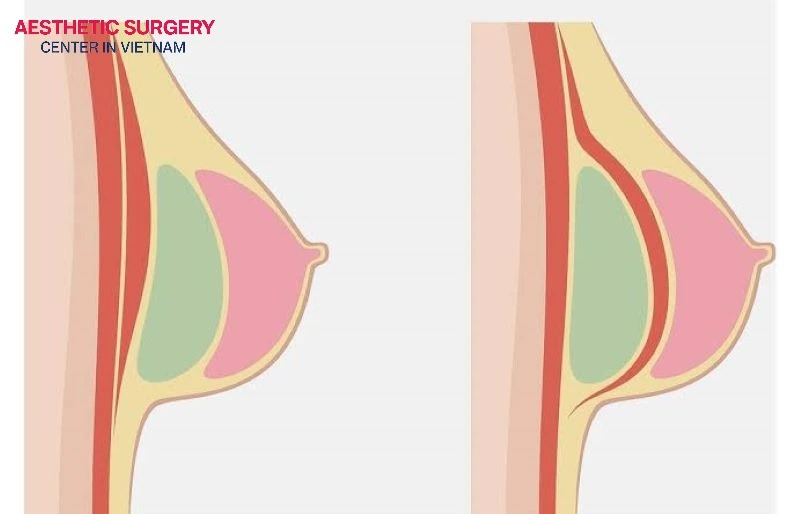
Selecting the right surgical pocket plays an essential role in defining the final shape, natural softness, and long-term stability of the breasts. Based on individual anatomy, parenchymal thickness, and personal goals, a breast augmentation surgeon will commonly evaluate two primary planes:
- Over the muscle (Subglandular placement): The implant is positioned directly underneath the natural glandular breast tissue and above the pectoralis major muscle.
- Under the muscle (Submuscul ar placement):The implant is inserted beneath the pectoralis major muscle, utilizing the muscle layer as structural support and an added biological cushion.
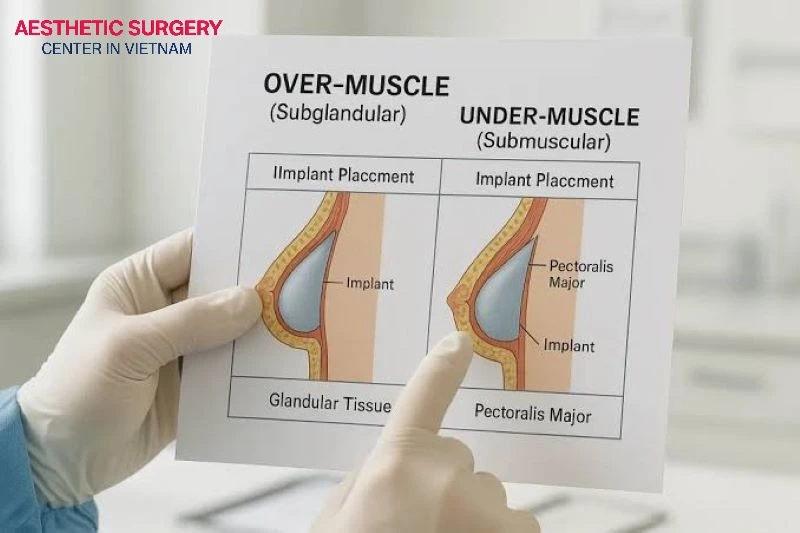
There are two primary implant placement planes: over the muscle and under the muscle.
Over-the-muscle implant placement (subglandular)
Subglandular placement involves creating a dissection plane directly between the posterior capsule of the mammary gland and the anterior fascia of the pectoralis major muscle. By leaving the underlying muscular architecture intact, this technique offers distinct physiological and cosmetic attributes tailored to specific patient profiles.
Benefits of over-the-muscle placement
- Rapid postoperative recovery: Because the pectoralis major muscle is neither elevated nor divided, surgical trauma is minimized. Patients experience less acute pain and edema, enabling an earlier return to light daily activities.
- No dynamic animation deformity: With the implant lying completely anterior to the muscle, flexing the chest wall during strenuous exertion or athletic exercise will not distort, displace, or pull on the implant.
- Effective support for mild ptosis: For breasts exhibiting mild pseudoptosis or minor sagging, subglandular placement fills out loose skin envelopes directly, restoring upper pole fullness and projection more effectively than submuscular positioning.
- Straightforward surgical dissection: Creating a subglandular pocket requires simpler surgical maneuvers and shorter operative time, reducing the total duration under general anesthesia.
Ideal candidates for over-the-muscle placement
To achieve optimal aesthetic refinement and prevent visible implant borders, subglandular placement is recommended for:
- Patients with abundant native glandular tissue: Having adequate subcutaneous fat and parenchyma (a thick tissue pinch test) is essential to completely camouflage the implant shell, preventing palpable ridges or visible edges.
- Women with mild post-pregnancy or age-related breast ptosis: Patients with mild-to-moderate laxity benefit from the implant serving as an internal scaffold to replenish lost parenchymal volume and elevate sagging tissue.
- Competitive athletes and bodybuilders: Individuals who frequently engage in heavy upper-body training, swimming, or professional athletics often prefer this approach to eliminate chest-muscle contraction forces on the implants.
Under the muscle implant placement (submuscular)
Submuscular placement (most commonly executed today using the partial submuscular or “Dual Plane” method) positions the implant deep to the pectoralis major muscle. Unlike the subglandular approach, the prosthesis is shielded by a dual protective layer: vascularized muscle tissue on the inside and natural breast tissue on the outside, creating seamless tissue coverage that conceals the implant.
Benefits of under the muscle placement
- Superior natural appearance: Covered by the pectoral muscle, the upper pole displays a gentle, natural slope without abrupt artificial fullness. It also virtually eliminates visible rippling and palpable upper margins.
- Significantly reduced capsular contracture rates: The pectoralis major acts as a vascular barrier, isolating the implant from potential ductal bacterial contamination. Furthermore, normal muscular movement provides continuous micro-massage, keeping the pocket soft and pliable
- Uncompromised breast cancer screening: Because the prosthesis is seated deep beneath the muscular plane, it does not compress glandular parenchyma. This ensures that routine mammography, ultrasound, or breast MRI can be performed with maximum diagnostic clarity.
- Long-term structural stability: The pectoral muscle functions like an internal bra, anchoring and cradling the implant securely over time to resist premature bottoming-out or gravitational descent.
Ideal candidates for under-the-muscle placement
- Petite or lean patients: Individuals with minimal subcutaneous fat and thin glandular tissue must utilize submuscular placement to avoid visible unnatural contours or palpable prosthetic edges.
- Patients with minimal baseline volume or flat chests: Nulliparous women with hypoplastic breasts require deep muscular coverage to ensure balanced, natural projection without excessive upper pole firmness.
- Patients with taut, non-protic breasts: Because submuscular placement does not directly project loose glandular tissue, it yields the cleanest contours on firm, non-sagging tissue beds.
- Patients prioritizing future lactation: Women planning future pregnancies and breastfeeding benefit from this plane, as retropectoral dissection completely avoids disrupting the lactiferous ductal system.
Key surgical and recovery differences
The contrast between both planes extends beyond simple implant depth; differences in tissue dissection profoundly influence the breast augmentation recovery journey.
Recovery timeline and comfort
- Over-the-muscle placement: Because only soft prepectoral tissue is dissected without muscle division or traction, patients experience markedly less post-operative pain, minimal tightness, and brief downtime, often resuming desk work within a few days.
- Under-the-muscle placement: Elevating and dividing lower costal muscular attachments induces involuntary muscle spasms, resulting in notable soreness and chest tightness akin to severe post-workout strain. Convalescence is more protracted, typically requiring 1 to 2 weeks for acute discomfort to subside.
The dual plane hybrid technique
To harness the benefits of both traditional methods while minimizing their drawbacks, modern aesthetic surgery established the Dual Plane technique as a contemporary gold standard.
In a Dual Plane approach, the upper two-thirds of the implant rests under the pectoralis major to ensure natural transition and prevent rippling, while the lower pole sits subglandularly. This allows the lower breast to expand naturally, achieving balanced roundness and lower-pole projection. It effectively relieves dynamic distortion during muscle contraction, making it ideal for women with low baseline volume combined with mild breast ptosis. Postoperative discomfort is also notably milder than in complete submuscular dissection.
Deciding factors for pocket selection
Determining the right pocket plane is never a one-size-fits-all formula; it requires a tailored clinical assessment:
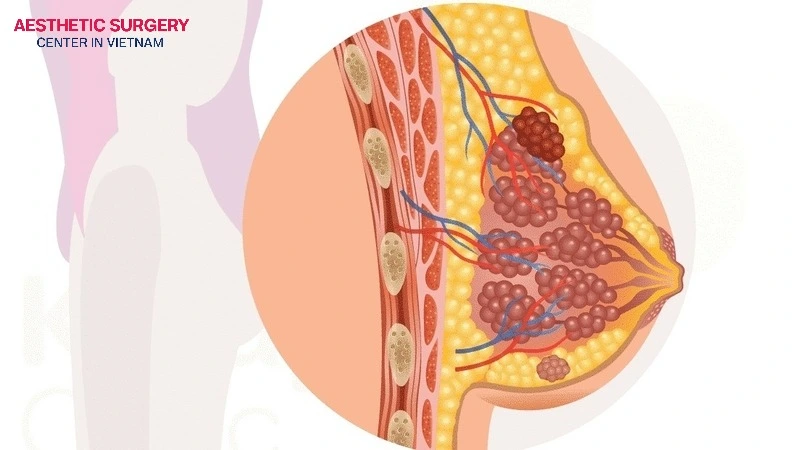
Existing breast tissue and chest wall anatomy
Parenchymal thickness and ribcage morphology dictate surgical feasibility. If a patient presents with adequate overlying tissue (typically greater than 2 cm on pinch testing), a subglandular pocket can provide reliable camouflage. Conversely, thin or slender frames require submuscular or Dual Plane coverage to prevent visible edges and rippling.
Implant volume and profile
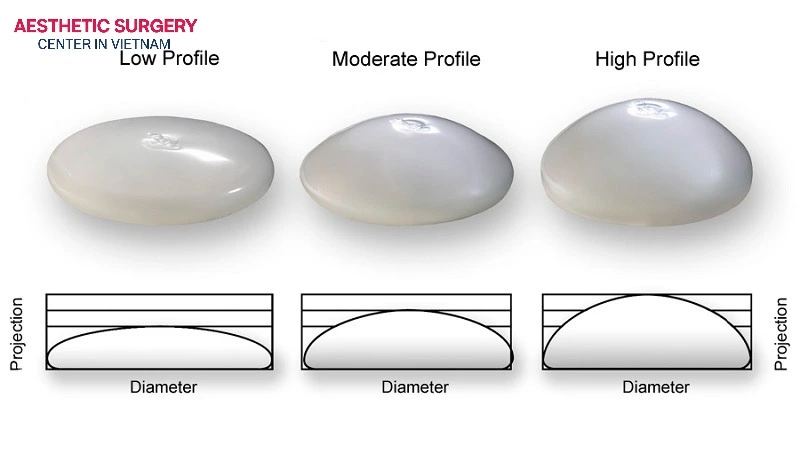
Larger, heavier implants place greater strain on overlying soft tissues. Submuscular placement provides strong structural support that distributes gravitational load, mitigating tissue thinning and premature sagging compared to unsupported subglandular positioning.
Personal Aesthetic objectives
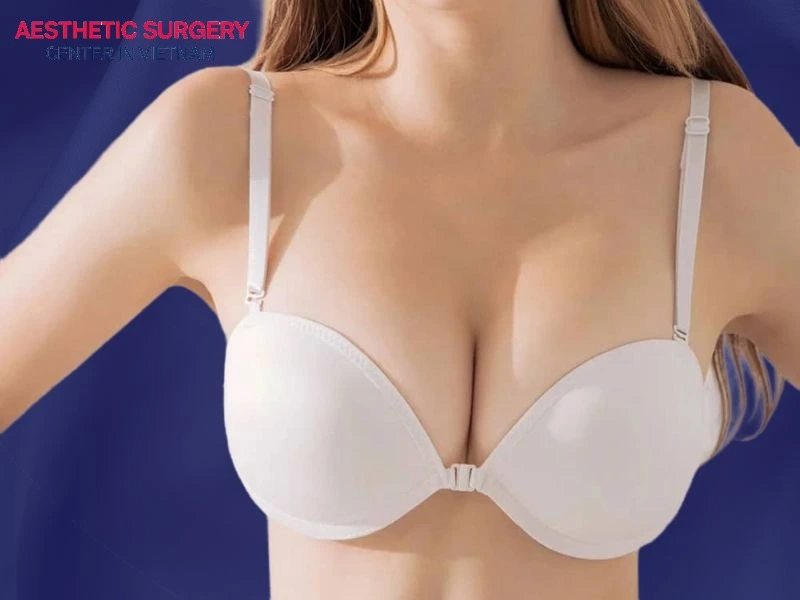
Patients seeking a subtle, gradual slope with imperceptible implant outlines are prime candidates for submuscular placement. Conversely, those with sufficient native tissue desiring prominent cleavage, upper-pole fullness, or high-level upper-body mobility may be better suited for subglandular or Dual Plane techniques.
Frequently asked questions
Is submuscular or subglandular placement generally recommended?
Plastic surgeons predominantly recommend submuscular placement (specifically the Dual Plane method) because it yields natural contours, conceals implant borders, and reduces the risk of capsular contracture. Pure subglandular placement is generally reserved for patients with ample natural breast tissue or mild ptosis.
Do implants look smaller when placed under the muscle?
Yes, implants positioned beneath the muscle may appear slightly smaller and flatter initially due to mechanical compression from the pectoralis major. Over subsequent months, as the muscle relaxes and the implants “drop and fluff,” the breasts soften into their true volume and contour.
What are the main drawbacks of submuscular placement?
Submuscular placement involves a longer recovery window and greater acute soreness. Additionally, dynamic animation deformity (subtle shifting during vigorous chest muscle contraction) can occasionally occur.
Deciding on breast augmentation over vs under muscle requires balancing your physical anatomy against your personal lifestyle. An in-person clinical consultation with an accredited plastic surgeon remains essential to evaluate tissue pinch thickness, discuss your aesthetic goals, and identify the safest, most flattering placement for your body.













Comment on the post