


Button nose rhinoplasty is a cosmetic solution that helps you achieve a small, balanced, soft, and natural-looking nose. In this article, learn about the procedure, cost, risks, and aftercare so you can feel confident preparing for surgery.
Understanding button nose surgery
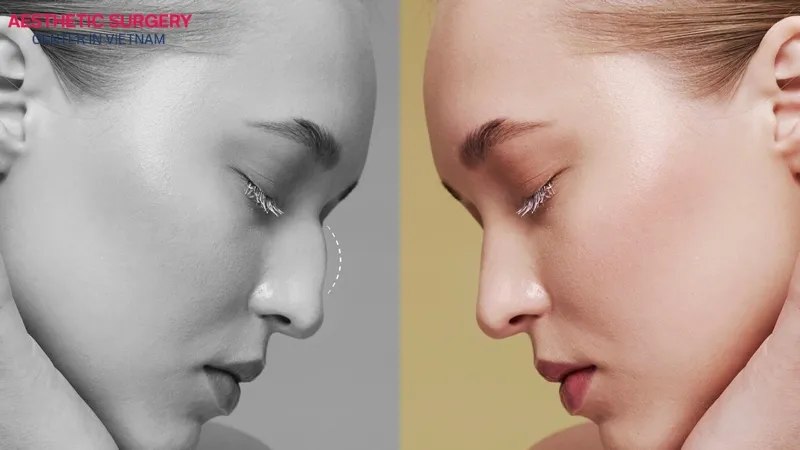
A button nose is a small, balanced nose shape that creates a soft and natural look. Its anatomical features include:
- Short length: The nose looks small and proportionate, not overly projected.
- Rounded tip: The tip is soft and slightly full, not sharp or angular.
- Low or subtle bridge: The bridge is straight or slightly concave, with no hump.
- Smooth transitions: The bridge, tip, and columella blend naturally without sharp angles.
These features help keep the nasal tip cartilage stable, maintain good breathing, and allow easier surgical adjustment.
Who is a good candidate for button nose rhinoplasty?
Learn the key criteria to determine who is truly suitable for button nose rhinoplasty:
- Fully developed facial structure (usually from 17–18 years old for females, 18–19 for males)
- Good overall health, no uncontrolled chronic conditions, and non-smoker (if you smoke, your surgeon will require you to stop at least 4–6 weeks before and after surgery
- Realistic expectations, with a desire for a small, balanced nose that suits the face
- Stable mental state, with the decision based on personal choice, not pressure from others
- No serious skin issues, stable weight, and no body dysmorphic disorder
How is button nose rhinoplasty performed?
Step 1 – Anesthesia
The procedure is usually performed under general anesthesia to keep you comfortable and pain-free. In some cases, local anesthesia with sedation may be used, depending on your needs and health condition.
Step 2 – Surgery
- Closed rhinoplasty: Incisions are made entirely inside the nose, leaving no visible scars. This method is suitable for minor adjustments.
- Open rhinoplasty: The surgeon makes a small incision on the columella to access the full nasal structure. This method is often used for precise tip refinement.
- Tip reshaping: The surgeon reshapes the nasal tip cartilage to create a round, soft, and natural look using techniques such as trimming or repositioning cartilage, suturing for definition, and slightly rotating the tip upward.
- Cartilage grafting: Cartilage from the nasal septum or other autologous sources is used to support the nasal tip structure and prevent long-term collapse or deformation.
Step 3 – Closure and splinting:
Once the desired shape is achieved, the incisions are closed and a nasal splint is applied to protect the nose during recovery. The procedure typically takes 1.5 to 3 hours, depending on the complexity.
How much does a button nose cost?
In Vietnam, the cost of button nose rhinoplasty typically ranges from about $1,500 to $3,500 (approximately 40,000,000 to 92,000,000 VND). This cost may vary depending on the hospital, the surgeon’s experience, the type of anesthesia used, and the complexity and technique of the procedure.
Meanwhile, according to Medical Tourism, the same procedure in the US or Australia can cost between $6,000 and $15,000 (around 158,000,000 to 395,000,000 VND).
This means having rhinoplasty in Vietnam can help you save between $4,500 and $11,500 (about 150,000,000 to 400,000,000 VND), with costs being only about one-quarter of those in the US or Australia. As a result, many people see Vietnam as a more cost-effective option while still maintaining quality.
Are there risks associated with button nose surgery?
According to PubMed Central (PMC), the following risks may occur after rhinoplasty button nose:
- Breathing difficulties or nasal congestion: This often occurs in reduction cases due to scarring or reduced mucosal sensation.
- Issues with graft materials: Patients may experience complications related to grafts, such as:
- Autologous cartilage may shift or resorb, while synthetic implants may become infected or extrude.
- Silicone has a complication rate of about 5–20%, while Gore-Tex has a lower rate.
- Skin and soft tissue problems: Patients may experience atrophy, hardening, numbness of the nasal tip, cysts, or granulomas caused by ointments.
- Swelling and scarring: The level of swelling and scarring depends on the osteotomy technique; external cuts are less invasive but may still leave scars.
- Severe infection: Rare but potentially serious, especially when combined with sinus surgery.
- Eye-related complications: In rare cases, this may cause eyelid numbness, tissue necrosis, or even blindness due to central artery occlusion.
- Other serious complications: Although rare, these may include cerebrospinal fluid leakage, brain injury, aneurysm, cavernous sinus thrombosis, or discoloration of the front teeth.
- Postoperative deformities: This is the most common risk, with about 5–15% of cases not achieving the desired result (e.g., pollybeak deformity, wide tip, uneven bridge, or septal deviation), requiring revision rhinoplasty surgery.
Recovery and aftercare
Recovery after rhinoplasty button nose
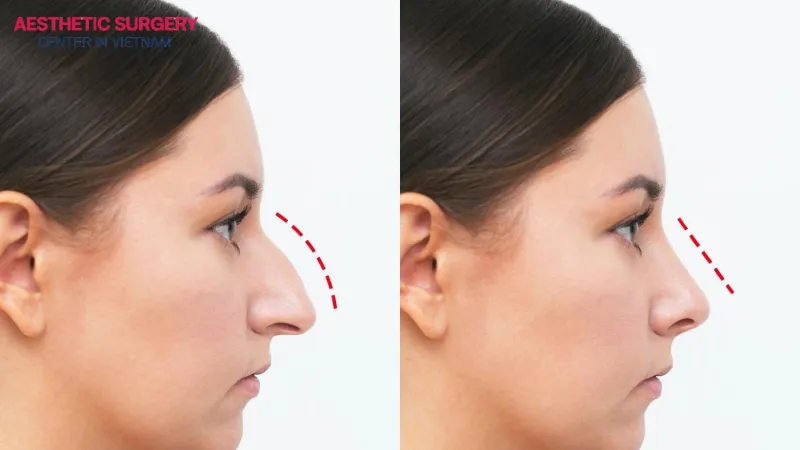
First, nose surgery is not as painful as many people think. In the first few days, the main sensation is nasal congestion or tightness at the tip, as the skin and soft tissues are adjusted to shape the nose.
Swelling is normal and usually most severe during the first 3 days. After about one week, when the splint and bandages are removed, the nose may look longer and the nostrils less visible from the front, but the tip is still swollen and slightly firm.
“Overcorrection” is also an important detail. In button nose rhinoplasty, surgeons often make the tip slightly longer than planned because, during recovery, the skin tends to contract and lift the nose upward. In the first month, the nose may appear slightly long, but over time, it will gradually settle into a natural and balanced shape.
In addition, patients may experience common symptoms such as:
- Temporary nasal congestion
- Numbness at the nasal tip
- Swelling and bruising
- Firmness of the nasal tip
- Slight difficulty when smiling
Aftercare for button nose rhinoplasty
Follow these aftercare guidelines during recovery:
- Get enough rest and keep your head elevated while sleeping to reduce swelling and support healing
- Take prescribed medications to relieve pain and prevent infection
- Attend follow-up appointments to monitor progress and address any issues early
- Be patient, as final results will gradually appear over several months once rhinoplasty swelling stages significantly subsides
Button nose rhinoplasty address in Vietnam
In Vietnam, Aesthetic Surgery Center in Vietnam is a leading and reputable destination specializing in rhinoplasty for button nose using structural rhinoplasty techniques—one of the most advanced methods today, helping create a beautiful, long-lasting, safe, and natural-looking button nose.
The center features a modern 5-star facility that integrates high-end aesthetics and dentistry, with internationally standardized sterile operating rooms, equipment imported from the UK, France, Korea, and Germany, along with precise 3D analysis technology for personalized nose design.
Aesthetic Surgery Center in Vietnam stands out with the following advantages for button nose rhinoplasty:
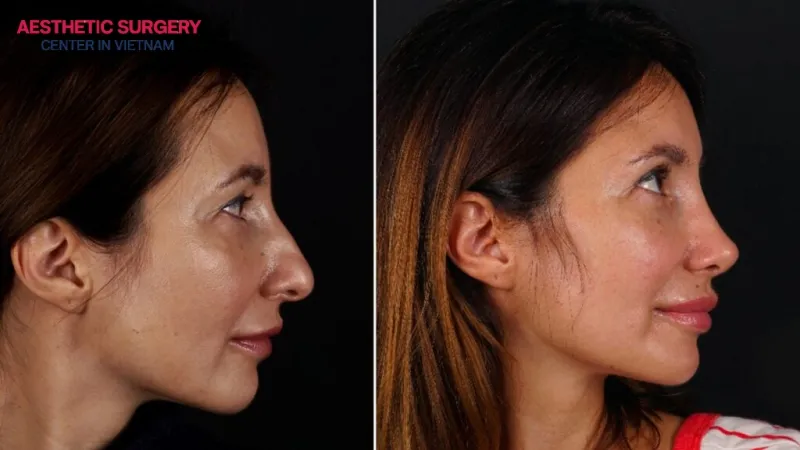
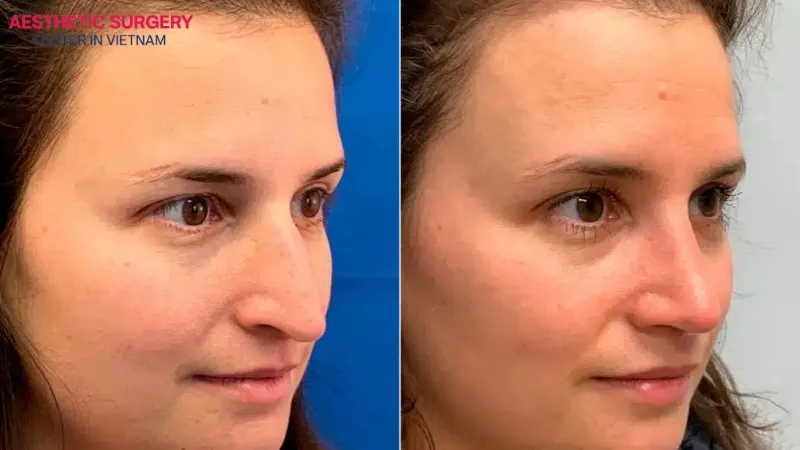
- Natural and safe results: A refined, high nose with a soft S-line curve, improved nasofrontal angle, and balanced nose–lip–chin ratio, enhancing overall facial harmony. The clinic provides real before-and-after images as proof of effective transformations from low, flat, or bulbous noses to refined button noses with a slim tip and smooth bridge.
- Maximum safety, minimized risks: The combination of autologous cartilage and implants helps reduce risks such as contraction, implant visibility, tip redness, or long-term deformities. This is especially important for procedures requiring high precision at the nasal tip.
- Advanced structural technique: Using premium materials such as Surgiform ePTFE and Nano US implants, combined with autologous cartilage to reconstruct the nasal tip, creating a rounded, refined, and harmonious nose while avoiding a bulky, upturned, or red tip.
If you are looking for a trusted button nose rhinoplasty address in Vietnam, Aesthetic Surgery Center in Vietnam is a top choice with 5-star standard structural rhinoplasty techniques, premium materials, and an experienced medical team. Book a consultation to receive a personalized treatment plan and achieve a beautiful, natural, and safe button nose today.
















Comment on the post