


Fat transfer breast augmentation is a modern cosmetic procedure that many women trust for its safety and effectiveness. Instead of using implants, this method takes excess fat from your own body and transfers it to the breasts. It creates fuller, softer, and naturally shaped breasts that harmonize with your figure and minimize the risk of complications. With fat transfer breast augmentation, you can achieve an attractive bust while keeping your health safe. This article will help you learn more about this method.
What is fat transfer breast augmentation?
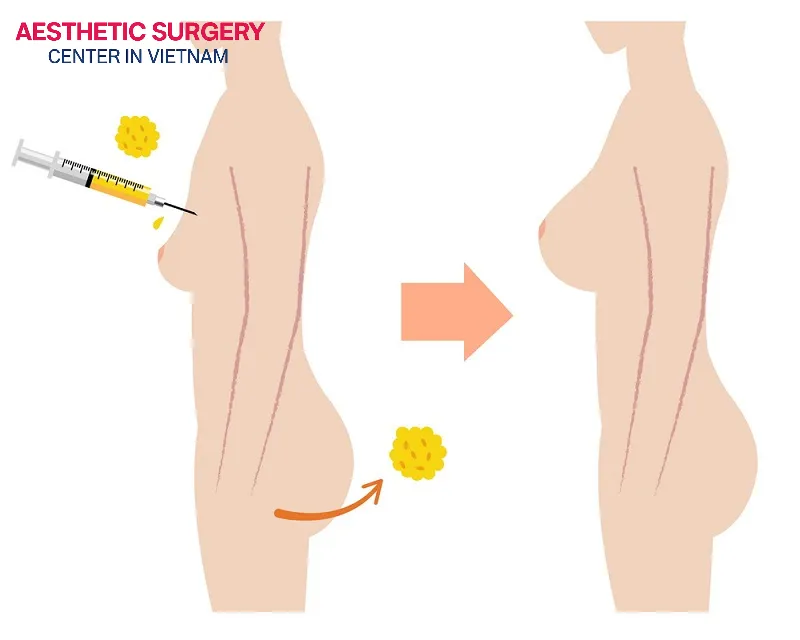
Fat transfer breast augmentation is a modern cosmetic method that uses excess fat from your own body, often taken from areas like the abdomen, thighs, waist, buttocks, or hips, and transfers it to the breasts. This technique helps enhance breast size and improve shape in a natural way. It is considered a safe solution, especially for women who want a fuller bust but are afraid of pain or surgical implants.
Fat transfer breast augmentation pros
Fat transfer breast augmentation offers many outstanding advantages compared to traditional breast augmentation methods. Specifically:
High natural look
The greatest strength of fat transfer is that it provides breasts with a softness and natural feel of almost 100%. Once transferred, the fat cells integrate with the existing breast tissue, creating elasticity, warmth, and movement just like natural breasts. In contrast, implants, even the softest ones, may still feel firmer and less natural to the touch.
In addition, this method does not alter the structure of the mammary glands or chest muscles. The enhanced breasts look very natural, without visible implant edges or the “fake” appearance that sometimes occurs with implants.
Safe with reduced risks
The fat is taken from the patient’s own body, making it a 100% biocompatible material. This completely eliminates the risk of rejection, allergies, or complications related to immune reactions to artificial implants, such as capsular contracture, implant rupture, or implant infection.
“2-in-1” effectiveness
This technique not only enhances breast size but also removes excess fat from other areas such as the abdomen, thighs, and waist, making the body slimmer and more balanced. Since the fat is taken from areas with excess, it hel ps reshape those parts of the body. Then, the healthy fat is used to enhance the breasts, creating more harmonious and attractive curves. Thanks to this, fat transfer breast augmentation is considered a 2-in-1 solution.
Minimally invasive and scar-free
The procedure only involves liposuction and fat injection through small punctures, instead of large incisions as in implant surgery. Because it is minimally invasive, recovery after fat transfer is significantly faster, and patients can return to daily activities sooner. The small puncture marks will gradually fade and leave almost no visible breast augmentation scar. Therefore, this method ensures faster breast augmentation recovery and virtually no scarring.
Does not affect breast gland function
The fat transfer technique is performed by injecting fat into the layers under the skin, between the fatty tissue and chest muscles, without affecting the mammary glands or milk ducts. This ensures that breastfeeding ability and other natural breast functions are completely preserved. It is a major advantage for women who plan to have children in the future.
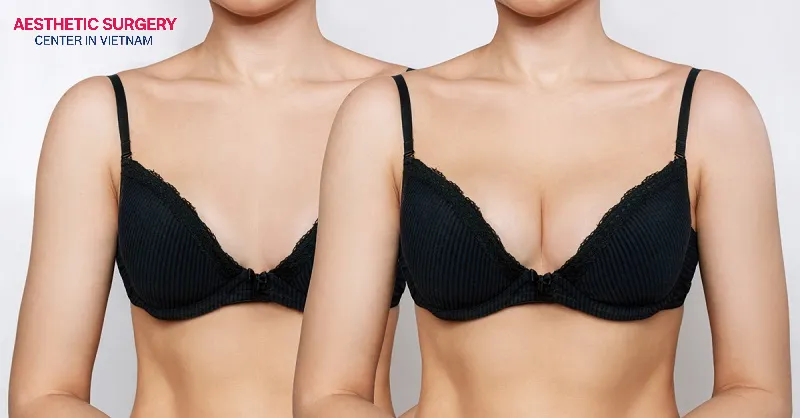
However, this method has some limitations, such as only moderately increasing breast size (usually about 1–2 cup sizes), and a portion of the fat may be reabsorbed by the body over time.
Fat transfer breast augmentation cons
In addition to its advantages, fat transfer breast augmentation also has some drawbacks and limitations that you should carefully consider:
- Not suitable for very slim individuals: To perform this procedure, you need to have enough excess fat on the body, usually from the abdomen or thighs, for harvesting and grafting. People who are too slim may not have sufficient fat for the procedure.
- Results are not permanent: Although it is considered “autologous” with a high survival rate, some fat cells will still be reabsorbed by the body over time. After about 3–5 years, breast size may decrease. To maintain the results, touch-up procedures may be needed.
- Only provides moderate enlargement: This method offers natural enhancement, typically increasing breast size by about 1–2 cup sizes. If you desire very large, noticeably full breasts, fat transfer alone may not meet your expectations.
- Risk of complications: If the fat harvesting and injection techniques are not performed correctly, complications may include:
- Fat necrosis: Occurs when too much fat is injected or placed in the wrong area, without sufficient blood supply to keep it alive.
- Fibrosis and calcification: Dead fat cells that are not eliminated can form hard lumps, which may interfere with future breast cancer screenings.
- Fat embolism: A serious risk that happens if fat enters the bloodstream, potentially life-threatening.
- High cost: The cost of fat transfer breast augmentation is usually higher than implants because the procedure is more complex, involving both liposuction and fat purification.
- Dependent on surgeon’s skill: The aesthetic results and safety of this method largely depend on the experience and professional expertise of the performing surgeon.
Who is suitable for breast enhancement with fat transfer?
Although fat transfer breast augmentation is considered safe and offers many advantages, it is not suitable for everyone. Therefore, before choosing this method, you should understand the groups of people for whom it is appropriate, including:
- Individuals with enough excess fat: This is a prerequisite, as the method uses fat from your own body for grafting. Common donor areas include the abdomen, thighs, waist, and arms.
- Individuals who want moderate breast enlargement: This method is suitable for natural enhancement, usually increasing breast size by 1–2 cup sizes, but it cannot achieve very large augmentation.
- Individuals prefer a natural look and avoid surgery: Suitable for those who want soft, natural breasts without using artificial implants.
- Individuals with breast atrophy: Ideal for cases of breast shrinkage after childbirth, weight loss, or aging.
- Individuals with asymmetrical breasts: Can be used to adjust and improve breast shape, making them more even.
How does the fat transfer breast enhancement process take place?
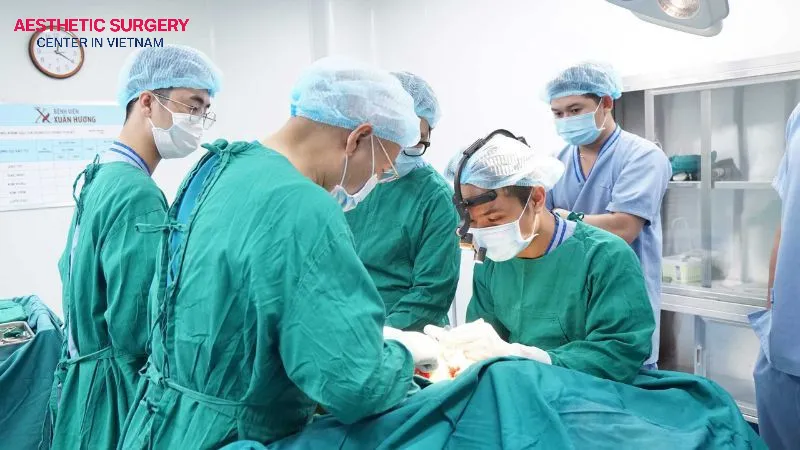
The process of fat transfer breast augmentation usually takes place through the following main steps:
Step 1: Consultation and examination
The doctor will conduct a general health check, assess the condition of your breasts, and identify areas of excess fat for liposuction. At the same time, the doctor will provide consultation on the method, breast augmentation cost, and create a suitable treatment plan.
Step 2: Liposuction
The doctor will perform liposuction on the marked areas of excess fat using specialized technology. This is usually done under local or general anesthesia to ensure you feel no pain.
Step 3: Fat purification
The harvested fat will be processed in a centrifuge. The purpose of this step is to remove blood, impurities, excess fluids, and weak fat cells, keeping only the healthiest and purest fat cells to ensure a high survival rate when injected into the breasts.
Step 4: Fat injection
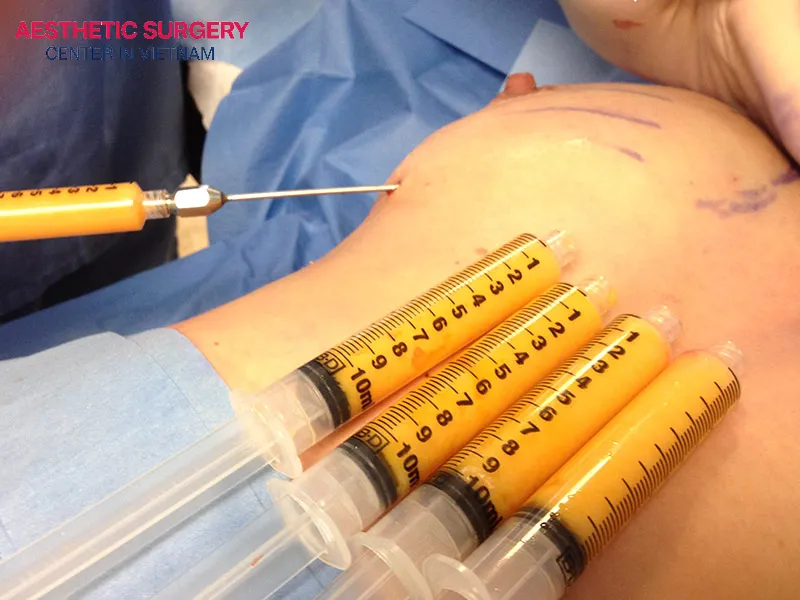
The purified fat cells will be directly injected into the breasts using specialized syringes. The doctor will carefully distribute the fat evenly throughout the breast tissue to shape and create fuller, rounder, and naturally balanced breasts.
Step 5: Post-operative care
After the fat transfer, you will be taken to the recovery room for rest and monitoring. The doctor will provide detailed instructions on aftercare, restrictions, and follow-up appointments.
How to maintain results after fat transfer breast augmentation?
To maintain long-lasting results from fat transfer breast augmentation, you need to follow proper aftercare and a healthy lifestyle after the procedure. Here are some important recommendations:
- Keep the incision sites clean and dry to prevent infection. Follow your doctor’s instructions on changing dressings and taking prescribed antibiotics or pain relievers.
- Wear a compression or shaping bra as directed by your doctor during the first few weeks. This helps stabilize and shape the breasts while supporting the survival of the newly transferred fat cells.
- For at least 4–6 weeks, avoid strenuous sports, heavy lifting, or direct impact on the chest area to protect the newly injected fat cells from damage.
- The fat cells injected into the breasts behave the same as fat in the rest of your body. If you lose weight, your breasts may also shrink. Therefore, maintaining a stable weight is very important to preserve long-term results.
- Drink enough water to support faster recovery and improve blood circulation.
- Avoid foods such as morning glory, beef, seafood, and sticky rice during the initial healing period to prevent keloid scars and other complications.
- Once the wounds are fully healed and with your doctor’s approval, you may gently massage the breasts to help the fat cells integrate better and to soften the breast tissue.
- Attend follow-up appointments as scheduled so your doctor can monitor recovery and address any unusual signs promptly.
With the information shared about fat transfer breast augmentation, you now have a deeper understanding of the procedure. It is clear that this method offers many outstanding advantages, but it still carries certain risks if performed at low-quality clinics. This highlights the importance of choosing a reputable clinic or aesthetic center to achieve the desired results while ensuring your safety. We hope this article has provided you with useful insights.











Comment on the post