



After a hair transplant, many people worry about which sleeping position is safe and will not affect the newly transplanted follicles. Sleeping in the correct position not only helps protect healthy hair follicles but also reduces swelling and supports faster recovery. Let’s find out the proper techniques for how to sleep after hair transplant in the article below, so you can rest comfortably while maintaining your hair transplant results.
Why is sleeping position important after a hair transplant?
After a hair transplant, your scalp is still in a sensitive stage. At this time, the newly transplanted hair follicles have not fully anchored yet, so they are easily affected by pressure or friction. Therefore, knowing how to sleep after hair transplant procedures during the first few days plays an important role in the survival rate of the hair follicles.
Sleeping in the correct position not only keeps the follicles in place but also helps reduce hair transplant swelling or puffiness spreading to the forehead and eye area. At the same time, it protects the scalp surface from impact when you turn over unconsciously, shortens the healing time, and helps achieve more stable hair transplant results.
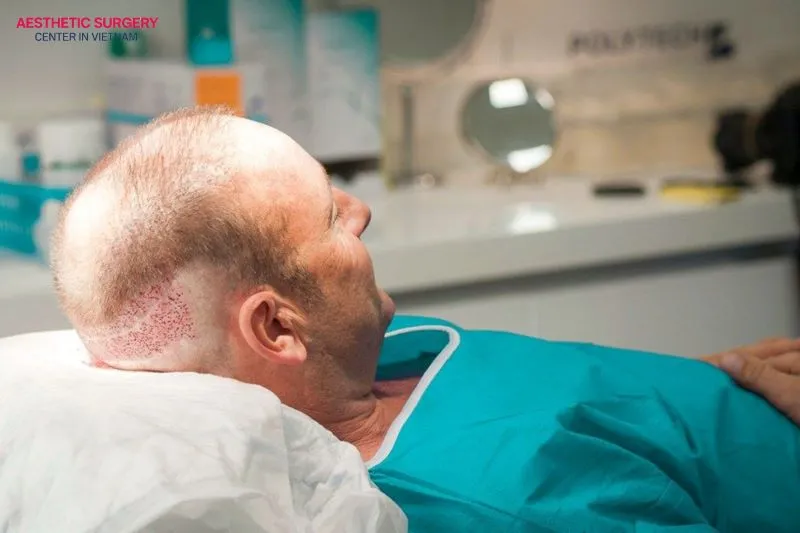
How to sleep after hair transplant: What is the correct position?
In the first days after a hair transplant, many people are unsure about the correct sleeping position to ensure safe hair transplant recovery. Below are sleeping positions recommended by experts to help you stay comfortable, reduce swelling, and protect newly transplanted hair follicles:
- Sleeping on your back: This is the safest position as it helps avoid pressure or friction on the transplanted area. When lying on your back, the grafted area is kept stable, which helps prevent follicle displacement.
- Elevating the head while sleeping: You should use 1–2 pillows or raise the head of the bed at about a 30–45 degree angle. This helps reduce swelling and prevents fluid buildup, making you feel more comfortable during the early recovery stage.
- Using a u-shaped pillow: A u-shaped pillow helps keep your head in place, limits side turning during sleep, and prevents unconscious movement. This helps protect the newly transplanted hair follicles more safely.

Sleeping positions to avoid
When learning how to sleep after hair transplant treatments, avoiding certain positions is crucial to prevent long-term hair transplant side effects. Do not sleep face down or on your side for the first 5–7 days, as these can dislodge follicles or cause fluid leakage.
- Do not sleep face down: This position causes direct pressure on the transplanted area as it presses against the pillow. It can dislodge hair follicles, cause pain, fluid leakage, and affect the ability of the hair to take root in the early days.
- Do not sleep on your side: Although side sleeping may feel more comfortable, during the first week the temple area and the area above the ears can easily rub against the pillow. Continuous friction can cause scabs to fall off too early, damage the follicles, or irritate the scalp.
- Do not let your head rub against the pillow or blanket: Even when sleeping on your back, turning your head too much can cause contact with the pillow or blanket edge. Too much friction can scratch the scalp or damage the transplanted area.

>>> See more: Hair transplant without finasteride
When can you return to a normal sleeping position after a hair transplant?
In general, you can return to your normal sleeping position after about 14 days from the hair transplant procedure. At this time, most of the hair follicles have firmly connected to the scalp tissue, the hair transplant scabs have gradually fallen off, and the risk of follicle loss is almost gone. However, recovery time may vary depending on your body condition, the transplant technique, and your scalp condition.
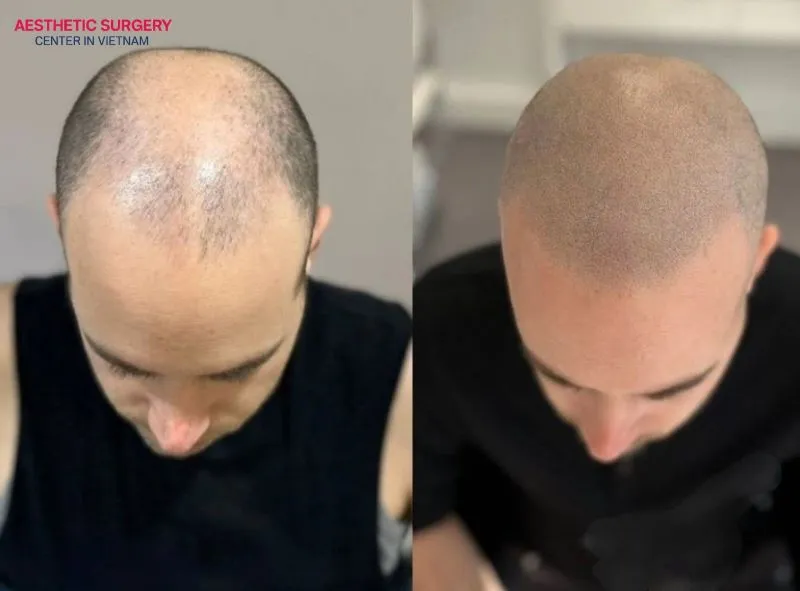
If you still feel tightness, easily touch the transplanted area, or have mild swelling, it is best to continue sleeping on your back for a few more days to ensure safety. In addition, to be sure when you can return to a normal sleeping position, you should follow your surgeon’s advice or the clinic where the hair transplant was performed, as they understand your scalp condition and can guide you on the most suitable time.

Tips to improve sleep quality after a hair transplant
To make the first days after your procedure more comfortable, knowing how to sleep after hair transplant surgery is essential for a smooth and relaxed recovery. The following tips can support your healing:
- Tap gently instead of scratching: In the early days, the transplanted area may feel itchy due to scab formation or scalp healing. If it feels uncomfortable, you can gently tap around the area near the transplant. Do not scratch directly on the scalp to avoid affecting the new hair follicles.
- Cold compress: During the first 2–3 days, you can apply a light cold compress to the forehead and around the eyes to reduce swelling and tightness. Do not place the cold compress directly on the transplanted area. Only apply it to the surrounding areas using ice wrapped in a soft cloth.
- Use soft pillowcases: Choose soft pillowcases such as satin or cotton to reduce friction when you move your head unconsciously. A soft surface also helps limit scalp irritation during the healing stage.
- Avoid excessive sweating: Sweat can make the transplanted area moist, causing irritation and increasing the hair transplant risks of infection. Keep your bedroom cool, avoid strong physical activity before sleep, and do not use thick blankets.
- Use pain relief medication as directed: If pain or tightness makes it hard to sleep, take the pain medication prescribed by your surgeon. Taking the correct dose at the right time will help you rest more easily and reduce discomfort in the early days.
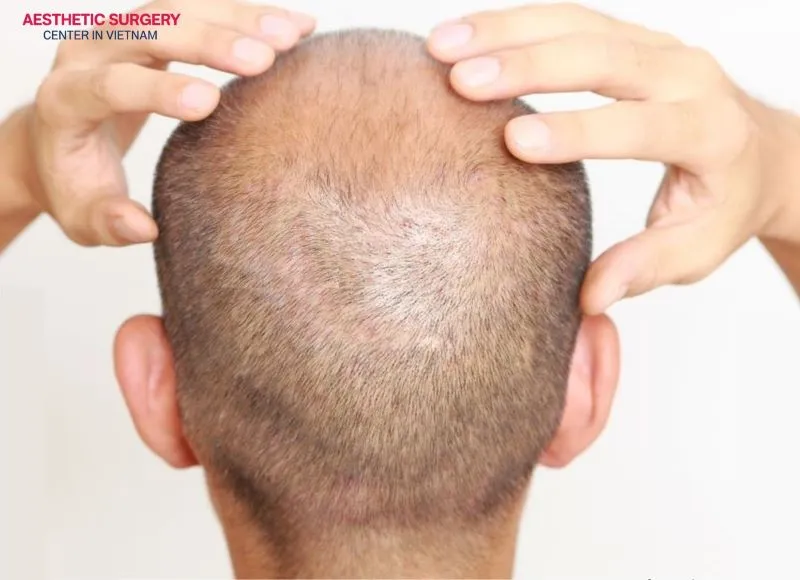
Frequently asked questions
Below are some common concerns that many people have during the first days after a hair transplant, along with detailed answers to help you care for your scalp properly and achieve the best recovery results:
When can you wash your hair before going to sleep?
You can usually wash your hair about 3–5 days after a hair transplant, depending on your surgeon’s instructions. Washing your hair earlier than this may allow water, foam, or massage pressure to affect the newly transplanted hair follicles.
After you are allowed to wash your hair, you can wash it in the evening before sleeping. However, make sure your hair is completely dry. Sleeping with wet hair can increase the risk of scalp irritation, moisture at the transplant area, and discomfort while lying down.
Do you need a special pillow or just a regular pillow?
You can use regular pillows after a hair transplant without needing a special medical pillow. You can stack a few pillows together as long as they are clean, soft, and keep your head elevated to maintain a stable sleeping position.
However, using a U-shaped pillow or a specialized pillow is still a good option if you tend to move a lot while sleeping. These pillows help stabilize your neck and limit unconscious side turning, which reduces friction on the transplanted area during the early recovery stage.
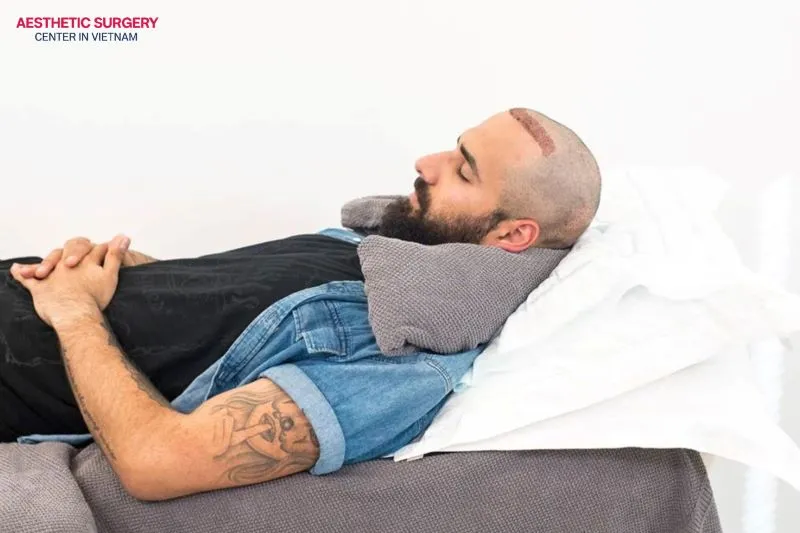
Can sleeping in the wrong position affect transplanted hair?
Sleeping in the wrong position can affect the newly transplanted hair follicles, especially during the first 5–7 days. While the transplanted area is still weak, any pressure or friction can cause hair follicles to shift, fall out early, or scabs to come off before it’s safe.
However, if you only slightly turn your head for a few seconds, it usually won’t cause significant harm. The level of impact mainly depends on whether you put strong pressure on the transplanted area or let your head rub against the pillow while sleeping.
From this article, we hope you now understand how to sleep after hair transplant to safely protect the new follicles and support a smoother recovery. By following the proper sleeping position in the first days, combined with gentle care according to your surgeon’s instructions, you can quickly maintain beautiful, long-lasting hair transplant results.













Comment on the post