



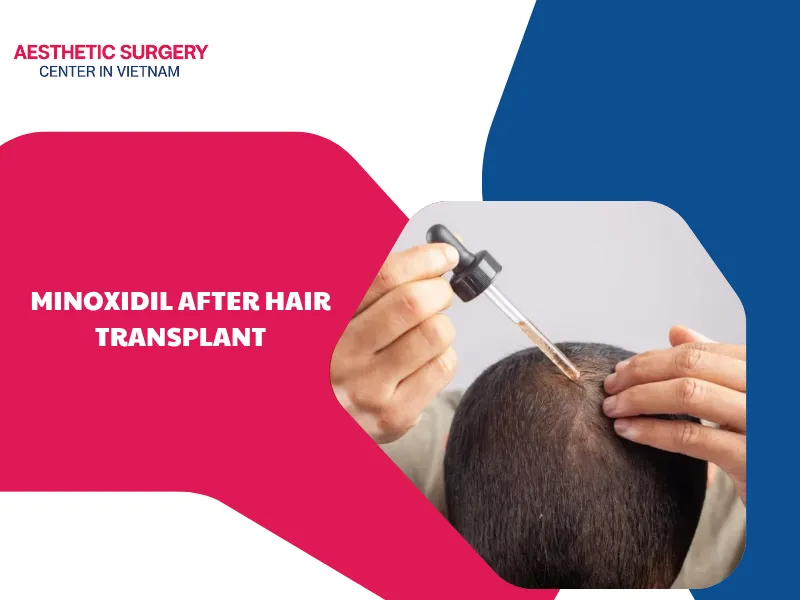
Hair recovery after a surgical procedure requires careful care with various specialized supportive products. Using minoxidil after hair transplant plays an important role in nourishing the weakened scalp and supporting a smoother hair growth process. Through this article, you should understand when to start using minoxidil and the appropriate dosage to achieve optimal results after a hair transplant.
Why use minoxidil after hair transplant surgery?
Using minoxidil after hair transplant provides many practical benefits for strengthening the overall hair structure and maintaining stable hair density in the long term. Specifically:
Protecting native hair from shock loss
Sudden hair loss after hair transplant surgery often causes concern when patients notice many weak hairs falling out on their pillow or comb.
The process of extracting and transplanting hair follicles causes temporary stress to the surrounding scalp. This can make nearby existing hair follicles more likely to shed. When minoxidil is used properly after the initial recovery period, it helps safely prolong the hair growth phase and reduce the number of hair follicles that shed prematurely.
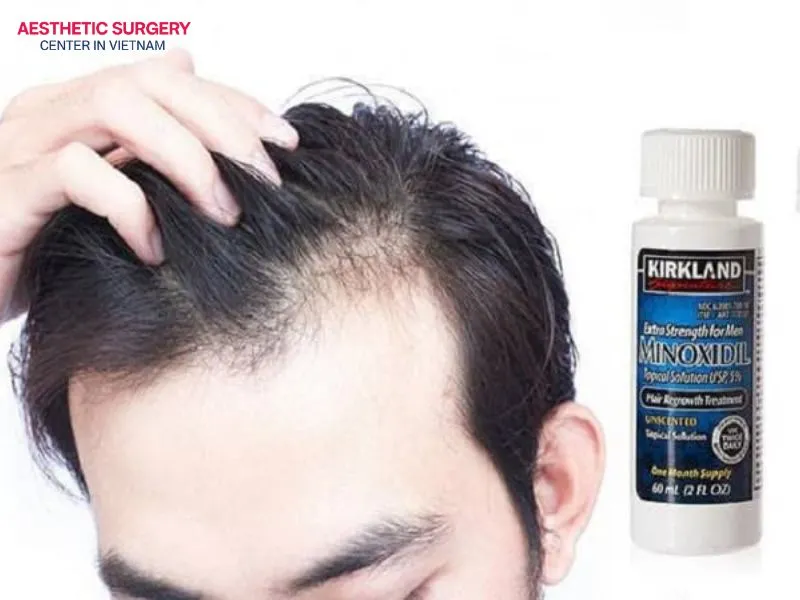
Stimulating growth in transplanted grafts
Newly transplanted hair follicles need a rich supply of nutrients and an effective blood microcirculation system to quickly adapt to the new area of the scalp. Minoxidil works by opening potassium channels and dilating small blood vessels just beneath the scalp. This significantly increases blood flow, bringing oxygen and essential vitamins to each hair follicle.
When to start using minoxidil after hair transplant?
The appropriate time to start using minoxidil after hair transplant is from the fourth week onward. Applying minoxidil too early, before the small wounds on the scalp have fully healed, may cause serious irritation and damage the newly transplanted hair follicles.
The initial healing phase
From the first day until the end of the third week after a hair transplant, the small wounds in both the donor and recipient areas are still going through the natural healing process. The connective tissues around the newly transplanted hair follicles are still very loose. They can easily be displaced or damaged by even minor contact with topical solutions.
Therefore, hair growth medications should not be used during this stage to protect the newly transplanted follicles from the risk of inflammation or clogged pores.
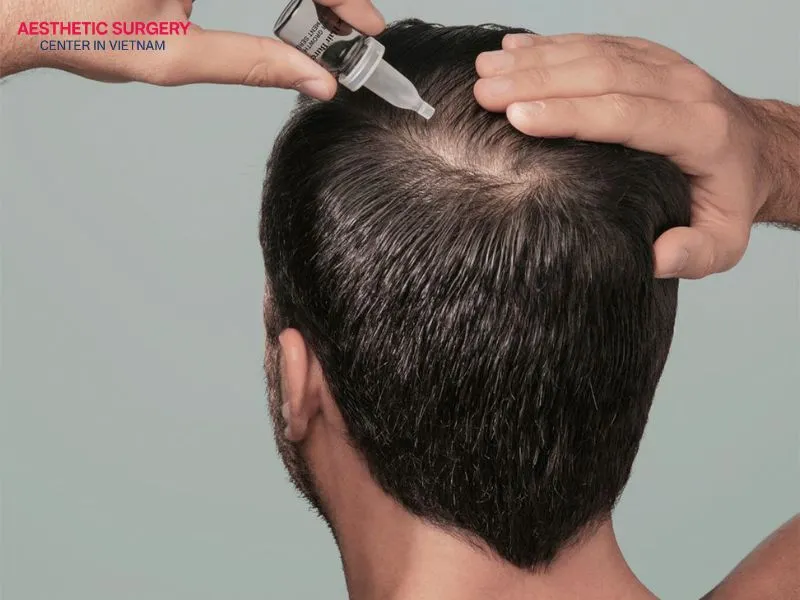
Recommended week by week timeline
The medication schedule should closely follow the hair transplant recovery timeline to achieve good results without harming the hair follicles. Starting from the fourth week, when the hair follicles have become firmly attached to the tissue beneath the skin, you can begin applying a very small amount of minoxidil to allow the scalp to gradually adapt.
By the fifth and sixth weeks, if there are no unusual signs of redness or itching, you can continue applying minoxidil regularly according to the frequency recommended by your doctor.
How to apply minoxidil safely to the scalp?
Using minoxidil after hair transplant requires careful selection of the appropriate formulation and proper application to avoid damaging the surrounding areas of the scalp.
Choosing between topical and oral minoxidil
The main differences between topical and oral minoxidil are how they are absorbed and how convenient they are for daily use. Specifically:
- Topical minoxidil allows the medication to be applied directly to the areas of the scalp that need hair growth stimulation. This helps minimize the amount of the active ingredient entering the body’s general circulation.
- Oral minoxidil is more convenient and does not make the hair greasy. However, the dosage requires close medical supervision to reduce the risk of effects on blood pressure and cardiovascular health.

Step by step application guide
The application process should be performed step by step to maintain hygiene and optimize the amount of active ingredient that comes into contact with the scalp.
- Step 1: First, wash your hands thoroughly with antibacterial soap and make sure the hair and scalp in the treatment area are completely dry.
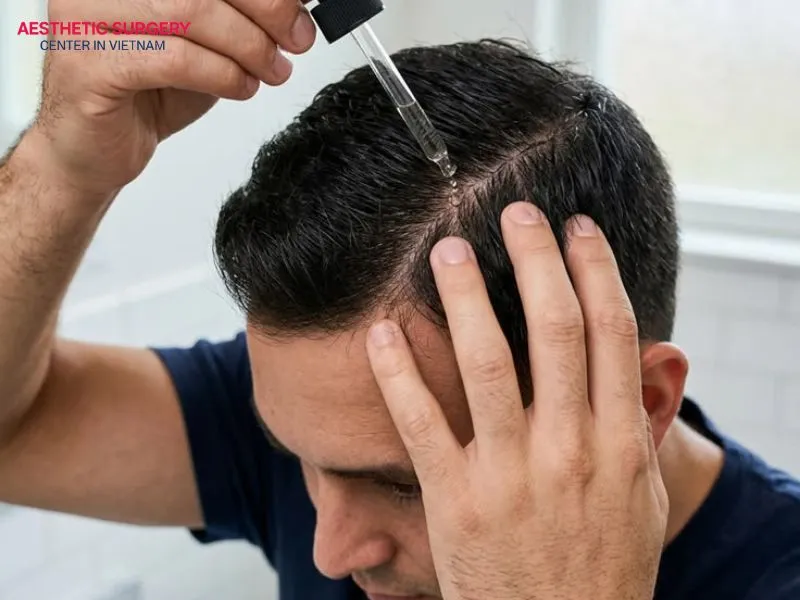
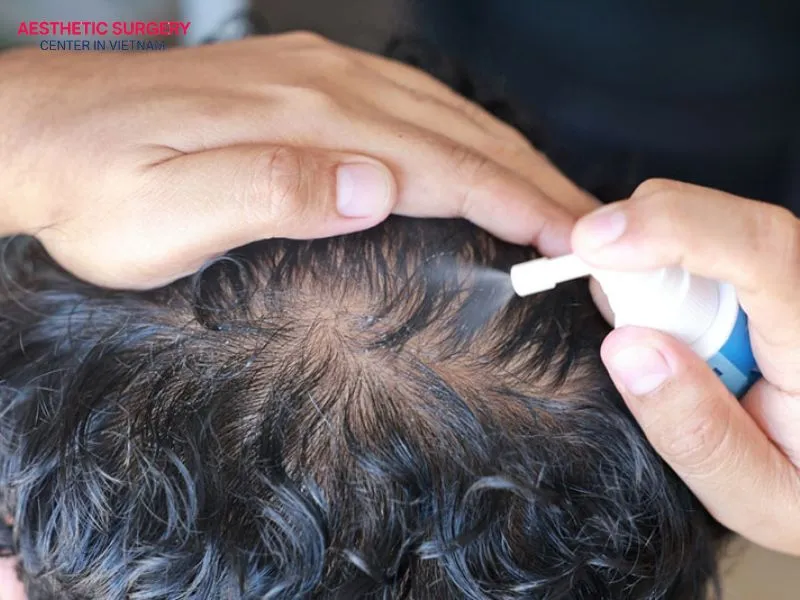
- Step 2: Use the appropriate amount of minoxidil solution or foam as directed. Use a clean fingertip or a specialized applicator to gently apply it to thinning areas or areas around the transplanted region that need hair growth stimulation.
- Step 3: Gently massage the scalp for about one to two minutes using circular motions. This helps the medication absorb into the hair follicles without rubbing too hard and damaging the skin.
- Step 4: After applying minoxidil, wash your hands thoroughly with water. Avoid getting the scalp wet or washing your hair for at least four hours afterward.

Potential side effects and safety precautions
Closely monitoring the body’s reactions is very important when using minoxidil after hair transplant. This helps detect unusual symptoms early and allows timely treatment.
Common side effects to watch for
Dry scalp, small white flakes, or mild itching and burning are common skin reactions that many individuals may experience during treatment. These reactions are mainly caused by the solvents and other ingredients in topical minoxidil. These ingredients help the solution evaporate quickly and allow the active ingredient to penetrate the skin.
To reduce these symptoms, patients can consult their doctor about switching to a propylene glycol-free foam or using a gentle moisturizing shampoo.
>>> See more: Hair transplant side effects
When to consult your hair transplant surgeon?
Patients should contact their surgeon or a medical professional immediately if they experience unusual symptoms such as persistent dizziness, a rapid heartbeat, chest pain, or a sudden drop in blood pressure. These symptoms may indicate that the body is absorbing too much of the active ingredient through areas of the scalp that have not fully healed.
In addition, if skin inflammation, widespread redness, swelling, or pustules appear in the treated area and do not improve after a few days, you should also see your doctor for an examination.

Frequently asked questions about post transplant care
Understanding common questions can help patients have a clearer understanding and properly follow their medical team’s hair care instructions when using minoxidil after hair transplant.
Is it compulsory to use minoxidil after surgery?
Using minoxidil after hair transplant is not always required for every patient. Whether you should use minoxidil depends on your current hair loss condition, the quality of your existing hair, and the personalized treatment plan recommended by your surgeon.
Can minoxidil cause graft loss?
Minoxidil does not damage or cause newly transplanted hair follicles to fall out when used at the appropriate time and according to medical instructions. On the contrary, proper use after the fourth week can help nourish the newly transplanted hair follicles and support healthier hair growth.
Using minoxidil after hair transplant correctly helps support the aesthetic results of the hair transplant and maintain strong, healthy hair in the long term. If you are considering a hair transplant to improve your appearance, you can contact Aesthetic Surgery Center in Vietnam for a direct consultation with a specialist. The doctor will develop a personalized care plan with a focus on scalp health and safety.















Comment on the post